THE CLASSIC COLLECTION✦An outlaw’s diary: the CommuneCLASSIC FREE BOOKS
An outlaw’s diary: the Commune
Cécile Tormay
THE CLASSIC COLLECTION · 1888
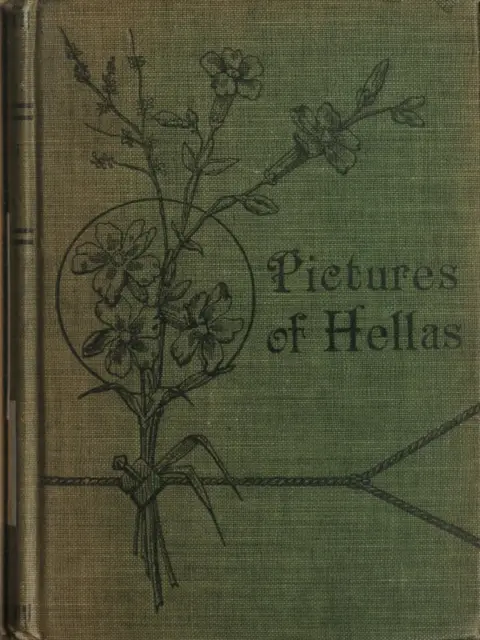
"Pictures of Hellas: Five Tales of Ancient Greece" by Peder Mariager is a collection of historical narratives written in the late 19th century. This work explores the ancient Greek world, focusing on life, culture, and the human element during a period referred to as the flowering of Hellas. Through its five tales, the book aims to bring to life the ordinary figures and daily experiences of ancient Greeks, offering readers a glimpse into a time shaped by divine influences and heroic deeds. The opening of the work sets the stage by introducing the narrative framework and providing a context for the author’s exploration of ancient Greek life. The preface outlines the challenges of capturing the essence of this era due to the scarcity of detailed personal accounts in historical texts. The first tale, "Zeus Hypsistos," centers around a cliff-city called Kranaai, where the conflict between Cychreans and native Pelasgians simmers beneath the surface. Key characters such as Lyrcus, a formidable warrior, and Byssa, the daughter of a priest, illustrate the complex social dynamics and themes of love, jealousy, and conflict that will unfold throughout the tales. The narrative promises to interweave historical elements with personal stories, aiming for an authentic representation of an ancient culture that deeply resonates with modern readers.
Introduction adapted from the source catalogue; source summaries may be automatically generated.
Free to read · English · 75,632 words · No account needed
MAKE TIME FOR A GOOD BOOK
On by default. Untick to stop anonymous reading totals. Each page counts after 10 seconds in view. How this works.
Anonymous counting is on unless you have switched it off.
“The ring is worth eight drachmae,” she said. “Conjuring with the stone will cost ten times as much. Know that hitherto no Hellene has made a baetylus speak. Such things can only be learned in Phrygia.... Farewell, maiden; we must part....”
“Don’t leave me!” cried the girl, seizing Ninus’ robe. “Look!” she added drawing from her arm a glittering gold band, “if this is enough, take it.”
“I am easily satisfied,” said Ninus, snatching the gold. “Well then, I’ll tell you everything. Before a baetylus will show its power one must fast thrice seven days and hold no conversation with men; then the stone must be washed in spring-water and clad in swaddling clothes like a little child. Even this is not enough. A lamp must be lighted in a clean room in the house, incense offered, and prayers repeated. All this I have done from the hour Doris first told me.”
Ninus now thrust both hands down into the basket and, with great care, drew out a smooth oval stone, wrapped in swaddling clothes like a new-born child.
Holding out the stone, she bowed low.
Hipyllos felt like a person who, at some untimely hour, had entered a sanctuary and beheld things no mortal eye ought to see.
“Maiden,” whispered Ninus, “take the baetylus in your arms and rock it to and fro. But beware of dropping it; for then it would be angry.”
The veiled figure received the stone with evident anxiety.
Ninus now lighted some charcoal on the gridiron by the flame of the lantern, scattered incense upon it, and let the smoke rise before the baetylus. Then, taking it from Clytie’s hands, she removed the swaddling clothes and anointed it with oil.
“Look!” she cried, raising it in the air, “the soul is coming.”
Hipyllos felt a slight thrill of awe. He fancied he saw the stone make a slight movement in the priestess’ hands.
Ninus now rocked it more violently and in a strange tone, that sounded like the monotonous buzzing of an Egyptian sistrum, chanted the following words:
Orites, lend thine ear,
Stone smooth and splendid,
Let us the spirit hear
Within thy heart hid.
Stone that thyself canst stir,
From earth arising,
Lipless art thou, yet murmur
Counsel inspiring.
Again the stone seemed to make a slight movement.
The priestess of Sabazius, bending over it, whispered:
“By the two great mysteries, life and death, I conjure thee, Orites, raise thy voice and answer. Shall this maiden apply to her mother or shall she follow the advice of the slave-girl, Doris?”
A whimpering sound like an infant’s cry was heard.
Your reading position is saved on this browser. Take it to another device with a library code. Reading pages adapt to text, rather than matching a printed edition.
BEHIND THE BOOK
This eBook is for the use of anyone anywhere in the United States and most other parts of the world at no cost and with almost no restrictions whatsoever. You may copy it, give it away or re-use it under the terms of the Project Gutenberg License included with this eBook or online at www.gutenberg.org. If you are not located in the United States, you will have to check the laws of the country where you are located before using this eBook. Read the source licence.
The original source file, including credits and licence, is retained by this library. Request an original-format copy at no charge. Please include the book title and Project Gutenberg identifier #56929.
KEEP YOUR CURIOSITY GOING
Cécile Tormay

Moritz Busch
Coulson Kernahan
John L. Ransom

Maurice Baring
Frances Wright