THE CLASSIC COLLECTION✦An outlaw’s diary: the CommuneCLASSIC FREE BOOKS
An outlaw’s diary: the Commune
Cécile Tormay
THE CLASSIC COLLECTION · 1888
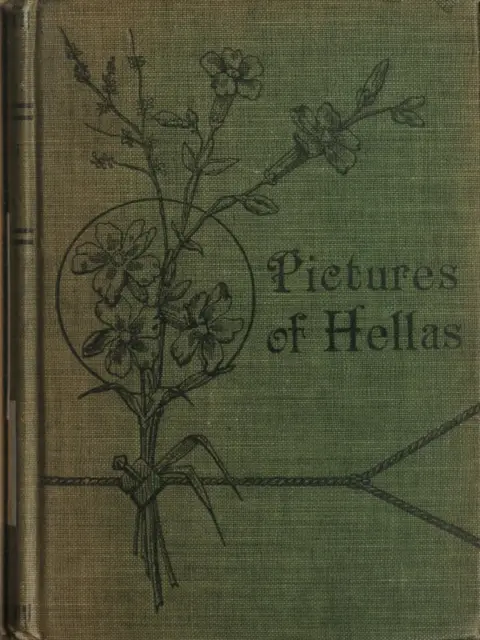
"Pictures of Hellas: Five Tales of Ancient Greece" by Peder Mariager is a collection of historical narratives written in the late 19th century. This work explores the ancient Greek world, focusing on life, culture, and the human element during a period referred to as the flowering of Hellas. Through its five tales, the book aims to bring to life the ordinary figures and daily experiences of ancient Greeks, offering readers a glimpse into a time shaped by divine influences and heroic deeds. The opening of the work sets the stage by introducing the narrative framework and providing a context for the author’s exploration of ancient Greek life. The preface outlines the challenges of capturing the essence of this era due to the scarcity of detailed personal accounts in historical texts. The first tale, "Zeus Hypsistos," centers around a cliff-city called Kranaai, where the conflict between Cychreans and native Pelasgians simmers beneath the surface. Key characters such as Lyrcus, a formidable warrior, and Byssa, the daughter of a priest, illustrate the complex social dynamics and themes of love, jealousy, and conflict that will unfold throughout the tales. The narrative promises to interweave historical elements with personal stories, aiming for an authentic representation of an ancient culture that deeply resonates with modern readers.
Introduction adapted from the source catalogue; source summaries may be automatically generated.
Free to read · English · 75,632 words · No account needed
MAKE TIME FOR A GOOD BOOK
On by default. Untick to stop anonymous reading totals. Each page counts after 10 seconds in view. How this works.
Anonymous counting is on unless you have switched it off.
Lycon let himself be shown around the city by the boy he had found sleeping with his head against the door-post, and invented errands to many of the citizens but none of them recognized him.
Meantime his young slave, Paegnion, was sauntering idly about the house. He was tired, so he welcomed the event when some one unexpectedly spoke to him in the peristyle of the women’s apartment.
“What is your name, my lad?” asked a gay, musical voice from one of the little openings in the wall facing the peristyle.
Paegnion looked up. All he saw inside the small opening was a delicate white hand, which had drawn aside the Coan curtain, some shining braids of brown hair, a gold fillet, and a pair of mischievous black eyes, whose sparkle vied with the fillet.
“What is your name, my lad?” the voice repeated.
“Paegnion.”
“A pretty name! Are many boys in Athens called Paegnion as well as you?”
“Some, but not many.”
“Has your master a pretty name too?”
“He is called Lycon.”
“Has he no other name?”
Paegnion was silent.
“Well then!” said the gay voice in a strangely contemptuous tone, and the hand moved as though to close the curtain.
Paegnion feared the conversation was over.
“What do you mean?” he hastened to ask.
“I thought Attic youths were more clever than others--so clever that their masters could never conceal anything from them. Now I see that the Athenian lads are no brighter than our own.”
Paegnion felt a little nettled.
“I could answer you, if I chose,” he muttered roughly.
“And why don’t you choose, Paegnion?”
“Because I don’t want to be thrust through the breast with a long
knife.”
“Empty threats! And you care for them? A boy like you isn’t easily killed.... No, say rather that you know nothing.”
And again the delicate hand moved as if to drop the curtain.
“But I do know something,” Paegnion hastened to reply. “He has, as you say, another name.”
“Who told you so?”
“He himself.”
“What did he say?”
“That I won’t tell.”
“Are you so timid, Paegnion? I thought the Attic boys were braver. Besides, what do you risk by telling me, a woman? I shall never see your master, never have a chance to speak to him--what do you fear?”
Paegnion reflected a moment.
“No!” he cried resolutely, “I dare not! He might find out.”
“That’s a pity! I thought you would earn some money. Look!” the young girl continued, holding out a number of small flat silver coins in a box and showing them to Paegnion, “here are twelve triobols.”
Your reading position is saved on this browser. Take it to another device with a library code. Reading pages adapt to text, rather than matching a printed edition.
BEHIND THE BOOK
This eBook is for the use of anyone anywhere in the United States and most other parts of the world at no cost and with almost no restrictions whatsoever. You may copy it, give it away or re-use it under the terms of the Project Gutenberg License included with this eBook or online at www.gutenberg.org. If you are not located in the United States, you will have to check the laws of the country where you are located before using this eBook. Read the source licence.
The original source file, including credits and licence, is retained by this library. Request an original-format copy at no charge. Please include the book title and Project Gutenberg identifier #56929.
KEEP YOUR CURIOSITY GOING
Cécile Tormay

Moritz Busch
Coulson Kernahan
John L. Ransom

Maurice Baring
Frances Wright