THE CLASSIC COLLECTION✦An outlaw’s diary: the CommuneCLASSIC FREE BOOKS
An outlaw’s diary: the Commune
Cécile Tormay
THE CLASSIC COLLECTION · 1888
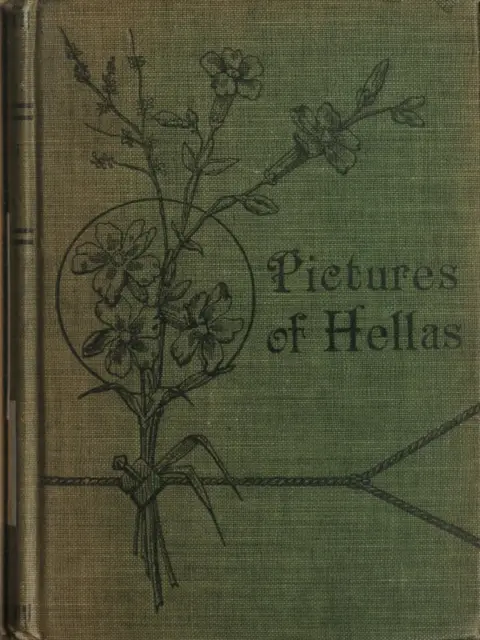
"Pictures of Hellas: Five Tales of Ancient Greece" by Peder Mariager is a collection of historical narratives written in the late 19th century. This work explores the ancient Greek world, focusing on life, culture, and the human element during a period referred to as the flowering of Hellas. Through its five tales, the book aims to bring to life the ordinary figures and daily experiences of ancient Greeks, offering readers a glimpse into a time shaped by divine influences and heroic deeds. The opening of the work sets the stage by introducing the narrative framework and providing a context for the author’s exploration of ancient Greek life. The preface outlines the challenges of capturing the essence of this era due to the scarcity of detailed personal accounts in historical texts. The first tale, "Zeus Hypsistos," centers around a cliff-city called Kranaai, where the conflict between Cychreans and native Pelasgians simmers beneath the surface. Key characters such as Lyrcus, a formidable warrior, and Byssa, the daughter of a priest, illustrate the complex social dynamics and themes of love, jealousy, and conflict that will unfold throughout the tales. The narrative promises to interweave historical elements with personal stories, aiming for an authentic representation of an ancient culture that deeply resonates with modern readers.
Introduction adapted from the source catalogue; source summaries may be automatically generated.
Free to read · English · 75,632 words · No account needed
MAKE TIME FOR A GOOD BOOK
On by default. Untick to stop anonymous reading totals. Each page counts after 10 seconds in view. How this works.
Anonymous counting is on unless you have switched it off.
The lad gazed covetously at the glittering coins.
“Twelve triobols,” he repeated with a crafty smile, “and I am
fifteen years old.”
“You shall have three more. But make haste, somebody might come. What
did your master say?”
Paegnion looked around him.
“On the way here,” he whispered, advancing close to the wall, “my master rode for a time absorbed in thought; then he suddenly exclaimed: ‘No, I will not return as Zenon, but as Lycon.’”
“I knew it!” cried the girl and, forgetting the money, she clapped her hands so that the obols fell on the ground and rolled about in every direction.
Paegnion was not slow in picking up his treasure.
“The three triobols,” he then said, “the three triobols you promised
me.”
The girl disappeared from the opening. A moment after a fold of the curtain was raised and, if Paegnion had had eyes for it, he might have seen a beautiful white arm bared to the shoulder, but the lad was more intent upon obols than arms.
At this moment the back door of the garden creaked on its rusty hinges, and Paegnion ran with all his might to the little guest-room at the corner of the house, which had been assigned to him and his master.
When Lycon--for it was he--was crossing the small courtyard on the way to the guest-room he saw that the household slaves, half a score in all, had assembled there. Some were carrying hay from a large cart into a barn, others were pouring water over the rude wheels, consisting of round wooden disks, to cleanse them from lumps of clay, and others were standing idle in the shade. But, whether busy or not, there was an air of malevolence about them and not one uttered a word. The prospect of forced labor in the Laurium mines rested like a dark cloud on every face.
The big swine-herd, Conops, held in his hand a bunch of dry leaves with which he was wiping the sweat from the heaving flanks of a mule.
Lycon passed quietly on to the guest-room, where he called to Conops in a curt, authoritative tone:
“Open the door. You see I am carrying something under my cloak.”
The huge fellow did not stir.
Lycon beckoned to the little boy and gave him his bundle.
“Don’t you know,” he then said to Conops, “that I am your master’s guest, and that you should obey a guest as you would your master himself?”
“Perhaps that is the custom in Athens,” replied Conops impudently, looking at the others. “In Methone slaves do what they choose.”
Your reading position is saved on this browser. Take it to another device with a library code. Reading pages adapt to text, rather than matching a printed edition.
BEHIND THE BOOK
This eBook is for the use of anyone anywhere in the United States and most other parts of the world at no cost and with almost no restrictions whatsoever. You may copy it, give it away or re-use it under the terms of the Project Gutenberg License included with this eBook or online at www.gutenberg.org. If you are not located in the United States, you will have to check the laws of the country where you are located before using this eBook. Read the source licence.
The original source file, including credits and licence, is retained by this library. Request an original-format copy at no charge. Please include the book title and Project Gutenberg identifier #56929.
KEEP YOUR CURIOSITY GOING
Cécile Tormay

Moritz Busch
Coulson Kernahan
John L. Ransom

Maurice Baring
Frances Wright