THE CLASSIC COLLECTION✦An outlaw’s diary: the CommuneCLASSIC FREE BOOKS
An outlaw’s diary: the Commune
Cécile Tormay
THE CLASSIC COLLECTION · 1888
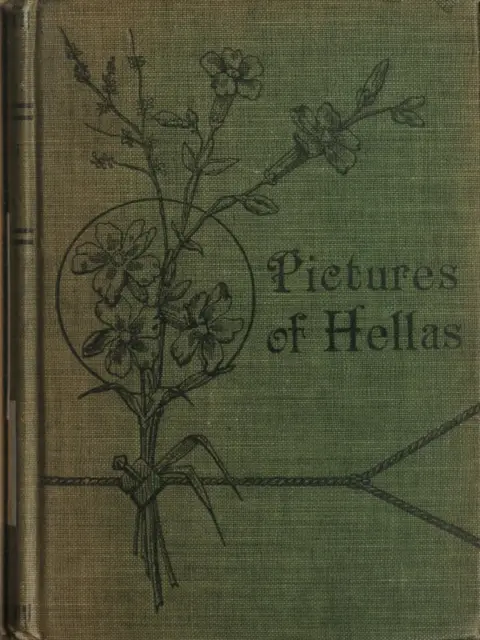
"Pictures of Hellas: Five Tales of Ancient Greece" by Peder Mariager is a collection of historical narratives written in the late 19th century. This work explores the ancient Greek world, focusing on life, culture, and the human element during a period referred to as the flowering of Hellas. Through its five tales, the book aims to bring to life the ordinary figures and daily experiences of ancient Greeks, offering readers a glimpse into a time shaped by divine influences and heroic deeds. The opening of the work sets the stage by introducing the narrative framework and providing a context for the author’s exploration of ancient Greek life. The preface outlines the challenges of capturing the essence of this era due to the scarcity of detailed personal accounts in historical texts. The first tale, "Zeus Hypsistos," centers around a cliff-city called Kranaai, where the conflict between Cychreans and native Pelasgians simmers beneath the surface. Key characters such as Lyrcus, a formidable warrior, and Byssa, the daughter of a priest, illustrate the complex social dynamics and themes of love, jealousy, and conflict that will unfold throughout the tales. The narrative promises to interweave historical elements with personal stories, aiming for an authentic representation of an ancient culture that deeply resonates with modern readers.
Introduction adapted from the source catalogue; source summaries may be automatically generated.
Free to read · English · 75,632 words · No account needed
MAKE TIME FOR A GOOD BOOK
On by default. Untick to stop anonymous reading totals. Each page counts after 10 seconds in view. How this works.
Anonymous counting is on unless you have switched it off.
“Is there any way of knowing who has denounced an hetaeria?” he
muttered.
“It was probably Megas,” whispered Lysiteles in his faint, cracked
voice.
“No,” replied Sthenelus positively, “had it been he, by Zeus, he would have been with them. Megas would have wanted to enjoy the sight of our faces when we were surprised. No, it was not he. I think it was Cephidosemos, who watched Xenocles and myself from behind the column. As an informer he is afraid of drawing hatred on his head, so he keeps away.”
Thuphrastos passed his hand thoughtfully over his beard.
“What offices can Phanos bestow upon us?” he asked.
“I have heard,” answered Lamon, “that a tax-collector is to be sent to some of the rebellious cities. He will have hundreds of soldiers with him. It would not surprise me, Thuphrastos, if you should be appointed to that office.”
“Well!” exclaimed the old captain, “I shall rely on Phanos’ words. He
never forgets.”
“We will all trust him!” echoed the group in chorus.
“But,” continued Thuphrastos, turning to Xenocles, “however we may fare, there is one person who will lose....”
“Whom do you mean?”
“By Zeus, your daughter! Was she not betrothed to Acestor, and was not the wedding to have taken place this very day?”
Xenocles made a repellent gesture.
“Do not speak of it!” he cried.
“Well then,” replied Thuphrastos, “I’ll give you a son-in-law and, by the gods, a better one than that chatterer.”
Xenocles raised his head with a questioning glance.
“The man I shall bring you is not far off,” continued Thuphrastos. “Here you see Hipyllos! He loves the maiden. We know of him--what nobody knew about that shrieker--that he is rich. He showed his courage at the battle of Antirrhium--he has archons in his family. What more can you desire?”
“Nothing, by Zeus!” answered Xenocles laughing and grasping the young man’s hand, “what objection should I have to a son-in-law who will make me a family connection of Lacrateides?”
Hipyllos pressed Xenocles’ hand in both his own.
“Father!” he cried warmly, “give me your daughter Clytie! Neither you nor she shall repent it--that I swear by all the gods.”
Soon after Hipyllos stole out into the peristyle and called his slave.
“Myrmex,” he whispered, “hurry down to the house of Sauros, the armorer. Ask for Ninus, the priestess of Sabazius, and let her see that the young lady and her slave return home at once without being seen. Look, here is money.”
Your reading position is saved on this browser. Take it to another device with a library code. Reading pages adapt to text, rather than matching a printed edition.
BEHIND THE BOOK
This eBook is for the use of anyone anywhere in the United States and most other parts of the world at no cost and with almost no restrictions whatsoever. You may copy it, give it away or re-use it under the terms of the Project Gutenberg License included with this eBook or online at www.gutenberg.org. If you are not located in the United States, you will have to check the laws of the country where you are located before using this eBook. Read the source licence.
The original source file, including credits and licence, is retained by this library. Request an original-format copy at no charge. Please include the book title and Project Gutenberg identifier #56929.
KEEP YOUR CURIOSITY GOING
Cécile Tormay

Moritz Busch
Coulson Kernahan
John L. Ransom

Maurice Baring
Frances Wright