THE CLASSIC COLLECTION✦An outlaw’s diary: the CommuneCLASSIC FREE BOOKS
An outlaw’s diary: the Commune
Cécile Tormay
THE CLASSIC COLLECTION · 1888
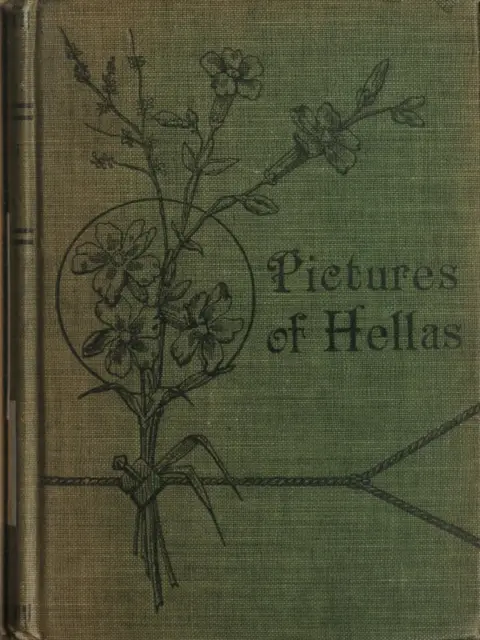
"Pictures of Hellas: Five Tales of Ancient Greece" by Peder Mariager is a collection of historical narratives written in the late 19th century. This work explores the ancient Greek world, focusing on life, culture, and the human element during a period referred to as the flowering of Hellas. Through its five tales, the book aims to bring to life the ordinary figures and daily experiences of ancient Greeks, offering readers a glimpse into a time shaped by divine influences and heroic deeds. The opening of the work sets the stage by introducing the narrative framework and providing a context for the author’s exploration of ancient Greek life. The preface outlines the challenges of capturing the essence of this era due to the scarcity of detailed personal accounts in historical texts. The first tale, "Zeus Hypsistos," centers around a cliff-city called Kranaai, where the conflict between Cychreans and native Pelasgians simmers beneath the surface. Key characters such as Lyrcus, a formidable warrior, and Byssa, the daughter of a priest, illustrate the complex social dynamics and themes of love, jealousy, and conflict that will unfold throughout the tales. The narrative promises to interweave historical elements with personal stories, aiming for an authentic representation of an ancient culture that deeply resonates with modern readers.
Introduction adapted from the source catalogue; source summaries may be automatically generated.
Free to read · English · 75,632 words · No account needed
MAKE TIME FOR A GOOD BOOK
On by default. Untick to stop anonymous reading totals. Each page counts after 10 seconds in view. How this works.
Anonymous counting is on unless you have switched it off.
“But--dangerous or not,” Phanos continued, “he has committed a crime and deserves punishment.”
“What has he done?” asked Xenocles.
“He is a spurious citizen. His father’s name cannot be found in the temple of Apollo Patrous.”
Acestor raised his head and fixed his eyes on Phanos with a venomous
glance.
“You are mistaken,” he said. “It can be found there.”
“Where?”
“By the side of your father’s name.”
Phanos recoiled a step as though struck by an invisible shaft; but the next moment the veins in his temples swelled, and his eyes flashed.
“Wretch!” he exclaimed, his lips quivering with indignation. “My father’s name is not to be found in the temple--he was, as every one knows, a freedman. Nevertheless, my right to citizenship is a legal one, bestowed for services rendered to the state. Note this, Gobryas, son of Tisamenos.”
These words fell upon Acestor like a thunder-bolt. At hearing his name, his real name, which he had believed concealed from every one, he perceived that all was discovered.
Throwing himself at Phanos’ feet, he raised his arms submissively.
“Mercy!” he murmured, “mercy!”
“Do you know the dungeons in the cliff?” asked Phanos sternly.
Acestor made a sign of assent.
“Well! Sthenelus can tell you what rumor says of them.”
Merry Sthenelus limped a few steps nearer, cleared his throat, and answered in a sepulchral voice:
“Rumor says that prisoners walk into them, but are carried out,
feet foremost.”
Acestor kissed the edge of Phanos’ robe.
“Mercy!” he cried. “Mercy! Forgive my evil speech.”
“Spare him,” said Xenocles.
“Let him run,” added Thuphrastos.
“Well then,” replied Phanos, “you boasted of your travels, Acestor. You must journey farther still. If you don’t want to have your hair clipped and become a slave for having your name spuriously inserted on the citizens’ list, you must leave Athens before to-morrow noon.”
Acestor bowed his head under Phanos’ hand in token of submission.
“Milon!” shouted Phanos.
The officer of the city-watch, who was still mounting guard inside the
curtain, came forward.
“Follow this man,” said Phanos, pointing to Acestor, “and don’t lose sight of him. When he has quitted Athens, report to me.”
Milon grasped Acestor’s arm and went away with him.
Xenocles gazed after them.
“By Zeus!” he exclaimed, “believe me or not as you choose, but I’ve always had a presentiment that the eagle might become a crow.”
“And I,” replied Thuphrastos, “have always seen the crow, never the
eagle.”
When, soon after, the house was cleared of the city-watch, the friends looked at each other a moment in silence.
“Who has done this?” asked Lamon.
Thuphrastos shrugged his shoulders.
Your reading position is saved on this browser. Take it to another device with a library code. Reading pages adapt to text, rather than matching a printed edition.
BEHIND THE BOOK
This eBook is for the use of anyone anywhere in the United States and most other parts of the world at no cost and with almost no restrictions whatsoever. You may copy it, give it away or re-use it under the terms of the Project Gutenberg License included with this eBook or online at www.gutenberg.org. If you are not located in the United States, you will have to check the laws of the country where you are located before using this eBook. Read the source licence.
The original source file, including credits and licence, is retained by this library. Request an original-format copy at no charge. Please include the book title and Project Gutenberg identifier #56929.
KEEP YOUR CURIOSITY GOING
Cécile Tormay

Moritz Busch
Coulson Kernahan
John L. Ransom

Maurice Baring
Frances Wright