Practical Boat-Sailing: A Concise and Simple Treatise
Douglas Frazar
THE CLASSIC COLLECTION · 1885
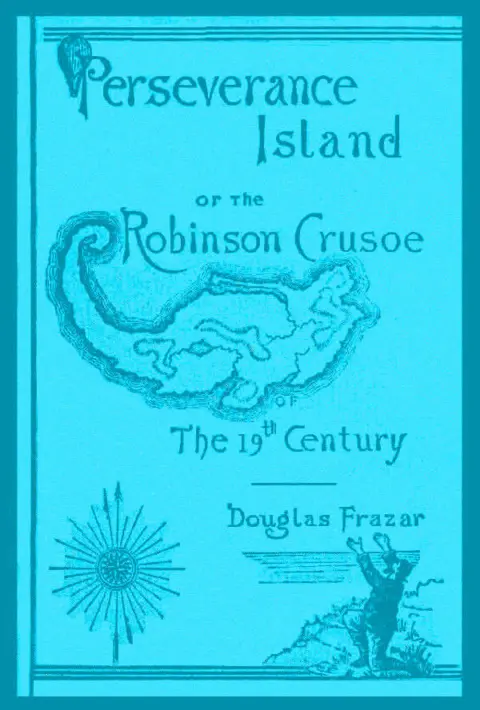
"Perseverance Island; Or, The Robinson Crusoe of the Nineteenth Century" by Douglas Frazar is a novel written in the late 19th century. This adventure story follows a character who, after a series of maritime disasters, finds himself shipwrecked on a deserted island in the South Pacific. Drawing on his ingenuity and skills, he attempts to survive and thrive in this unfamiliar environment, focusing on themes of resilience, resourcefulness, and the indomitable human spirit. The opening of the narrative introduces the protagonist and provides the backstory of his life as a sailor, detailing his aspirations for adventure that culminate in joining the ill-fated expedition aboard the schooner "Good Luck." After navigating treacherous seas and facing storms, the crew suffers devastating losses, leading to the shipwreck. The protagonist survives the chaos of the storm, finds himself washed ashore on an unknown island, and begins to contemplate his situation, setting the stage for his struggle for survival. Filled with emotional depth and survival challenges, the beginning wastes no time immersing the reader into the hardships faced by the protagonist, highlighting both his vulnerabilities and strengths.
Introduction adapted from the source catalogue; source summaries may be automatically generated.
Free to read · English · 103,200 words · No account needed
MAKE TIME FOR A GOOD BOOK
On by default. Untick to stop anonymous reading totals. Each page counts after 10 seconds in view. How this works.
Anonymous counting is on unless you have switched it off.
The next morning the sun rose with his customary brilliancy and brought to poor me another beautiful day. I arose from my hard and humble couch, and raked apart the ashes of my last evening's fire, and put on some new wood and soon had a cheerful blaze. I stepped down to the river and soon with my bow and arrows had two or three of my wild pigeons despatched, which I quickly plucked and soon had roasting over my fire. So far I had been more successful than I could have hoped to have been; no savages, no noxious or deadly animals, but all a seeming paradise. I soon finished my simple repast, and strapping my canister upon my back and taking my harpoon in hand I commenced my pilgrimage round about the island, which I was determined to accomplish before I undertook any other task.
I passed across Rapid River and pressed towards the sea coast and finally, after a walk of about a mile in a northeasterly direction, came out upon a bold shore with quite a promontory on my right hand. How wistfully I looked out upon the ocean, the day being so clear that I could see to a great distance; but my view encountered no welcome sail,--only the everlasting waste of waters spread out before me. With one long sigh of repining at my fate, I passed on to the right and commenced ascending the promontory before me. I trudged on through open land and small groves of trees till I arrived at the summit, which was barren and gave me a great view seaward and convinced me that I was on the extreme northeastern extremity of my island; for I could see nothing to the northward of me, but in my rear and to the eastward I saw another projection extending into the sea, to the southward of which I could not observe. From my elevation I was able to see somewhat of the interior of the island, and this was what met my view: to the south of me and at about two miles distance, as I should judge, I saw quite an elevation, and far away to the southwest another large hill, almost a miniature mountain. The island seemed well wooded in all directions and presented a beautiful appearance in the brilliant morning sun and pure clear air. I looked long and anxiously to the eastward for land, but saw nothing: and my friends the goats seemed to have deserted me in this part of the island, for I saw no signs of them. I turned to pass to the southward and eastward along the coast-line, when I was attracted by the appearance of the ground round about me, having in seams amongst the rocks a dark appearance. I stooped down and by the aid of my knife broke off some portions of this familiar looking substance, when lo and behold! I held in my hand veritable anthracite or bituminous coal,--I was not expert enough to know which, although I thought it to be the former. What a discovery was this for me, and yet what a natural one, after all. I could not rest satisfied with my own convictions that it was really coal that I held in my hand; but then and there drew out my flint and steel and started a wood fire, at which I had become expert, and digging up large fragments with my harpoon and knife, which I took care not to break or dull in the operation, I cast them upon the flame. Yes, it was true past peradventure,--I had found coal, veritable coal, that burned readily in the midst of my wood fire where I had piled it in the glowing embers and flames. Every once in a while it seemed to give off quick jets of flame, and this led me to examine the specimens before me more carefully to ascertain the cause. And upon breaking open, with a stone, quite a large fragment, I saw within it a large broad streak, as wide as my finger, of a yellowish cast, which I instantly recognized as sulphur, and in fact my memory told me that the coal received from the island of Formosa, in China, especially from the surface collections, abounded in sulphur, sometimes so much so as to be disagreeable for house use. But one thought flashed into my mind upon this discovery, matches! matches! matches! Yes, here was before me the foundation of all lucifer matches, and I had only to consult, on my return, my Compendium of Useful Arts and Sciences, to avail myself of it and find out how to combine it with the other necessary articles to have real bonâ fide matches. I was overwhelmed with joy, and blessed the hour that had been so fruitful in comforts for me, should I have to remain upon this island.
Your reading position is saved on this browser. Take it to another device with a library code. Reading pages adapt to text, rather than matching a printed edition.
BEHIND THE BOOK
This eBook is for the use of anyone anywhere in the United States and most other parts of the world at no cost and with almost no restrictions whatsoever. You may copy it, give it away or re-use it under the terms of the Project Gutenberg License included with this eBook or online at www.gutenberg.org. If you are not located in the United States, you will have to check the laws of the country where you are located before using this eBook. Read the source licence.
The original source file, including credits and licence, is retained by this library. Request an original-format copy at no charge. Please include the book title and Project Gutenberg identifier #46128.
KEEP YOUR CURIOSITY GOING
Wilfrid Scawen Blunt
Wilfrid Scawen Blunt

E. W. (Edgar Watson) Howe
Coulson Kernahan

Maurice Baring
Frances Wright