Practical Boat-Sailing: A Concise and Simple Treatise
Douglas Frazar
THE CLASSIC COLLECTION · 1885
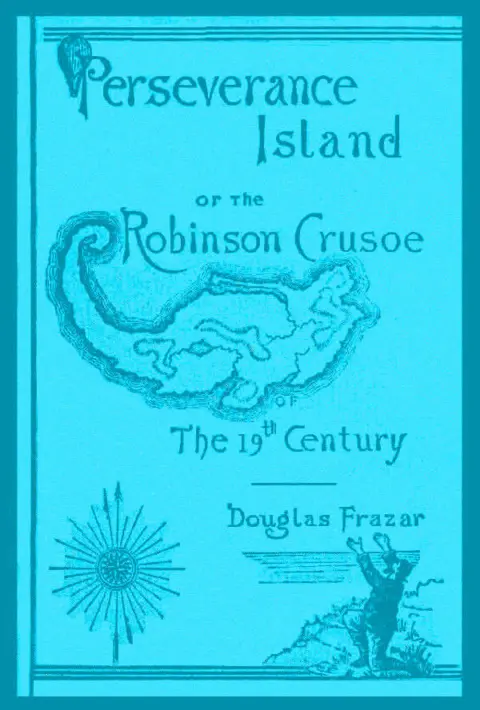
"Perseverance Island; Or, The Robinson Crusoe of the Nineteenth Century" by Douglas Frazar is a novel written in the late 19th century. This adventure story follows a character who, after a series of maritime disasters, finds himself shipwrecked on a deserted island in the South Pacific. Drawing on his ingenuity and skills, he attempts to survive and thrive in this unfamiliar environment, focusing on themes of resilience, resourcefulness, and the indomitable human spirit. The opening of the narrative introduces the protagonist and provides the backstory of his life as a sailor, detailing his aspirations for adventure that culminate in joining the ill-fated expedition aboard the schooner "Good Luck." After navigating treacherous seas and facing storms, the crew suffers devastating losses, leading to the shipwreck. The protagonist survives the chaos of the storm, finds himself washed ashore on an unknown island, and begins to contemplate his situation, setting the stage for his struggle for survival. Filled with emotional depth and survival challenges, the beginning wastes no time immersing the reader into the hardships faced by the protagonist, highlighting both his vulnerabilities and strengths.
Introduction adapted from the source catalogue; source summaries may be automatically generated.
Free to read · English · 103,200 words · No account needed
MAKE TIME FOR A GOOD BOOK
On by default. Untick to stop anonymous reading totals. Each page counts after 10 seconds in view. How this works.
Anonymous counting is on unless you have switched it off.
Rainy day. Reflections concerning climate, season of the year, tides, etc. Plant several varieties of my seeds. Make a pocket compass, and prepare for my exploration of the island.
"Man proposes, but God disposes." This was what I thought when I woke in the morning and looked out upon a foggy, drizzling day; not very much wind, but a regular Scotch mist, and with every look of settling into a real downright rain. I could not well complain, for I had been blessed with pleasant weather since my arrival, and it was but natural that all days should not be as pleasant; and the fast-approaching appearance of rain delighted me in another sense, for I was not at all sure about my supply of fresh water, and I was not sorry to see that the island was visited with rain, which I foresaw that in the future I could utilize should all other methods fail. My nautical experience had been correct; in less than an hour the rain fell freely, and the wind got up quite strong from the northward and eastward. I saw that I must put aside all idea of exploring my island for this day, and I was not sorry, as I had several things that I desired to complete first, and my great fear of not being able to obtain plenty of water of a good quality was fast being dissipated. I got to my fire and started it briskly, so that it would not be disturbed by the rain, and for more security lighted a small one inside my hut under cover, so as to run no risks at all. Although I felt confident that I had the means at present of starting a new fire at any time, I was morbid on this subject, and could not prevail upon myself to allow any of the three flames to be extinguished, namely, the lamps, the regular fire, and the small one in my hut, so fearful was I about it. Up to the present time fire was not only fire to me, but it was water. Once secure concerning the latter I felt that I could allow my fires to go out with better faith. I found during this day my hut a great comfort, and blessed my stars that I had completed it so luckily before this storm commenced. The rain was not cold, being from the direction of the equator; and I therefore, throughout the day, moved about in it in my flannel shirt and drawers, with my broad-brimmed hat and shoes and stockings, leaving my other clothing dry in the hut. I was pleased to observe that the thatching was a perfect success, and the interior as dry and nice as possible. My first task was to go and get the other half of the sea-oyster shell that I had placed under my shark's livers and bring it near the house. I had no fears of the rain interfering with the former, for I knew that, although exposed, the rain would not mix with the oil, but would, if anything, purify it, and that I could easily skim off every particle with a clam-shell when the weather became again clear. Having got my sea-oyster shell, which would hold some gallons, placed under one of the dripping eaves of my hut, I sat down to breakfast, which I made very pleasantly of turtle steaks and eggs. After breakfast I drew forth from my trousers pocket my precious piece of tobacco, and looked with grief at its diminished proportions, but, urged on by solitude and the rain, I could not resist filling my pipe and taking a good long smoke. Whilst smoking, the following thoughts of what I had seen, and what I might expect ran through my head, and I repeated them to myself to fix them in my memory, so that they might serve me in the future. In the first place I calculated that this day, the thirteenth of November, must in this part of the world represent the thirteenth of May in the northern hemisphere, and that therefore I was in the very spring-time of the year, and at a proper season to plant some of my seeds and note the result. Although I did not know how far south I was, still I knew within a degree or so by the reckoning that I had on board of the "Good Luck." I felt assured that I was somewhere between the fortieth and forty-fifth parallel of latitude, and that the climate must therefore be somewhat like that of countries situated between the same parallels of north latitude, like that of England, France, or the New England States of America. Knowing this I had a sort of general knowledge of what seeds would probably prosper, and also what kind of a winter I might expect. Surrounded as I was, as I suspected, by water, I thought that the winter ought to be milder than those of the northern hemisphere, and for the same reason the summers milder. I remembered that many fruits would mature in England, in latitude 52° north, that would not grow in the open air in New England in only 42° north. In imagination I gave my island a climate even milder than England, first on account of its being nearer the equator, and next on account of its, as I supposed, small extent, completely surrounded by water. I was also led to this belief by the balmy, spring-like, and warm air of the days I had already passed upon the island, and the advancement in vegetation that I saw upon all sides of me; the latter completely satisfying me that the springs must be very early, and that the winters could not be very severe. I had also noticed that the rise and fall of the tide was considerable; I should say at a venture at least ten feet. I had no doubt but what I could wade almost across the gulf separating me from the breakwater at mean low tide, at any rate a few strokes only of swimming would be necessary, I felt convinced. From these subjects I passed to thinking of my lonely fate, and made up my mind to cross over again to the breakwater this very day and examine anew the scene of my disaster. What a miserable fate was reserved for me. Here was I only thirty-two years of age, in the very prime of my life, cut off from intercourse with all my fellow-men; cast upon a desert island, without even the comforts and necessities that my predecessor in history had given him to his hands, with nothing but the few miserable trifles that I have enumerated; cast on shore, to care for myself, protect myself, and live for whatever God might have in store for me. The bitter tears ran through my fingers at the desolate picture my imagination had conjured up. Why was I punished in this manner? what had I done that I should be imprisoned in this solitude? But then, on the other hand, what should prevent me from building in the future a boat or raft and escaping from my prison, or why should I despair of some day seeing a vessel within sight of my island that I could hail?
Your reading position is saved on this browser. Take it to another device with a library code. Reading pages adapt to text, rather than matching a printed edition.
BEHIND THE BOOK
This eBook is for the use of anyone anywhere in the United States and most other parts of the world at no cost and with almost no restrictions whatsoever. You may copy it, give it away or re-use it under the terms of the Project Gutenberg License included with this eBook or online at www.gutenberg.org. If you are not located in the United States, you will have to check the laws of the country where you are located before using this eBook. Read the source licence.
The original source file, including credits and licence, is retained by this library. Request an original-format copy at no charge. Please include the book title and Project Gutenberg identifier #46128.
KEEP YOUR CURIOSITY GOING
Wilfrid Scawen Blunt
Wilfrid Scawen Blunt

E. W. (Edgar Watson) Howe
Coulson Kernahan

Maurice Baring
Frances Wright