Practical Boat-Sailing: A Concise and Simple Treatise
Douglas Frazar
THE CLASSIC COLLECTION · 1885
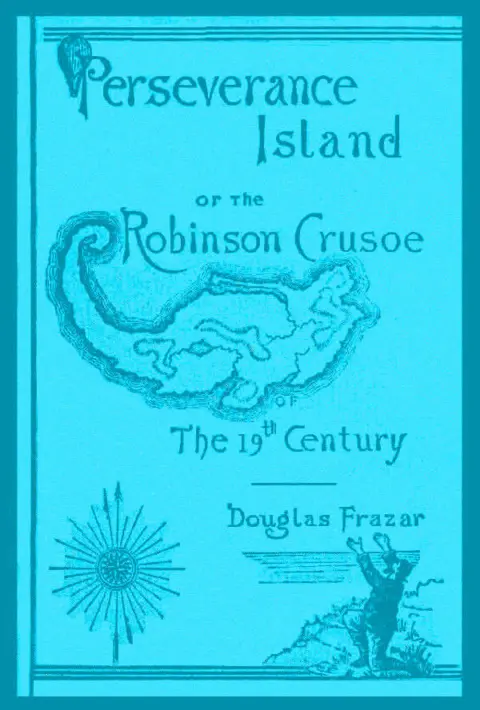
"Perseverance Island; Or, The Robinson Crusoe of the Nineteenth Century" by Douglas Frazar is a novel written in the late 19th century. This adventure story follows a character who, after a series of maritime disasters, finds himself shipwrecked on a deserted island in the South Pacific. Drawing on his ingenuity and skills, he attempts to survive and thrive in this unfamiliar environment, focusing on themes of resilience, resourcefulness, and the indomitable human spirit. The opening of the narrative introduces the protagonist and provides the backstory of his life as a sailor, detailing his aspirations for adventure that culminate in joining the ill-fated expedition aboard the schooner "Good Luck." After navigating treacherous seas and facing storms, the crew suffers devastating losses, leading to the shipwreck. The protagonist survives the chaos of the storm, finds himself washed ashore on an unknown island, and begins to contemplate his situation, setting the stage for his struggle for survival. Filled with emotional depth and survival challenges, the beginning wastes no time immersing the reader into the hardships faced by the protagonist, highlighting both his vulnerabilities and strengths.
Introduction adapted from the source catalogue; source summaries may be automatically generated.
Free to read · English · 103,200 words · No account needed
MAKE TIME FOR A GOOD BOOK
On by default. Untick to stop anonymous reading totals. Each page counts after 10 seconds in view. How this works.
Anonymous counting is on unless you have switched it off.
I had at the end of some six months become greedy and was not satisfied with my daily gains, but longed to extend my operations. During these months I had not been idle, but had studied upon the problem of how to get at the bottom of the lake. I was thinking about this one day, when nearly half-way between the lake and the mountain side, passing the brook once in a while and looking into its waters for quartz-pebbles marked with gold. At once it struck me, why not turn the brook from the lake towards the sea, in a new direction. I struck my head with my fist to think what a fool I had been for so many months; why, here, even where I stood, was a natural valley on my left, that would convey the water to the sea. I dashed down my pan and worked my way seaward. Why here was even a little mountain brook already tending in that direction, and, following it about two miles, I saw it pierce the sand of the seaside, at least two feet wide, and discharge its tiny current into the ocean. I was crazy with excitement. I dashed back again to the point where I had left my pan, and, picking it up, made for the lake. When I arrived, I went to the inlet and examined it. I felt that I had the whole matter under my thumb, and without much labor, too; for if I should turn the direction of Singing Water Brook so that it would not pour into Mirror Lake, the latter at its outlet would be exactly as low as the bottom, over which a rapid current was now flowing, but which would, by this process, be in one sense brought to the surface; and, as it appeared, I could work upon it, and cut it down, and as I cut it down so would the lake be drawn off, till, if cut little by little, a passage-way which I could timber up to the depth of eighteen feet, all the water of the lake would be drawn off, and the whole bottom exposed to my view, and the golden accumulation of untold ages beneath my feet to pick and choose from. It was feasible, fool that I was, not to have thought of it before. The very next day, armed with axes, tools, and shovels, which I had to make two trips to convey, I found myself at the place on the brook where the natural valley leading towards the sea seemed to meet it, and where a little further on to the seaward I had found the miniature brook, trickling its way to the southward. At the point that I commenced work the brook was not over ten or twelve feet wide, rapid to be sure, but with not a very great descent just at this point. I commenced in the first place by cutting and opening on its southerly bank, towards the sea and into the valley. I did not cut the bank away so as to let the water in yet to its new channel, but worked a little distance from it. For two whole weeks I dug at this, making a good bed for the brook to rush into in its new passage that I intended to give it to the sea. Having this to suit me, I commenced cutting down trees to fall across the brook as it now ran, and these I filled in with pebbles and stones. It was hard work, but at the end of three weeks I had made such a dam across the original brook that I opened the passage for the water into the new one, and kept on strengthening the former till all the water in a day or two bounded down its new course to the sea as if it had always run in that direction. I restrained my curiosity, however, to look for gold in the now dried up bed of the brook, but felled more trees, and put in more stones, and banked up with more earth, till I felt convinced that even in a storm the brook would no longer seek an outlet in the direction of the lake over such a barrier, and with the bed of its new course so well dug out by itself even now, helped as it had been by my labor of two weeks, before allowing it to seek it. Finally I felt my work complete, and, breaking up my camp that I had so long made in the woods, I went back to the lake, looking once in a while into the now empty brook. I should have said that of course, before I undertook this work, I had taken the yacht and submarine boat out of the way,--the submarine boat to its old resting-place at Still Water Cove, and the yacht at anchor in Mirror Bay near the shore. I had been living a hard, rude life in the woods, and had only come out once to go to the Hermitage for food and to attend to my flocks; and I hurried down now to look at the lake, which I knew would be lowered to exactly the former depth of the water at the outlet, some four or five feet. As I came in view of it I saw at once the effects of my work; it looked already woefully shrunken and belittled, but I did not stop to look at it, or for nuggets either. I felt convinced that I had passed many in the bed of the deserted brook, but at present I was intent upon my work of changing the face of nature. In two trips I had all my traps and tools conveyed to the outlet, and it was here that I established my new camp. I had to go to the saw-mill and get some plank, and by the aid of the goats and wagon finally, after bringing them around in the yacht, got them to the outlet where I needed them. I commenced digging in its bed, and the water soon began to pour out, as I did not have to dig a great distance, as the decline was quite sharp. I found that I should not need my boards till I had gotten considerably down, if even then, for my work consisted only in shovelling the bed of the late stream out upon each side and in making a channel lower than the water still remaining in the lake. Suffice it to say that in three months I had the lake drawn off, so as to expose a very large margin of the late bottom. It would take too long to relate how I travelled over these exposed sands and the deserted bed of Singing Water Brook; it will be sufficient to say that my findings were immense, and in the bed of the brook I found several nuggets in what had before been eddies, weighing as high as two or three pounds, as near as I could judge. I soon, however, got tired of tramping over the sand to try and find nuggets by the eye, and arranged to go to work in a more thorough and satisfactory manner. To do this, I left my gold-fields for several months, and went to work at my forge to turn out a portable steam-engine, with a rocker or sand-washer attached. When this was finished I took it, in pieces, to the bed of the lake and erected it on wheels. It was arranged with sections of pipe and hose so as to be placed near the sand that was to be washed, and the water pumped for that purpose from that still remaining in the lake, and which I had left for this very purpose, intending to draw it off and expose more bottom by opening the outlet whenever I should have been over the sands now exposed to view. It was well also that I should have had to make this engine, for the fishes contained in the lake had commenced to die, and the air was impregnated with their effluvia, and the surface was covered with their dead bodies. When I got to work with my rocker and engine it seemed as if the sands were inexhaustible. I often gathered, as far as I could judge, in one day's work, the sum of at least $500, and some days I must have gathered hard upon $1,000, not to mention the nuggets large enough to pick up with my hand, that I was continually coming upon. But at last I got absolutely tired of gathering this golden harvest, and abandoned it for other occupations, having already more than I knew what to do with, and of not one dollar's value to me unless I could escape or be rescued. After my fierce excitement was over in this direction, I returned to the old problem of escape.
Your reading position is saved on this browser. Take it to another device with a library code. Reading pages adapt to text, rather than matching a printed edition.
BEHIND THE BOOK
This eBook is for the use of anyone anywhere in the United States and most other parts of the world at no cost and with almost no restrictions whatsoever. You may copy it, give it away or re-use it under the terms of the Project Gutenberg License included with this eBook or online at www.gutenberg.org. If you are not located in the United States, you will have to check the laws of the country where you are located before using this eBook. Read the source licence.
The original source file, including credits and licence, is retained by this library. Request an original-format copy at no charge. Please include the book title and Project Gutenberg identifier #46128.
KEEP YOUR CURIOSITY GOING
Wilfrid Scawen Blunt
Wilfrid Scawen Blunt

E. W. (Edgar Watson) Howe
Coulson Kernahan

Maurice Baring
Frances Wright