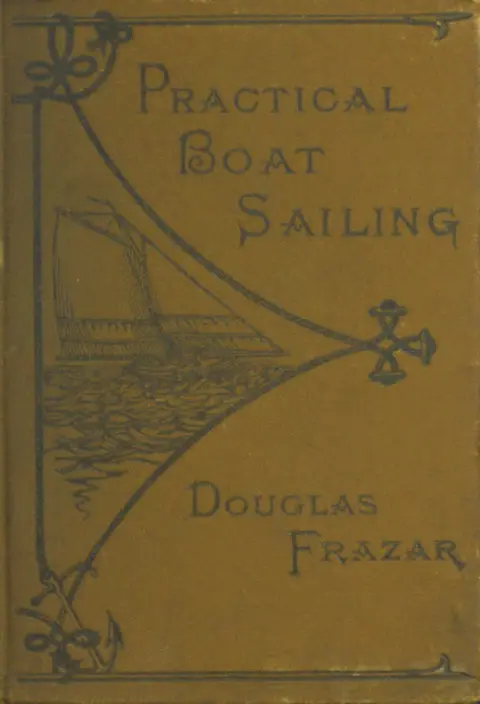
Practical Boat-Sailing: A Concise and Simple Treatise
Douglas Frazar

THE CLASSIC COLLECTION · 1885
"Perseverance Island; Or, The Robinson Crusoe of the Nineteenth Century" by Douglas Frazar is a novel written in the late 19th century. This adventure story follows a character who, after a series of maritime disasters, finds himself shipwrecked on a deserted island in the South Pacific. Drawing on his ingenuity and skills, he attempts to survive and thrive in this unfamiliar environment, focusing on themes of resilience, resourcefulness, and the indomitable human spirit. The opening of the narrative introduces the protagonist and provides the backstory of his life as a sailor, detailing his aspirations for adventure that culminate in joining the ill-fated expedition aboard the schooner "Good Luck." After navigating treacherous seas and facing storms, the crew suffers devastating losses, leading to the shipwreck. The protagonist survives the chaos of the storm, finds himself washed ashore on an unknown island, and begins to contemplate his situation, setting the stage for his struggle for survival. Filled with emotional depth and survival challenges, the beginning wastes no time immersing the reader into the hardships faced by the protagonist, highlighting both his vulnerabilities and strengths.
Introduction adapted from the source catalogue; source summaries may be automatically generated.
Free to read · English · 103,200 words · No account needed
MAKE TIME FOR A GOOD BOOK
On by default. Untick to stop anonymous reading totals. Each page counts after 10 seconds in view. How this works.
Anonymous counting is on unless you have switched it off.
This being done, a detail of the crew was made to build this hut for my accommodation. The weather being cool, and thinking that we had found a splendid stronghold for the future, I commanded several goats to be landed, and as my men strolled hither and thither they were instructed to plant a sweet potato once in a while, of which we had plenty on board, and some seeds of the tobacco plant were also planted, I believe, at nearly the other side of the island, near some river. I made up my mind that this should be our rendezvous in the future, for I could not find the island put down upon any chart, and I believed it utterly unknown. I made known my resolves to my subordinates, and they to the crew, which seemed to please them much; and now, having gotten everything in readiness and a watch set aboard the vessel, casks of brandy were hoisted from the hold and landed upon the island. To these were added a large stock of provisions; and an enormous tent was erected of spare sails. Details by lot were made of men to cook, and a watch to keep guard in the vessel, and then for three days all discipline was relaxed, and drunken orgies too fearful to be related commenced, at the end of which a new detail of the most sober was made for the watch on the ship and the cooking, when the same recommenced. During these six days I withdrew with one servant from all this into this hut that I had ordered built, and passed the time as pleasantly as I could, with trips once in a while to the vessel and back. Each day I received the usual report of so many men killed in drunken brawls or so many wounded; but I never moved a finger to stop the affray, feeling that this was the best way to allow them to work off their bad blood and passions. It was, however, on the seventh day that I saw cause for alarm, and, alas! too late. I had noticed that there seemed to be some trouble brewing, and that my second in command, when he came to make his daily report, had not the air of respect that he used to have, and that the reports of serious fights were more frequent than on former carousals of a similar nature. Why, here were some five men killed and seven wounded since we had been on the island, and upon inquiry I found that they were all men whom I knew were devoted to me, if a pirate may use that term. All at once it flashed upon my brain that my second in command was inciting the crew to my downfall and his own elevation. In fact, the matter was made too apparent on that very day; for, after hearing the report, I was sitting at the door of this hut when an unearthly confusion and din commenced at the large tent and the air was filled with the report of pistols (all guns being positively forbidden on shore), and shouts and cries of men in terrible earnest mixed with the screams of the wounded. I buckled on my cutlass and picked up my two pistols, and, calling upon my servant to follow me, made for the tent; but before I arrived there I was met by a retreating body of my men who were making for my hut, crying out, "Treason, treason, treason!" followed by another portion of the crew, at the head of whom was my second in command, all disguise now thrown off, cheering his part of the crew on to my destruction. I gathered about me the retreating men loyal to me, and we faced the rest. The first man who advanced I shot dead, the second also, and the day had almost turned in my favor when, with a well-directed pistol-shot and with a curse mingled with the report, my rival brought me to the ground, the ball having passed through my chest and out at the back. I fell to the ground, and in one instant my prestige of years was gone. When I say gone I mean that it was so far gone that it barely saved my life, for the men still stood quite firm upon my side, when, with the wit and talent worthier of a better cause, my rival moved between the conflicting lines and called for a truce, uttering at the same time the following words: "Now look a-here, shipmates, what is the use of our cutting each other's throats any more? There lies your late captain, still alive to be sure, but good for nothing more. I am bound to be captain of the 'Rover,' and you see I have more men to back me, and a head to them also, than you have. What's the use of our cutting each other's throats when we have some ten or fifteen millions to spend? If you don't like to give in I only admire you the more for it; and if you will join my side and lay down your arms, I promise before you all not to injure one hair on the head of our late captain, but to leave him here on this island without further molestation. Come, that is a fair offer. You have done enough for honor. Do you accept? Why, who have you on your side that can navigate a vessel? Who will give you as much liberty and money as I will? We will live in common, and have no more of this damned supposed superiority. But as for Captain Sutland, dead or alive, he and I can't sail in the same vessel again. I will do all I say, and swear it,"--and amidst the wildest cheers of excitement and drunken enthusiasm, I found myself lying deserted and, as I believed, bleeding to death. After some little hand-shaking and congratulations, however, I was, by order of my rival, carried carefully to this hut, where my wound was examined by the doctor and proclaimed not necessarily mortal. Food and water in profusion, fuel for my fire, and anything that I should naturally require during my convalescence, should it ever take place, was, with the reckless generosity of sailors, piled up near me; and with a few farewells from some who really cared for me, I was left alone, my whole crew, under the command of their new leader, working like beavers to take down their tent, get on board and to sea, and thence to some haven of rest, where they could as quickly as possible squander the wealth so criminally acquired. They had placed me upon my wooden bed, so that I could look out of the open window upon the bay and ship, and see their departure. It was nearly sundown before they had everything ready, and with a heavy heart I heard them at work weighing the anchor, leaving me alone to solitude, my outraged God, and probably death.
Your reading position is saved on this browser. Take it to another device with a library code. Reading pages adapt to text, rather than matching a printed edition.
BEHIND THE BOOK
This eBook is for the use of anyone anywhere in the United States and most other parts of the world at no cost and with almost no restrictions whatsoever. You may copy it, give it away or re-use it under the terms of the Project Gutenberg License included with this eBook or online at www.gutenberg.org. If you are not located in the United States, you will have to check the laws of the country where you are located before using this eBook. Read the source licence.
The original source file, including credits and licence, is retained by this library. Request an original-format copy at no charge. Please include the book title and Project Gutenberg identifier #46128.
KEEP YOUR CURIOSITY GOING
Wilfrid Scawen Blunt
Wilfrid Scawen Blunt

E. W. (Edgar Watson) Howe
Coulson Kernahan

Maurice Baring
Frances Wright