THE CLASSIC COLLECTION✦An outlaw’s diary: the CommuneCLASSIC FREE BOOKS
An outlaw’s diary: the Commune
Cécile Tormay
THE CLASSIC COLLECTION · 1885
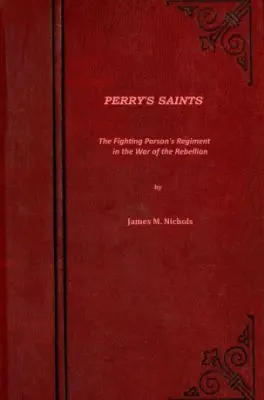
"Perry's Saints; Or, The Fighting Parson's Regiment in the War of the Rebellion" by James M. Nichols is a historical account written in the late 19th century. The book recounts the experiences of the 48th New York State Volunteers, known as "Perry's Saints," during the American Civil War, particularly focusing on their formation and service under Colonel James H. Perry. It aims to present an authentic portrayal of army life and the individual and collective experiences of soldiers fighting for the Union. The opening of this narrative sets the stage for the Civil War, highlighting the tension and causes behind the conflict, particularly the issue of slavery. It introduces Colonel James H. Perry, a former preacher turned soldier, showcasing his transformation from a man of peace to a commanding officer who inspires his regiment. The early chapters detail the regiment's formation, the eagerness of the soldiers, and their initial enthusiasm for service as they prepare to face the unknown challenges of war. Through snippets of personal reflections and the experiences of the soldiers, the story captures not only the historical context of the conflicts but also the emotional landscape of those who fought.
Introduction adapted from the source catalogue; source summaries may be automatically generated.
Free to read · English · 46,880 words · No account needed
MAKE TIME FOR A GOOD BOOK
On by default. Untick to stop anonymous reading totals. Each page counts after 10 seconds in view. How this works.
Anonymous counting is on unless you have switched it off.
The two months spent in St. Augustine passed quickly and pleasantly. Occasionally, the pickets were fired upon, but no regular attack was made. Communication was undoubtedly kept up between the citizens and the enemy, outside the city, in spite of the great precautions taken to prevent it. Applicants for admission to the city were reported waiting at the picket stations almost daily, some of whom were received and others turned away. Visitors came to the city by almost every steamer, and the abundant leisure of most of the officers allowed of their generous entertainment. From my office I looked across the square, past the old building with open front, formerly used as a slave mart but now converted into a general market, to the office of the commissary--Lieutenant Ingraham; and frequently, when the duties of the forenoon were well over, we signalled to each other to drop work, and engaged in some form of recreation together. During our stay at St. Augustine we were thrown much together, and the pleasant feelings which I had always entertained towards him ripened into a strong attachment. I think of him now with feelings of peculiar sadness. Some time before the battle of Cold Harbor, his promotion rendered it necessary that he should take his place as an officer of the company to which he was attached. Previous to this he had always been detailed in the quartermaster's or commissary departments. At that battle, while we occupied the Confederate line of works which we had just captured, we were subjected to a merciless enfilading fire, which we could neither avoid nor return effectively. Lieutenant Ingraham, in command of his company, had pressed to the very front, and, while encouraging his men by word and example, he suddenly dropped from my side, and I never saw him more. With a great rush, the enemy was upon us both in front and flank, and we were pushed through the woods, and our wounded and dead were left to their care. Ingraham was a good soldier, a good friend, and a good man. October 3, a steamer, containing the 24th Massachusetts regiment arrived at the dock, and we were ordered to prepare for our departure. October 6, we bade good-by to the old city, to the many good people who had done so much to make our stay among them contented and restful, and to the peculiar comforts and pleasures, which, to so many, were the only suggestion of home that came into their lives during their long term of service. On the 7th we reached Beaufort, S.C., and reported to General Saxton. The next day the writer was ordered by the colonel to proceed with four companies to Seabrook Landing, to guard the shipping. This point was rather an important one at the time, being used as a coaling station and for naval repairs. November 9, one hundred and fifty-six conscripts arrived from New York and were distributed to the various companies of the regiment. November 13, companies G and I, so long detached as garrison of Fort Pulaski, joined us at Hilton Head, where regimental headquarters were then established. November 20, the subject of re-enlistment as veterans began to be agitated, and the promise of thirty days furlough and a bounty were strong inducements. November 25, having business at Morris Island, I took occasion to visit Fort Wagner, which had been rebuilt under the supervision of Captain Eaton of the New York Engineer regiment, a most excellent officer, who seemed almost to belong to us, having had charge of the repairing of Fort Pulaski while we were there as garrison. With him I wandered about the fort, and around the localities marked by special events connected with the siege and assault. But memory was too busy with painful scenes to permit of much satisfaction. As we talked together of old times, and recalled the names of those with whom we had been intimate at Pulaski, it seemed impossible to realize that the clean white sand on which we were then treading had drank in the life-blood of so many, and the clear, bright, sparkling water, that idly played upon the beach, had reached out its eager tongue to lick up the cruel stains. The air was mild, not a cloud obscured the sun's rays, and the silence that reigned about us was profound, almost oppressive, but, as we recalled the past, the din of battle rang in our ears; the flash of musketry pierced through the darkness of night and lighted up a scene of carnage; the groans and cries of the wounded and dying mingled with the shouts and yells and fierce oaths of combatants. The spirit of peace rested upon the landscape which lay spread out before us, and upon the face of the quiet waters which, with gentle embrace, pressed lightly against the shore; but the past came back to us like a mighty surging torrent; a tempest raged; darkness and horror enveloped us, and we turned away. We could not endure it, and were glad to get back to camp, to lose the thought of the past in the performance of present duty.
Your reading position is saved on this browser. Take it to another device with a library code. Reading pages adapt to text, rather than matching a printed edition.
BEHIND THE BOOK
This eBook is for the use of anyone anywhere in the United States and most other parts of the world at no cost and with almost no restrictions whatsoever. You may copy it, give it away or re-use it under the terms of the Project Gutenberg License included with this eBook or online at www.gutenberg.org. If you are not located in the United States, you will have to check the laws of the country where you are located before using this eBook. Read the source licence.
The original source file, including credits and licence, is retained by this library. Request an original-format copy at no charge. Please include the book title and Project Gutenberg identifier #58480.
KEEP YOUR CURIOSITY GOING
Cécile Tormay

Moritz Busch
John L. Ransom
Frances Wright
Cécile Tormay

Mabel Potter Daggett