THE CLASSIC COLLECTION✦An outlaw’s diary: the CommuneCLASSIC FREE BOOKS
An outlaw’s diary: the Commune
Cécile Tormay
THE CLASSIC COLLECTION · 1885
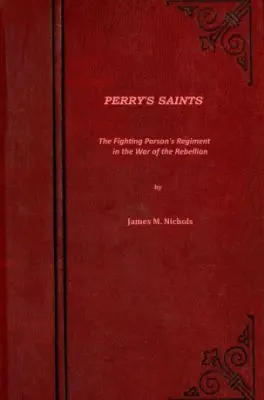
"Perry's Saints; Or, The Fighting Parson's Regiment in the War of the Rebellion" by James M. Nichols is a historical account written in the late 19th century. The book recounts the experiences of the 48th New York State Volunteers, known as "Perry's Saints," during the American Civil War, particularly focusing on their formation and service under Colonel James H. Perry. It aims to present an authentic portrayal of army life and the individual and collective experiences of soldiers fighting for the Union. The opening of this narrative sets the stage for the Civil War, highlighting the tension and causes behind the conflict, particularly the issue of slavery. It introduces Colonel James H. Perry, a former preacher turned soldier, showcasing his transformation from a man of peace to a commanding officer who inspires his regiment. The early chapters detail the regiment's formation, the eagerness of the soldiers, and their initial enthusiasm for service as they prepare to face the unknown challenges of war. Through snippets of personal reflections and the experiences of the soldiers, the story captures not only the historical context of the conflicts but also the emotional landscape of those who fought.
Introduction adapted from the source catalogue; source summaries may be automatically generated.
Free to read · English · 46,880 words · No account needed
MAKE TIME FOR A GOOD BOOK
On by default. Untick to stop anonymous reading totals. Each page counts after 10 seconds in view. How this works.
Anonymous counting is on unless you have switched it off.
Of some of those who were my companions during the progress of the war I have made mention, but in the final review of narrative I am reminded of many others whom I have omitted, to whose worth I could testify with earnestness and feeling. I am conscious, also, of not having given sufficient prominence to the social life in the army. Our duties were oftentimes severe, trying, and perilous; but it was not all duty, and my intercourse with many if not most of the officers whom I met was both elevating and stimulating, especially within our own regiment. I remember well my first introduction to Captain (afterwards Lieutenant-Colonel) Strickland. He was officer of the day when I made my first application to be admitted to the camp at Fort Hamilton. "What are you here for?" he asked, to which I replied that I hoped to become an officer of the regiment. "Impossible!" said he, "and I advise you to take yourself off as quickly as possible, as every officer has been selected, and there isn't a ghost of a chance for you." Further explanation, however, effected an entrance to the camp; and before the guard was relieved I had been regularly mustered into the service, as second lieutenant of Company G. Notwithstanding the brusqueness of his first salutation, I found him to be an educated gentleman, and my relations with him while he remained in the service were intimate and most agreeable. Of Lockwood I have already written, but have only faintly expressed the constant pleasure which I enjoyed in his companionship. Hurst and Edwards, both sacrificed at Wagner, although of diverse habits and tastes, contributed their full share to the social life of the regiment, while Carleton, Miller and Bodine are all living to enjoy the memory of their faithful service in camp and field. Among the younger officers was Dr. J. Mott Throop, assistant surgeon. I could not forget him; for, while lying in the hospital, stricken down with fever, he brought me the welcome papers which made me free again. Better than medicine had been his friendly offices; but better than all else combined was the release from army life when there could be no hope of restoration to health, and consequently no further efficient service. In all the world he could find no lovelier scenes than now surround him in his home among the Berkshire Hills. As he goes his daily round of ministration to the sick and suffering, may the beauty which appeals to him from hill and mountain side and peaceful valley minister to his soul continual comfort and joy, is the sincere wish of his friend and former comrade. Now, having told my story and rendered these forgotten tributes, I seem to hear the patient reader who has followed me to this point say: Why don't he add the finis and have done. So perhaps I should. But may I not be indulged in a few reflections which seem to claim a relationship with the events herein narrated? Since the surrender at Appomattox, another generation has arisen, and many of those who were too young to participate in, or even understand, the questions involved in the war have grown to manhood and are occupying places in the State and National councils. The war is indeed over, but to these, and to all others who aspire to official positions,--yes, and equally to the people at large,--there remain duties to perform, difficulties and perils to encounter. Not so great, it may be, as those here narrated, but such as shall test the loyalty and patriotism as surely if not so severely as in the scenes herein depicted. The colored people of the South have been endowed with the full rights of citizenship under the law; but the task remains of fitting them for the exercise of this great privilege, and protecting them against injustice and wrong. Under the influence of a discontented and vicious class of emigrants from the old world who have brought from its oppressions and want a spirit of rebellion against even the most necessary restraints of society, serious divisions have been created. The poorer and those who call themselves the laboring class have arrayed themselves in organized antagonism against those more sagacious and more successful than themselves. The cry of the communist of Paris is being repeated here and must be heeded, or the most unhappy results may follow. May we rest, then, in blind security, or shall the men of this and coming generations rather emulate the spirit of their fathers who, with true devotion to principle and duty, freely offered all, even life itself, on the altar of their country? Let the questions which now occupy the minds of the people be settled on the broadest principles of justice. Let every wrong that now disturbs the peace and well-being of society be met and adjusted, with the fullest regard for the welfare of the humblest and most dependent, and may the spirit which animated the "Saints" be the promise and fulfilment of the hopes and prayers of those who sought these shores whereon to found a government which should guarantee to all men freedom, justice, and equality.
Your reading position is saved on this browser. Take it to another device with a library code. Reading pages adapt to text, rather than matching a printed edition.
BEHIND THE BOOK
This eBook is for the use of anyone anywhere in the United States and most other parts of the world at no cost and with almost no restrictions whatsoever. You may copy it, give it away or re-use it under the terms of the Project Gutenberg License included with this eBook or online at www.gutenberg.org. If you are not located in the United States, you will have to check the laws of the country where you are located before using this eBook. Read the source licence.
The original source file, including credits and licence, is retained by this library. Request an original-format copy at no charge. Please include the book title and Project Gutenberg identifier #58480.
KEEP YOUR CURIOSITY GOING
Cécile Tormay

Moritz Busch
John L. Ransom
Frances Wright
Cécile Tormay

Mabel Potter Daggett