THE CLASSIC COLLECTION✦An outlaw’s diary: the CommuneCLASSIC FREE BOOKS
An outlaw’s diary: the Commune
Cécile Tormay
THE CLASSIC COLLECTION · 1885
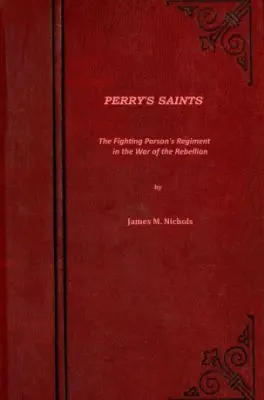
"Perry's Saints; Or, The Fighting Parson's Regiment in the War of the Rebellion" by James M. Nichols is a historical account written in the late 19th century. The book recounts the experiences of the 48th New York State Volunteers, known as "Perry's Saints," during the American Civil War, particularly focusing on their formation and service under Colonel James H. Perry. It aims to present an authentic portrayal of army life and the individual and collective experiences of soldiers fighting for the Union. The opening of this narrative sets the stage for the Civil War, highlighting the tension and causes behind the conflict, particularly the issue of slavery. It introduces Colonel James H. Perry, a former preacher turned soldier, showcasing his transformation from a man of peace to a commanding officer who inspires his regiment. The early chapters detail the regiment's formation, the eagerness of the soldiers, and their initial enthusiasm for service as they prepare to face the unknown challenges of war. Through snippets of personal reflections and the experiences of the soldiers, the story captures not only the historical context of the conflicts but also the emotional landscape of those who fought.
Introduction adapted from the source catalogue; source summaries may be automatically generated.
Free to read · English · 46,880 words · No account needed
MAKE TIME FOR A GOOD BOOK
On by default. Untick to stop anonymous reading totals. Each page counts after 10 seconds in view. How this works.
Anonymous counting is on unless you have switched it off.
On the night of the assault, July 18, there was no sleep in the 48th. It was past midnight when the last of the men came in from the fort, and the horrible scenes through which they had passed, and the anguish of grief over friends and comrades, maimed and wounded, or lying silent in that pit of darkness and blood, forbade all thought of rest. Colonel Barton was wounded through the thigh, Lieutenant-Colonel Green, Captains Farrell and Hurst, and Lieutenant Edwards were dead, and Captain Paxson was mortally wounded. Captains Lockwood, Elfwing, and Swartwout, and Lieutenants Miller, Barrett, and Acker, were also severely wounded. It was a heart-rending sight when, on the following morning, I visited them in the steamer which was to convey them to Hilton Head. No one could doubt the quality of the 48th now. The heroism of the men was only equalled by that of their officers. None could have been braver. All the wounded officers had made their escape with the exception of Lieutenants Taylor and Fox, who were left in the hands of the Confederates. While we mourned for our immediate friends and associates, we did not forget that our brigade commander, General Strong, was among the fatally wounded. I had been accustomed to report to him in person for commands for the battery; and, of all the men I have ever known, few have left such deep and such pleasant impressions on my memory as he--of the gentlest and most winning manners, yet always the thorough soldier, brave even to rashness, kind, courteous, and considerate, he grew more and more beloved as he became better known. He never asked men to go where he would not lead the way.
On the night of the assault, my battery was stationed at the outer lines of our defences, on the shore, to resist any counter attack which the Confederates might make, and I witnessed much of its horrors. As one after another of the wounded came in, eager and anxious were the questions asked, until the return of the torn and broken remnants of the proud columns which a few moments before had rushed to victory told too plainly the story of savage butchery and defeat. Well do I remember the appearance of the negro soldiers as they came straggling back from the front that night, for I was not favorably impressed by their conduct. I have often thought that their presence in the attacking column was a mistake, and that the hatred and disgust which they caused in the minds of the Confederates overcame every other feeling, to such an extent that the instinct of self-defence was converted into brutal ferocity, as was manifest in their treatment not only of the colored soldiers themselves, but the gallant officers who led them. With the highest respect for the opinions of those who have testified to the discipline and valor of the negro troops, I am impelled to say, in spite of the criticisms that my statement may provoke, that my own observation and experience, as well as the experience of others, have convinced me that the prevailing opinion, especially in New England, of the valuable services rendered by colored troops in actual conflict, is erroneous, and that their most effective work during the war was done with the pick and spade. If quickness of perception and independence of thought and action are desirable qualities in a soldier, this conclusion seems both obvious and necessary. After the repulse of the 18th, the Billinghurst and Regua battery was kept at the front all the time, and, although protected somewhat by earthworks, there was no complete guard against the shells which night and day exploded all about us. One of my men was sitting in the sand just outside the battery, when a shell from Wagner literally ploughed him out of his seat. Fortunately, it did not explode, and he only experienced a good shaking-up. Night after night we were obliged to keep watch of those magnificent streams of light which, proceeding from the mortars at Castle Pinkney, seemed charged with intelligence as well as powder, for as they moved through the air and reached the point over our batteries, they appeared to poise themselves as if to select the most vulnerable point, when they descended with a peculiar whizzing sound into our very midst. Our only recourse was, by determining on which side the earthworks they would fall, to make the most expeditious movement to the other side, to await the explosion.
Your reading position is saved on this browser. Take it to another device with a library code. Reading pages adapt to text, rather than matching a printed edition.
BEHIND THE BOOK
This eBook is for the use of anyone anywhere in the United States and most other parts of the world at no cost and with almost no restrictions whatsoever. You may copy it, give it away or re-use it under the terms of the Project Gutenberg License included with this eBook or online at www.gutenberg.org. If you are not located in the United States, you will have to check the laws of the country where you are located before using this eBook. Read the source licence.
The original source file, including credits and licence, is retained by this library. Request an original-format copy at no charge. Please include the book title and Project Gutenberg identifier #58480.
KEEP YOUR CURIOSITY GOING
Cécile Tormay

Moritz Busch
John L. Ransom
Frances Wright
Cécile Tormay

Mabel Potter Daggett