THE CLASSIC COLLECTION✦An outlaw’s diary: the CommuneCLASSIC FREE BOOKS
An outlaw’s diary: the Commune
Cécile Tormay
THE CLASSIC COLLECTION · 1885
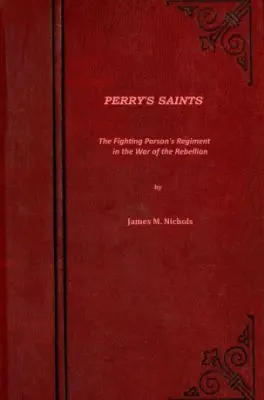
"Perry's Saints; Or, The Fighting Parson's Regiment in the War of the Rebellion" by James M. Nichols is a historical account written in the late 19th century. The book recounts the experiences of the 48th New York State Volunteers, known as "Perry's Saints," during the American Civil War, particularly focusing on their formation and service under Colonel James H. Perry. It aims to present an authentic portrayal of army life and the individual and collective experiences of soldiers fighting for the Union. The opening of this narrative sets the stage for the Civil War, highlighting the tension and causes behind the conflict, particularly the issue of slavery. It introduces Colonel James H. Perry, a former preacher turned soldier, showcasing his transformation from a man of peace to a commanding officer who inspires his regiment. The early chapters detail the regiment's formation, the eagerness of the soldiers, and their initial enthusiasm for service as they prepare to face the unknown challenges of war. Through snippets of personal reflections and the experiences of the soldiers, the story captures not only the historical context of the conflicts but also the emotional landscape of those who fought.
Introduction adapted from the source catalogue; source summaries may be automatically generated.
Free to read · English · 46,880 words · No account needed
MAKE TIME FOR A GOOD BOOK
On by default. Untick to stop anonymous reading totals. Each page counts after 10 seconds in view. How this works.
Anonymous counting is on unless you have switched it off.
Lying alongside, but extending much farther up the river than Bird, was McQueen's Island, the upper extremity of which was bounded by St. Augustine's Creek, which connected the Savannah with Wilmington River, and afforded a channel of communication with Fort Pulaski by means of small boats. Across St. Augustine's Creek, the telegraph wire connecting the city with the fort had been stretched on tall, heavily constructed spindles. The wire had been destroyed some time before, but the fact that steamboats from Savannah, at some risk from our battery, continued to come down to this point, and seemed busily engaged in some operations near these spindles, determined Major Beard, who commanded on the island, to investigate the matter, and, if possible, to bring away a scow which was known to be lying in that vicinity. The investigation was very proper, but the object of getting the scow we never understood. However, a detail was made, a boat was dragged across McQueen's Island to Wilmington River, and from that point a small party, with a guide supposed to be acquainted with the region, started for these spindles. It was a curious experience, paddling along under the overhanging banks in perfect silence, save when the vivid imagination of some one of the party pictured a Confederate picket from some peculiar conformation of the shore or eccentric growth of bush or shrub, when a word of caution would stay our progress until cooler eyes discovered the deception. One of the party even descried a picket beside its camp fire, whose bright glow shed a clear light upon their waiting figures, but to all the others there was but the blackness of darkness, and we passed on without molestation. The leaky little dug-out, which required constant bailing to keep it afloat, had room for neither rest nor comfort. Hour after hour we paddled along with the incoming tide, vainly hoping to reach the point we sought, every moment taking us farther within the lines of the enemy, and when, at last, completely lost amidst a maze of devious, winding creeks, the tide turned, we turned also, and by marvellous good fortune found our way back before the morning dawn discovered us to the Confederates. Determined to have that scow, and equally determined to have a better knowledge of the country before a second attempt was made, a small party was started one bright afternoon, which, rowing some distance up the river, landed on McQueen's Island, and striking through the canes, made straight for the spindles. We took no notice of the picket on the other side of the island, but kept right on, until, approaching the shore of the creek, the men were held back behind the trees and bushes which grew along the bank, until we could be assured of no special danger. Satisfied on this point, they were allowed to come on, and we gathered along the shore, and endeavored to impress upon each others' minds the direction of the creek, the location of the scow, and the probable means of reaching it from Wilmington River. The order to return had been given, when suddenly the Confederates appeared from behind the timbers of the spindles opposite, and not a hundred yards distant, and from the bushes near, and the order to lie down was given none too quickly to avoid the bullets which came whistling over our heads in close proximity. No one of our party was hurt, and we never received an official report of the number killed and wounded by our return fire. The locality was not sufficiently attractive to induce us to remain until the report was made up. Not only the danger of being cut off by the picket we had passed, but the shells from our own battery soon began to trouble us, for, as it afterwards transpired, one of our number, unaccustomed to the sound of bullets, became so thoroughly frightened at the first discharge that he started for camp by the most direct course, and on his arrival announced that we had been attacked by greatly superior numbers, and that he had been sent back for re-enforcements. Our own battery was soon throwing shot and shell over our heads, much to our discomfort,--for those missiles often make serious mistakes, and fall where they are least intended,--and all that could be spared were preparing to set out to rescue us from the peril to which we were exposed, when our appearance on the river put an end to the alarm. On reaching the island, we found the utmost excitement prevailing, and that every preparation had been made for the reception and care of our wounded. The author of all this confusion was discovered to be suffering the extreme effects of fright, and in a pitiable condition of mental and physical prostration. His youth, for he was a mere boy, shielded him from the consequences of his conduct, which otherwise would have been very serious. He was never permitted, however, to forget the circumstances and effects of his fright. Soon after this I was sent to Wilmington River to intercept the despatch boats, which, we had reason to suppose, found their way to the fort, but although many nights were spent in watching, while the miasma from the swamps was doing its deadly work, penetrating to the very bone and marrow, and preparing many a poor fellow for his final rest, the creeks and rivers which intersected the country in all directions afforded abundant means for avoiding us, and we made no captures.
Your reading position is saved on this browser. Take it to another device with a library code. Reading pages adapt to text, rather than matching a printed edition.
BEHIND THE BOOK
This eBook is for the use of anyone anywhere in the United States and most other parts of the world at no cost and with almost no restrictions whatsoever. You may copy it, give it away or re-use it under the terms of the Project Gutenberg License included with this eBook or online at www.gutenberg.org. If you are not located in the United States, you will have to check the laws of the country where you are located before using this eBook. Read the source licence.
The original source file, including credits and licence, is retained by this library. Request an original-format copy at no charge. Please include the book title and Project Gutenberg identifier #58480.
KEEP YOUR CURIOSITY GOING
Cécile Tormay

Moritz Busch
John L. Ransom
Frances Wright
Cécile Tormay

Mabel Potter Daggett