
Piccino, and other child stories
Frances Hodgson Burnett

THE CLASSIC COLLECTION · 1878
"Miss Crespigny" by Frances Hodgson Burnett is a novel written in the late 19th century. The story revolves around the enigmatic Lisbeth Crespigny, a young woman with a complex personality and a tumultuous past, navigating relationships and societal expectations in her quest for independence and self-discovery. The book introduces her interactions with figures such as her patroness, Mrs. Despard, and Hector Anstruthers, who is linked to her history through a former engagement that she now dismisses. At the start of the story, we meet Lisbeth as she expresses a sense of restlessness and dissatisfaction with social gatherings, showcasing her self-aware and somewhat rebellious nature. She has recently left her sheltered life with her aunts and is now living with Mrs. Despard. The narrative captures her sharp wit and striking beauty, hints at her emotional struggles, and sets the stage for her encounters with Anstruthers, who has matured since their last meeting. Lisbeth's conflicting feelings about her past, her self-image, and her influence over those around her are explored as she interacts with various characters and prepares for potential confrontations with her former life.
Introduction adapted from the source catalogue; source summaries may be automatically generated.
Free to read · English · 38,158 words · No account needed
MAKE TIME FOR A GOOD BOOK
On by default. Untick to stop anonymous reading totals. Each page counts after 10 seconds in view. How this works.
Anonymous counting is on unless you have switched it off.
“I had a reason of my own for coming here,” he went on, “apart from Miss Clarissa’s commands. I want to bid you good-by.”
“You must be going,” she commented, “very early in the morning.” And yet her heart was beating like a trip-hammer.
“It is not that,” was his reply, “though I am going early. I had a whim--you remember my whim about the song--a fancy that I should like to say my good-by here, where I said a good-by once before.”
“It is easily said,” answered Lisbeth, and held out one of her hands.
“Good-by.”
He took it, with a pretense at a coolness as masterly as her own, but he could not keep it up. He gave way to some swift, passionate, inexplicable prompting, and in an instant had covered it with kisses, had even fiercely kissed her slender wrist.
She snatched it from his grasp, breathless with anger, forgetting her resolve to control herself.
“What do you mean?” she cried. “You are mad. How dare you?”
He drew back a step, confronting her defiantly.
“I do not know what I mean,” he answered, “unless, as you say, I am mad. I think I am mad; so, being a madman, I will not ask you to pardon me. It was a farewell. It is over now, however. Will you let me take your roses, and carry them to the house?”
She vouchsafed him no answer, but turned away, and left him to follow, if he chose. Her helplessness against him drove her fairly wild. Nothing she could say, or do, would ever wipe out the memory of those mad kisses. He either loved or despised her utterly; and remembering his manner toward Georgie, she could only conclude that he despised her, and had offered her a deadly insult. The blood shot into her cheeks, like a rush of fire, and her eyes blazed ominously.
“My dear Lisbeth,” bleated good little Miss Clarissa, the moment she saw her, “you have caught fresh cold, I am convinced. You are in a high fever.”
Fever, indeed! She had never been in such a fever in her life; but it was a fever of anger and humiliation.
“I think it probable,” she said, seriously, “that I am going to have measles, or scarlatina, Aunt Clarissa. Which would you prefer?”
Georgie came up stairs, long after she had shut herself in her room, to find her sitting by the open window, looking worn out and wretched.
“Lisbeth,” she ventured, “is it possible that you are going to be
ill?”
Your reading position is saved on this browser. Take it to another device with a library code. Reading pages adapt to text, rather than matching a printed edition.
Frances Hodgson Burnett

Frances Hodgson Burnett

Frances Hodgson Burnett
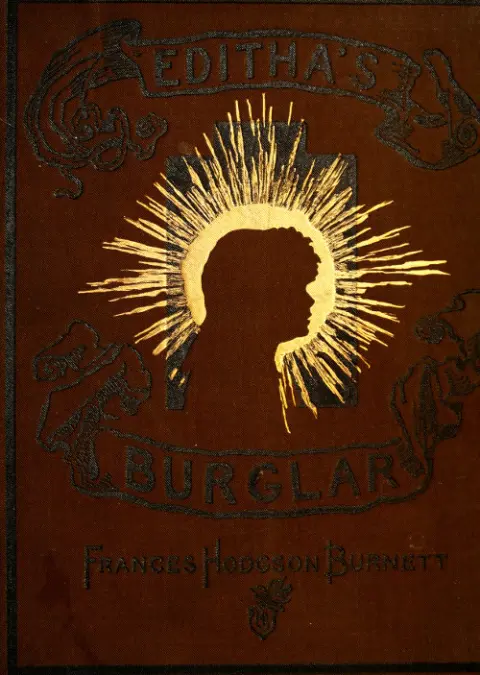
Frances Hodgson Burnett
BEHIND THE BOOK
This eBook is for the use of anyone anywhere in the United States and most other parts of the world at no cost and with almost no restrictions whatsoever. You may copy it, give it away or re-use it under the terms of the Project Gutenberg License included with this eBook or online at www.gutenberg.org. If you are not located in the United States, you will have to check the laws of the country where you are located before using this eBook. Read the source licence.
The original source file, including credits and licence, is retained by this library. Request an original-format copy at no charge. Please include the book title and Project Gutenberg identifier #57099.
KEEP YOUR CURIOSITY GOING
Coulson Kernahan

Maurice Baring
Frances Wright
Cécile Tormay

Frederic Jesup Stimson

W. H. P. (William Henry Pope) Jarvis