
Piccino, and other child stories
Frances Hodgson Burnett

THE CLASSIC COLLECTION · 1878
"Miss Crespigny" by Frances Hodgson Burnett is a novel written in the late 19th century. The story revolves around the enigmatic Lisbeth Crespigny, a young woman with a complex personality and a tumultuous past, navigating relationships and societal expectations in her quest for independence and self-discovery. The book introduces her interactions with figures such as her patroness, Mrs. Despard, and Hector Anstruthers, who is linked to her history through a former engagement that she now dismisses. At the start of the story, we meet Lisbeth as she expresses a sense of restlessness and dissatisfaction with social gatherings, showcasing her self-aware and somewhat rebellious nature. She has recently left her sheltered life with her aunts and is now living with Mrs. Despard. The narrative captures her sharp wit and striking beauty, hints at her emotional struggles, and sets the stage for her encounters with Anstruthers, who has matured since their last meeting. Lisbeth's conflicting feelings about her past, her self-image, and her influence over those around her are explored as she interacts with various characters and prepares for potential confrontations with her former life.
Introduction adapted from the source catalogue; source summaries may be automatically generated.
Free to read · English · 38,158 words · No account needed
MAKE TIME FOR A GOOD BOOK
On by default. Untick to stop anonymous reading totals. Each page counts after 10 seconds in view. How this works.
Anonymous counting is on unless you have switched it off.
A week or so after Anstruthers’ departure Georgie decided that her visit must come to an end. Mamma was not so very well, and poor papa had a touch of his old enemy, the gout; and, really she had been away from home a long time. Did not Lisbeth think that they had better return to London, even though Pen’yllan was still as delightful as ever?
Then they had a surprise indeed.
Lisbeth, who had been listening, in a rather absent manner, aroused
herself to astonish them.
“I think,” she said, “that if you do not mind making the journey alone, Georgie, I should like to stay in Pen’yllan this winter.”
“In Pen’yllan?” cried Georgie. “All winter, Lisbeth?”
“At Pen’yllan? Here? With us?” cried Miss Millicent, and Miss Hetty, and Miss Clarissa, in chorus.
“Yes,” answered Lisbeth, in her most non-committal fashion. “At Pen’yllan, Aunt Hetty. Here, Aunt Millicent. With you, Aunt Clarissa.”
The Misses Tregarthyn became quite pale. They glanced at each other, and shook their heads, ominously. This portended something dreadful, indeed.
“My love,” faltered Miss Clarissa.
“What?” interposed Lisbeth. “Won’t you let me stay? Are you tired of me? I told you that you would be, you know, before I came.”
“Oh, my dear!” protested Miss Clarissa. “How can you? Tired of you? Sister Hetty, sister Millicent! Tired of her?”
“We only thought, my love, that it would be so dull to one used to--to the brilliant vortex of London society,” ended Miss Millicent, rather grandly.
“But if I think that it will not,” said Lisbeth. “I am tired of the ‘brilliant vortex of London society.’”
She got up from her chair, and went and stood by Georgie, at the
window, looking out.
“Yes,” she said, almost as if speaking to herself, “I think I should
like to stay.”
The end of it was, that she did stay. She wrote to Mrs. Despard, that very day, announcing her intention of remaining. Georgie, in packing her trunks, actually shed a few silent tears among her ruffs and ribbons. To her mind, this was a sad termination to her happy visit. She knew that it must mean something serious, that there must be some powerful motive at the bottom of such a resolution. If Lisbeth would only not be so reserved. If it was only a little easier to understand her.
“We shall miss you very much, Lisbeth,” she ventured, mournfully.
“Not more than I shall miss you,” answered Lisbeth, who at the time stood near, watching her as she knelt before the box she was packing.
Georgie paused in her task, to look up doubtfully.
Your reading position is saved on this browser. Take it to another device with a library code. Reading pages adapt to text, rather than matching a printed edition.
Frances Hodgson Burnett

Frances Hodgson Burnett

Frances Hodgson Burnett
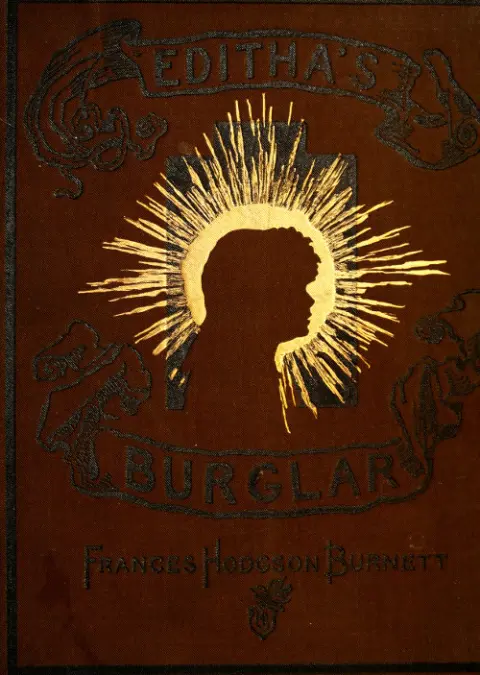
Frances Hodgson Burnett
BEHIND THE BOOK
This eBook is for the use of anyone anywhere in the United States and most other parts of the world at no cost and with almost no restrictions whatsoever. You may copy it, give it away or re-use it under the terms of the Project Gutenberg License included with this eBook or online at www.gutenberg.org. If you are not located in the United States, you will have to check the laws of the country where you are located before using this eBook. Read the source licence.
The original source file, including credits and licence, is retained by this library. Request an original-format copy at no charge. Please include the book title and Project Gutenberg identifier #57099.
KEEP YOUR CURIOSITY GOING
Coulson Kernahan

Maurice Baring
Frances Wright
Cécile Tormay

Frederic Jesup Stimson

W. H. P. (William Henry Pope) Jarvis