
Piccino, and other child stories
Frances Hodgson Burnett

THE CLASSIC COLLECTION · 1878
"Miss Crespigny" by Frances Hodgson Burnett is a novel written in the late 19th century. The story revolves around the enigmatic Lisbeth Crespigny, a young woman with a complex personality and a tumultuous past, navigating relationships and societal expectations in her quest for independence and self-discovery. The book introduces her interactions with figures such as her patroness, Mrs. Despard, and Hector Anstruthers, who is linked to her history through a former engagement that she now dismisses. At the start of the story, we meet Lisbeth as she expresses a sense of restlessness and dissatisfaction with social gatherings, showcasing her self-aware and somewhat rebellious nature. She has recently left her sheltered life with her aunts and is now living with Mrs. Despard. The narrative captures her sharp wit and striking beauty, hints at her emotional struggles, and sets the stage for her encounters with Anstruthers, who has matured since their last meeting. Lisbeth's conflicting feelings about her past, her self-image, and her influence over those around her are explored as she interacts with various characters and prepares for potential confrontations with her former life.
Introduction adapted from the source catalogue; source summaries may be automatically generated.
Free to read · English · 38,158 words · No account needed
MAKE TIME FOR A GOOD BOOK
On by default. Untick to stop anonymous reading totals. Each page counts after 10 seconds in view. How this works.
Anonymous counting is on unless you have switched it off.
Georgie turned to her, taking sudden courage.
“Lisbeth,” she said, “you never told me much about your acquaintance with Hector Anstruthers. I wonder how it was. You knew him very well, it seems.”
“I wish,” broke out Lisbeth, almost angrily, “that I had never known
him at all.”
The faithful heart, beating in the breast of the girl at her side,
leaped nervously.
“It was Lisbeth,” said she to herself. “It was Lisbeth.”
“I wish,” repeated Lisbeth, frowning at the sea, “that I had never seen
him.”
“Why?” was Georgie’s quiet question.
“Because--because it was a bad thing for us both,” in greater
impatience than ever.
Georgie looked up at her sadly.
“Why, again?” she ventured, in her soft voice. She could not help it.
But for a moment Lisbeth did not answer. She had risen, and stood leaning against the rock, a queer look on her face, a queer darkening in her eyes. At length she broke into a little, hard laugh, as if she meant to defy herself to be emotional.
“How horror-stricken you would be, if I were to tell you why,” she said.
“Does that mean,” Georgie put it to her “that you were unkind to him?”
“It means,” was her strange reply--“it means that it was I who ruined
his life forever.”
She made the confession fairly, in spite of herself. And she was emotional--vehement. She could not stand this innocent Georgie, and her beliefs any longer. She had been slowly approaching this mood for months, and now every inner and outer influence seemed to combine against her natural stubborn secretiveness. Perhaps Pen’yllan, the sea, the shore, the sky, helped her on to the end. At any rate, she must tell the truth this once, and hear what this innocent Georgie would say to it.
“I ruined his life for him,” she repeated. “I broke his faith. I believe I am to blame for every evil change the last few years have wrought in him. I, myself--Lisbeth. Do you hear, Georgie?”
The face under Georgie’s straw hat was rather pale, but it was not
horror-stricken.
“You were too young,” she faltered, “to understand.”
“Too young?” echoed Lisbeth. “I never was young in my life. I was born old. I was born a woman, and I was born cold and hard. That was it. If I had been like other girls, he would have touched my heart, after he had touched my vanity, or he might even have touched my heart first. You would have loved him with all your soul. Are you willing to hear the whole history, Georgie?”
Your reading position is saved on this browser. Take it to another device with a library code. Reading pages adapt to text, rather than matching a printed edition.
Frances Hodgson Burnett

Frances Hodgson Burnett

Frances Hodgson Burnett
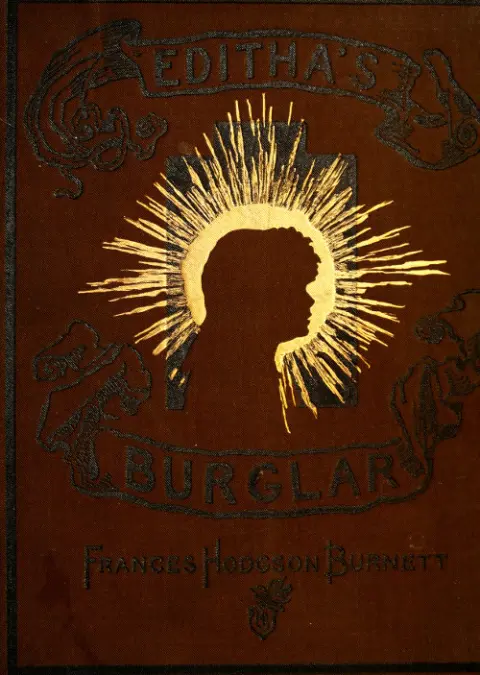
Frances Hodgson Burnett
BEHIND THE BOOK
This eBook is for the use of anyone anywhere in the United States and most other parts of the world at no cost and with almost no restrictions whatsoever. You may copy it, give it away or re-use it under the terms of the Project Gutenberg License included with this eBook or online at www.gutenberg.org. If you are not located in the United States, you will have to check the laws of the country where you are located before using this eBook. Read the source licence.
The original source file, including credits and licence, is retained by this library. Request an original-format copy at no charge. Please include the book title and Project Gutenberg identifier #57099.
KEEP YOUR CURIOSITY GOING
Coulson Kernahan

Maurice Baring
Frances Wright
Cécile Tormay

Frederic Jesup Stimson

W. H. P. (William Henry Pope) Jarvis