
Piccino, and other child stories
Frances Hodgson Burnett

THE CLASSIC COLLECTION · 1878
"Miss Crespigny" by Frances Hodgson Burnett is a novel written in the late 19th century. The story revolves around the enigmatic Lisbeth Crespigny, a young woman with a complex personality and a tumultuous past, navigating relationships and societal expectations in her quest for independence and self-discovery. The book introduces her interactions with figures such as her patroness, Mrs. Despard, and Hector Anstruthers, who is linked to her history through a former engagement that she now dismisses. At the start of the story, we meet Lisbeth as she expresses a sense of restlessness and dissatisfaction with social gatherings, showcasing her self-aware and somewhat rebellious nature. She has recently left her sheltered life with her aunts and is now living with Mrs. Despard. The narrative captures her sharp wit and striking beauty, hints at her emotional struggles, and sets the stage for her encounters with Anstruthers, who has matured since their last meeting. Lisbeth's conflicting feelings about her past, her self-image, and her influence over those around her are explored as she interacts with various characters and prepares for potential confrontations with her former life.
Introduction adapted from the source catalogue; source summaries may be automatically generated.
Free to read · English · 38,158 words · No account needed
MAKE TIME FOR A GOOD BOOK
On by default. Untick to stop anonymous reading totals. Each page counts after 10 seconds in view. How this works.
Anonymous counting is on unless you have switched it off.
She began to wander about restlessly, pulling at the roses with no particular object, but because she could not keep still. Buds and blossoms, red, and cream, and white, were torn from their stems ruthlessly, until her hands were full, and then she stopped again, half wondering at herself.
“What am I thinking of?” she said. “What do I want them for? Poor things!” remembering her parable bitterly. “They might have been very sweet to-morrow.”
She held the cool, fresh things close up to her face, breathing in their fragrance eagerly; and when she took them away, their blossoms were bright here and there--perhaps with dew; certainly with dew, if it was dew that wet her fevered cheeks, and softened her eyes so strangely.
Scarcely three minutes later she turned with a start, and then stood listening. Some one had left the house, and was coming across the lawn toward her. She waited a few seconds, to make sure that she was not mistaken, and then she bent down over a bush, and began leisurely to gather more roses, though she was overloaded already.
“Where is Georgie?” she asked, calmly, of the intruder, when he reached
her side.
“Georgie,” returned a rather constrained voice, “is talking to Miss Hetty. Miss Clarissa sent me here to remind you that the dew is falling, and that you are not strong enough to bear the night air.”
“Miss Clarissa is very good,” Lisbeth answered. “And so are you. But dear Miss Clarissa has been threatening me with an untimely grave, as the result of night air, ever since I was six months old; so, perhaps, I am not so grateful as I ought to be. I love darkness rather than light, upon the whole, and don’t find that it disagrees with me; perhaps because my deeds are evil.”
“Perhaps,” dryly.
For fully two minutes, she gathered her flowers in silence, while Anstruthers waited, and looked at her; but at last she stood upright, and their eyes met.
“It is a beautiful night,” she remarked, sententiously.
“Yes.”
“We have had a great number of lovely nights, lately.”
“Yes.”
She busied herself with her roses for a little while, to the exclusion of everything else, and then she gave it up.
“Well,” she said, “suppose we go into the house. I can do nothing with them here. The fact is, I don’t know why I gathered them, unless it was from an impulse of destructiveness. Let us go.”
“Stop a moment,” he said; nay, almost commanded her.
She paused, not seeming in the least disturbed, however. She would have cut off her right hand, almost, before she would have exhibited an emotion.
Your reading position is saved on this browser. Take it to another device with a library code. Reading pages adapt to text, rather than matching a printed edition.
Frances Hodgson Burnett

Frances Hodgson Burnett

Frances Hodgson Burnett
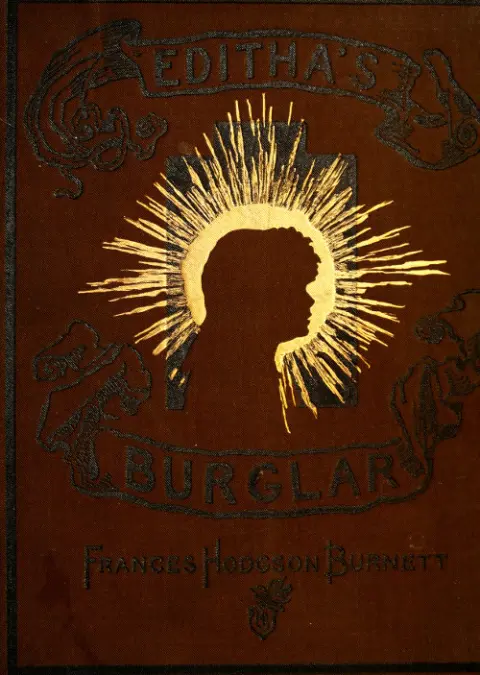
Frances Hodgson Burnett
BEHIND THE BOOK
This eBook is for the use of anyone anywhere in the United States and most other parts of the world at no cost and with almost no restrictions whatsoever. You may copy it, give it away or re-use it under the terms of the Project Gutenberg License included with this eBook or online at www.gutenberg.org. If you are not located in the United States, you will have to check the laws of the country where you are located before using this eBook. Read the source licence.
The original source file, including credits and licence, is retained by this library. Request an original-format copy at no charge. Please include the book title and Project Gutenberg identifier #57099.
KEEP YOUR CURIOSITY GOING
Coulson Kernahan

Maurice Baring
Frances Wright
Cécile Tormay

Frederic Jesup Stimson

W. H. P. (William Henry Pope) Jarvis