THE CLASSIC COLLECTION✦An outlaw’s diary: the CommuneCLASSIC FREE BOOKS
An outlaw’s diary: the Commune
Cécile Tormay
THE CLASSIC COLLECTION · 1884
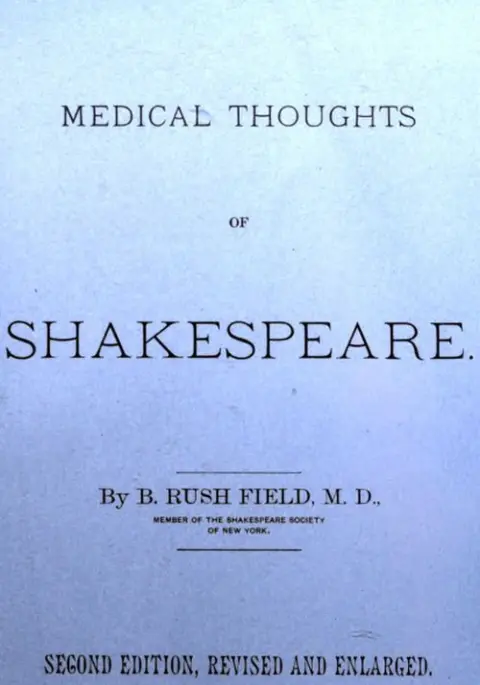
"Medical Thoughts of Shakespeare" by Benjamin Rush Field is a scholarly publication written in the late 19th century. The work explores the intersection of medicine and the literary genius of Shakespeare, analyzing various medical references and characters within his plays. It aims to highlight Shakespeare's understanding of medical practices and terminology through various citations from his works, providing insights into the medical knowledge of his time. At the start of the text, the author introduces the revised second edition, noting the expansion of content and the addition of new topics related to medicine, surgery, and pharmacology. The opening includes a preface that acknowledges the book's reception and outlines the chapters to follow, suggesting an organized analytical approach. Field begins discussing Shakespeare's portrayal of physicians in his plays and quotes lines showcasing the playwright’s grasp of medical concepts, setting the stage for a detailed investigation into Shakespeare’s medical insights throughout the ensuing chapters.
Introduction adapted from the source catalogue; source summaries may be automatically generated.
Free to read · English · 25,133 words · No account needed
MAKE TIME FOR A GOOD BOOK
On by default. Untick to stop anonymous reading totals. Each page counts after 10 seconds in view. How this works.
Anonymous counting is on unless you have switched it off.
At this instant he is sick, my lord,
Of a strange fever.
Measure for Measure, Act V., Sc. I.
My heart beats thicker than a feverous pulse. Troilus and Cressida, Act III., Sc. II.
Sickness is catching.
Midsummer Night’s Dream, Act I., Sc. I.
Thus saith the preacher: “Nought beneath the sun, Is new,” yet still from change to change we run: What varied wonders tempt us as they pass! The cow-pox, tractors, galvanism, and gas, In turns appear, to make the vulgar stare, Till the swoln bubble bursts—and all is air! Byron—Eng. Bards and Scotch Reviewers.
Vaccination certainly has been A kind antithesis to Congreve’s rockets, With which the Doctor paid off an old pox, By borrowing a new one from an ox. Byron—Don Juan, Canto I., Verse CXXIX.
I don’t know how it was, but he grew sick; The empress was alarm’d, and her physician (The same who physick’d Peter), found the tick Of his fierce pulse betoken a condition Which augur’d of the dead, however quick Itself, and show’d a feverish disposition; At which the whole court was extremely troubled, The sovereign shock’d, and all his medicines doubled. Low were the whispers, manifold the rumours: Some said he had been poison’d by Potemkin; Others talked learnedly of certain tumours, Exhaustion, or disorders of the same kin; Some said ’twas a concoction of the humours, With which the blood too readily will claim kin; Others again were ready to maintain, “’Twas only the fatigue of last campaign.” But here is one prescription out of many: “Sodæ-sulphat. 3. VI. 3. S. mannæ optim. Aq. fervent. F. 3. iss. 3. ij tinct, sennæ Haustus,” (and here the surgeon came and cupp’d him), R. Pulv. com. gr iii. Ipecacuanhæ, (With more besides, if Juan had not stopp’d ’em).
“Bolus potassæ sulphuret, sumendus,
Et haustus ter in die capiendus.”
This is the way physicians mend or end us,
Secundum artem. * * * * *
Byron—Don Juan, Canto X., Verse XXXIX.
Rheumatic diseases do abound:
And through this distemperature, we see
The seasons alter.
Midsummer Night’s Dream, Act II., Sc. I.
This raw rheumatic day.
Merry Wives, Act III., Sc. I.
Is Brutus sick,—and is it physical
To walk unbraced, and suck up humours
Of the dank morning? What, is Brutus sick,
And will he steal out of his wholesome bed,
To dare the vile contagion of the night,
And tempt the rheuma and unpurged air
To add unto his sickness?
Julius Cæsar, Act II., Sc. I.
Is this the poultice for my aching bones? Romeo and Juliet, Act II., Sc. V.
Your reading position is saved on this browser. Take it to another device with a library code. Reading pages adapt to text, rather than matching a printed edition.
BEHIND THE BOOK
This eBook is for the use of anyone anywhere in the United States and most other parts of the world at no cost and with almost no restrictions whatsoever. You may copy it, give it away or re-use it under the terms of the Project Gutenberg License included with this eBook or online at www.gutenberg.org. If you are not located in the United States, you will have to check the laws of the country where you are located before using this eBook. Read the source licence.
The original source file, including credits and licence, is retained by this library. Request an original-format copy at no charge. Please include the book title and Project Gutenberg identifier #61366.
KEEP YOUR CURIOSITY GOING
Cécile Tormay

Moritz Busch
John L. Ransom
Frances Wright
Cécile Tormay

Mabel Potter Daggett