THE CLASSIC COLLECTION✦An outlaw’s diary: the CommuneCLASSIC FREE BOOKS
An outlaw’s diary: the Commune
Cécile Tormay
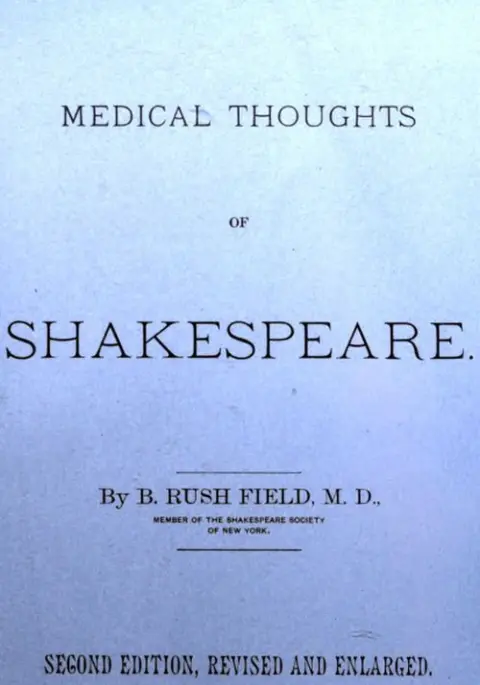
THE CLASSIC COLLECTION · 1884
"Medical Thoughts of Shakespeare" by Benjamin Rush Field is a scholarly publication written in the late 19th century. The work explores the intersection of medicine and the literary genius of Shakespeare, analyzing various medical references and characters within his plays. It aims to highlight Shakespeare's understanding of medical practices and terminology through various citations from his works, providing insights into the medical knowledge of his time. At the start of the text, the author introduces the revised second edition, noting the expansion of content and the addition of new topics related to medicine, surgery, and pharmacology. The opening includes a preface that acknowledges the book's reception and outlines the chapters to follow, suggesting an organized analytical approach. Field begins discussing Shakespeare's portrayal of physicians in his plays and quotes lines showcasing the playwright’s grasp of medical concepts, setting the stage for a detailed investigation into Shakespeare’s medical insights throughout the ensuing chapters.
Introduction adapted from the source catalogue; source summaries may be automatically generated.
Free to read · English · 25,133 words · No account needed
MAKE TIME FOR A GOOD BOOK
On by default. Untick to stop anonymous reading totals. Each page counts after 10 seconds in view. How this works.
Anonymous counting is on unless you have switched it off.
Shakespeare’s maladies are many and the symptoms very well defined. Diseases of the nervous system seem to have been a favorite study, especially insanity; Lear, Timon, and Hamlet being excellent examples.
And he * * * (a short tale to make), Fell into a sadness; then into a fast; Thence to a watch; thence into a weakness; Thence to a lightness; and, by this declension Into the madness wherein now he raves. Hamlet, Act II., Sc. II.
He took me by the wrist and held me hard; Then goes he to the length of all his arm; And with his other hand thus o’er his brow, He falls to such perusal of my face, As he would draw it. Long stay’d he so; At last,—a little shaking of mine arm, And thrice his head thus waving up and down, He raised a sigh so piteous and profound, That it did seem to shatter all his bulk, And end his being: That done, he lets me go: And, with his head o’er his shoulder turn’d, He seem’d to find his way without his eyes; For out o’ doors he went without their help, And, to the last, bended their light on me. Hamlet, Act II., Sc. I.
Alas, how is it with you,
That you do bend your eye on vacancy,
And with the incorporal air do hold discourse?
Forth at your eyes your spirits wildly peep;
And, as the sleeping soldiers in the alarm,
Your bedded hair, like life in excrements,
Starts up, and stands on end.
Hamlet, Act III., Sc. IV.
O, what a noble mind is here o’erthrown! The courtier’s, scholar’s, soldier’s, eye, tongue, sword: The expectancy and rose of the fair state, The glass of fashion and the mould of form, The observed of all observers,—quite, quite down! And I, of ladies most deject and wretched, That suck’d the honey of his music vows, Now see that noble and most sovereign reason, Like sweet bells jangled, out of tune and harsh; That unmatch’d form and feature of blown youth, Blasted with ecstasy. Hamlet, Act III., Sc. I.
There’s something in his soul,
O’er which his melancholy sits on brood;
And I do doubt the hatch and the disclose,
Will be some danger.
Hamlet, Act III., Sc. I.
Canst thou not minister to a mind diseas’d; Pluck from the memory a rooted sorrow; Raze out the written troubles of the brain; And, with some sweet oblivious antidote, Cleanse the stuff’d bosom of that perilous stuff Which weighs upon the heart? Macbeth, Act V., Sc. III.
Your reading position is saved on this browser. Take it to another device with a library code. Reading pages adapt to text, rather than matching a printed edition.
BEHIND THE BOOK
This eBook is for the use of anyone anywhere in the United States and most other parts of the world at no cost and with almost no restrictions whatsoever. You may copy it, give it away or re-use it under the terms of the Project Gutenberg License included with this eBook or online at www.gutenberg.org. If you are not located in the United States, you will have to check the laws of the country where you are located before using this eBook. Read the source licence.
The original source file, including credits and licence, is retained by this library. Request an original-format copy at no charge. Please include the book title and Project Gutenberg identifier #61366.
KEEP YOUR CURIOSITY GOING
Cécile Tormay

Moritz Busch
John L. Ransom
Frances Wright
Cécile Tormay

Mabel Potter Daggett