THE CLASSIC COLLECTION✦An outlaw’s diary: the CommuneCLASSIC FREE BOOKS
An outlaw’s diary: the Commune
Cécile Tormay
THE CLASSIC COLLECTION · 1884
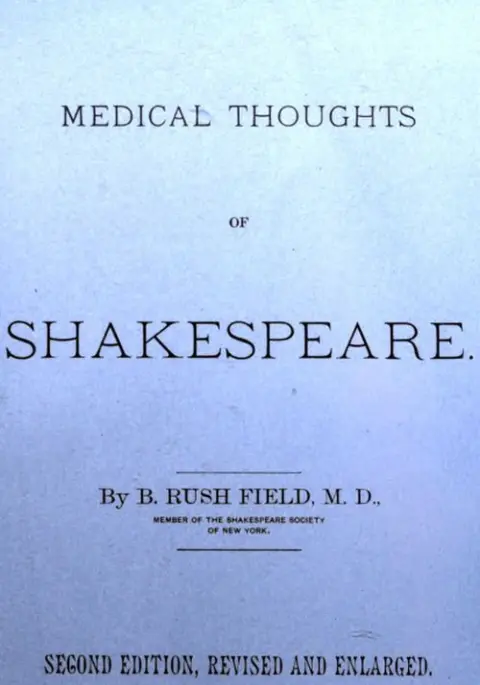
"Medical Thoughts of Shakespeare" by Benjamin Rush Field is a scholarly publication written in the late 19th century. The work explores the intersection of medicine and the literary genius of Shakespeare, analyzing various medical references and characters within his plays. It aims to highlight Shakespeare's understanding of medical practices and terminology through various citations from his works, providing insights into the medical knowledge of his time. At the start of the text, the author introduces the revised second edition, noting the expansion of content and the addition of new topics related to medicine, surgery, and pharmacology. The opening includes a preface that acknowledges the book's reception and outlines the chapters to follow, suggesting an organized analytical approach. Field begins discussing Shakespeare's portrayal of physicians in his plays and quotes lines showcasing the playwright’s grasp of medical concepts, setting the stage for a detailed investigation into Shakespeare’s medical insights throughout the ensuing chapters.
Introduction adapted from the source catalogue; source summaries may be automatically generated.
Free to read · English · 25,133 words · No account needed
MAKE TIME FOR A GOOD BOOK
On by default. Untick to stop anonymous reading totals. Each page counts after 10 seconds in view. How this works.
Anonymous counting is on unless you have switched it off.
Others, when the bagpipe sings i’ the nose Cannot contain their urine: for affection, Master of passion, sways it to the mood Of what it likes or loathes. Merchant of Venice, Act IV., Sc. I.
Macd. What three things does drink especially provoke? Port. Marry, sir, nose-painting, sleep, and urine. Macbeth, Act II., Sc. II.
When he makes water, his urine is congealed ice. Measure for Measure, Act III., Sc. II.
Fevers and other general diseases are often referred to and very many excellent allusions have been made to them.
He is so shaked of a burning quotidian tertian, that it is most lamentable to behold. Henry V., Act II., Sc. I.
If all the wine in my bottle will recover him, I will help his ague. Tempest, Act II., Sc. II.
A lunatic lean-witted fool,
Presuming on an ague’s privilege,
Dar’st with thy frozen admonition
Make pale our cheek; chasing the royal blood,
With fury, from his native residence.
Richard II., Act II., Sc. I.
But now will canker sorrow eat my bud,
And chase the native beauty from his cheek,
And he will look as hollow as a ghost,
As dim and meagre as an ague’s fit,
And so he’ll die.
King John, Act III., Sc. IV.
Here let them lie till famine and the ague eat them up. Macbeth, Act V., Sc. V.
An untimely ague
Stay’d me a prisoner in my chamber.
Henry VIII., Act I., Sc. I.
My wind * * * would blow me to an ague. Merchant of Venice, Act I., Sc. I.
He had a fever when he was in Spain, And, when the fit was on him, I did mark How he did shake; ’tis true, this god did shake: His coward lips did from their colour fly; And that same eye whose bend did awe the world Did lose his lustre: I did hear him groan: Ay, and that tongue of his, that bade the Romans Mark him, and write his speeches in their books, Alas! it cried, Give me some drink, Titinius, As a sick girl. Julius Cæsar, Act I., Sc. II.
Home without boots, and in foul weather too! How ’scapes he agues? Henry IV., Act III., Sc. I.
Danger, like an ague, subtly taints Even then when we sit idly in the sun. Troilus and Cressida, Act III., Sc. III.
All the infections that the sun sucks up From bogs, fens, flats, on Prosper fall, and make him By inch-meal a disease! Tempest, Act II., Sc. II.
It is not for your health thus to commit Your weak condition to the raw cold morning. Julius Cæsar, Act II., Sc. I.
Your reading position is saved on this browser. Take it to another device with a library code. Reading pages adapt to text, rather than matching a printed edition.
BEHIND THE BOOK
This eBook is for the use of anyone anywhere in the United States and most other parts of the world at no cost and with almost no restrictions whatsoever. You may copy it, give it away or re-use it under the terms of the Project Gutenberg License included with this eBook or online at www.gutenberg.org. If you are not located in the United States, you will have to check the laws of the country where you are located before using this eBook. Read the source licence.
The original source file, including credits and licence, is retained by this library. Request an original-format copy at no charge. Please include the book title and Project Gutenberg identifier #61366.
KEEP YOUR CURIOSITY GOING
Cécile Tormay

Moritz Busch
John L. Ransom
Frances Wright
Cécile Tormay

Mabel Potter Daggett