
The Book of Clever Beasts: Studies in Unnatural History
Myrtle Reed
THE CLASSIC COLLECTION · 1910
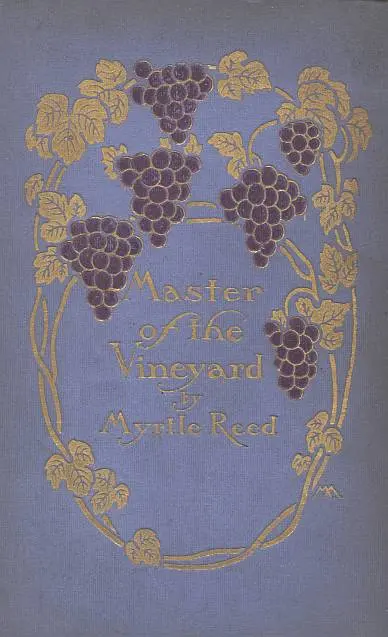
"Master of the Vineyard" by Myrtle Reed is a novel written in the early 20th century. The story follows Rosemary, a young woman reflecting on her life and circumstances while navigating a world shaped by familial obligations and unfulfilled dreams. It explores themes of love, duty, and personal aspiration against the backdrop of a vineyard that symbolizes both entrapment and legacy. The opening of the novel depicts Rosemary as she seeks solace on the Hill of the Muses, a place where she feels a sense of escape from her mundane existence. As she observes the valley, the river, and the vineyards belonging to the Marsh family, she reminisces about the weight of her thirty years, characterized by toil and emotional detachment. The narrative introduces Alden Marsh, a complex character frustrated with his role in the vineyard and his responsibilities, establishing a connection between them. Their interactions mix feelings of yearning for freedom with a budding emotional bond, hinting at the themes of love and sacrifice that will permeate the narrative.
Introduction adapted from the source catalogue; source summaries may be automatically generated.
Free to read · English · 80,142 words · No account needed
MAKE TIME FOR A GOOD BOOK
On by default. Untick to stop anonymous reading totals. Each page counts after 10 seconds in view. How this works.
Anonymous counting is on unless you have switched it off.
"I'd like to know what makes you so high and mighty all of a sudden," said Grandmother. "Coffee's just like tea--as long as colour comes into it when it's boiled, it's good. My mother always used the same grounds for a week for a family of eight, and she didn't hear no complaints, neither. You ain't boiled this long enough--that's what's the matter."
[Sidenote: The Common Task]
Aunt Matilda muttered something about "beggars being choosers," and
Rosemary pushed her plate away wearily. She had not tasted her
breakfast.
Grandmother arose and noisily blew out the lamp, regardless of the fact that Matilda had not finished eating. "Now, Rosemary," she said, briskly, "after you get the dishes done and the kitchen cleaned up, I want you should go to the post-office and get my paper. When you come back, you can do the sweepin' and dustin' down here and I can set in the kitchen while you're doin' it. Then you can make the beds and do the up-stairs work and then go to the store. By the time you're ready to go to the store, I'll have decided what you're to get."
"And," continued Aunt Matilda, pushing back her chair, "this afternoon you can help me cut out some underclothes and get 'em basted together." She never attempted any sort of housework, being pathetically vain of her one beauty--her small, white hands. Even the family sewing she did under protest.
"Is the alpaca all gone?" asked Grandmother.
"Yes," Matilda replied. "I used the last of it patchin' Rosemary's dress under the arms. It beats all how hard she is on her clothes."
[Sidenote: A Question of Colour]
"I'll have to order more," sighed the old lady. "I suppose the price has
gone up again."
Rosemary's breath came and went quickly; her heart fluttered with a sudden wildness. "Grandmother," she pleaded, hesitatingly, "oh, Aunt Matilda--just for this once, couldn't I have grey alpaca instead of brown? I hate brown so!"
Both women stared at her as though she had all at once gone mad. The silence became intense, painful.
"I mean," faltered the girl, "if it's the same price. I wouldn't ask you to pay any more. Perhaps grey might be cheaper now--even cheaper than brown!"
"I was married in brown alpaca," said Grandmother. She used the tone in which royalty may possibly allude to coronation.
"I was wearing brown alpaca," observed Aunt Matilda, "the night the
minister came to call."
"Made just like this," they said, together.
"If brown alpaca's good enough for weddin's and ministers, I reckon it'll do for orphans that don't half earn their keep," resumed Grandmother, with her keen eyes fixed upon Rosemary.
Your reading position is saved on this browser. Take it to another device with a library code. Reading pages adapt to text, rather than matching a printed edition.
Myrtle Reed
Myrtle Reed
Myrtle Reed
Myrtle Reed
BEHIND THE BOOK
This eBook is for the use of anyone anywhere in the United States and most other parts of the world at no cost and with almost no restrictions whatsoever. You may copy it, give it away or re-use it under the terms of the Project Gutenberg License included with this eBook or online at www.gutenberg.org. If you are not located in the United States, you will have to check the laws of the country where you are located before using this eBook. Read the source licence.
The original source file, including credits and licence, is retained by this library. Request an original-format copy at no charge. Please include the book title and Project Gutenberg identifier #27661.
KEEP YOUR CURIOSITY GOING
Coulson Kernahan

Maurice Baring
Frances Wright
Cécile Tormay

Frederic Jesup Stimson

W. H. P. (William Henry Pope) Jarvis