
The Book of Clever Beasts: Studies in Unnatural History
Myrtle Reed
THE CLASSIC COLLECTION · 1910
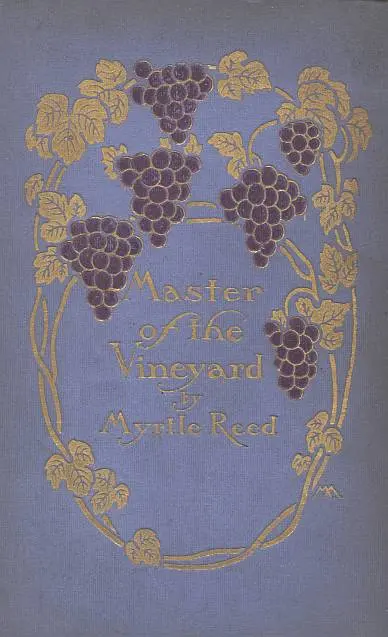
"Master of the Vineyard" by Myrtle Reed is a novel written in the early 20th century. The story follows Rosemary, a young woman reflecting on her life and circumstances while navigating a world shaped by familial obligations and unfulfilled dreams. It explores themes of love, duty, and personal aspiration against the backdrop of a vineyard that symbolizes both entrapment and legacy. The opening of the novel depicts Rosemary as she seeks solace on the Hill of the Muses, a place where she feels a sense of escape from her mundane existence. As she observes the valley, the river, and the vineyards belonging to the Marsh family, she reminisces about the weight of her thirty years, characterized by toil and emotional detachment. The narrative introduces Alden Marsh, a complex character frustrated with his role in the vineyard and his responsibilities, establishing a connection between them. Their interactions mix feelings of yearning for freedom with a budding emotional bond, hinting at the themes of love and sacrifice that will permeate the narrative.
Introduction adapted from the source catalogue; source summaries may be automatically generated.
Free to read · English · 80,142 words · No account needed
MAKE TIME FOR A GOOD BOOK
On by default. Untick to stop anonymous reading totals. Each page counts after 10 seconds in view. How this works.
Anonymous counting is on unless you have switched it off.
Dinner was cheerful, though not lively. Once or twice, Edith caught Alden looking at her with a strange expression on his face. Madame chattered on happily, of the vineyard and the garden and the small household affairs that occupied her attention.
Afterward, Alden read the paper and the other two played cribbage. It was only a little after nine when Madame, concealing a yawn, announced that she was tired and would go to bed, if she might be excused.
Edith rose with alacrity. "I'll come, too," she said. "It's astonishing how sleepy it makes one to be outdoors."
"Don't," Madame protested. "We mustn't leave him entirely alone. You can sleep late to-morrow morning if you choose."
"Please don't leave me alone, Mrs. Lee," pleaded Alden, rather wickedly.
"All right," Edith answered, accepting the inevitable as gracefully as she might. "Shall I play solitaire while you read the paper?"
"If you like," he replied.
Madame took her candle and bade them good-night. As she went up-stairs, Edith said, with a pout: "I wish I were going to bed too."
"You can't sleep all the time," he reminded her. The paper had slipped to the floor. "Mother tells me that you slept this morning until half-past nine."
[Sidenote: The Souvenir of Rural Lovers]
"Yes--but--." She bit her lips and the colour rose to her temples. She hastily shuffled the cards and began to play solitaire so rapidly that he wondered whether she knew what cards she was playing.
"But," he said, "you didn't sleep well last night. Was that what you
were going to say?"
Edith dropped her cards, and looked him straight in the face. "I slept perfectly," she lied. "Didn't you?"
"I slept just as well as you did," he answered. She thought she detected a shade of double meaning in his tone.
"I had a long walk to-day," she went on, "and it made me sleepy. Look," she continued, going to the mantel where she had left the book. "See what I found on top of a hill, in a crevice between an oak and a log that lay against it. Do you think some pair of rural lovers left it there?"
"Possibly," he replied. If the sight of the book he had loaned Rosemary awoke any emotion, or even a memory, he did not show it. "Sit down," he suggested, imperturbably, "and let me see if I can't find a sonnet that fits you. Yes, surely--here it is. Listen."
She rested her head upon her hand and turned her face away from him. In his smooth, well-modulated voice, he read:
[Sidenote: Alden Reads a Sonnet]
Your reading position is saved on this browser. Take it to another device with a library code. Reading pages adapt to text, rather than matching a printed edition.
Myrtle Reed
Myrtle Reed
Myrtle Reed
Myrtle Reed
BEHIND THE BOOK
This eBook is for the use of anyone anywhere in the United States and most other parts of the world at no cost and with almost no restrictions whatsoever. You may copy it, give it away or re-use it under the terms of the Project Gutenberg License included with this eBook or online at www.gutenberg.org. If you are not located in the United States, you will have to check the laws of the country where you are located before using this eBook. Read the source licence.
The original source file, including credits and licence, is retained by this library. Request an original-format copy at no charge. Please include the book title and Project Gutenberg identifier #27661.
KEEP YOUR CURIOSITY GOING
Coulson Kernahan

Maurice Baring
Frances Wright
Cécile Tormay

Frederic Jesup Stimson

W. H. P. (William Henry Pope) Jarvis