
The Book of Clever Beasts: Studies in Unnatural History
Myrtle Reed
THE CLASSIC COLLECTION · 1910
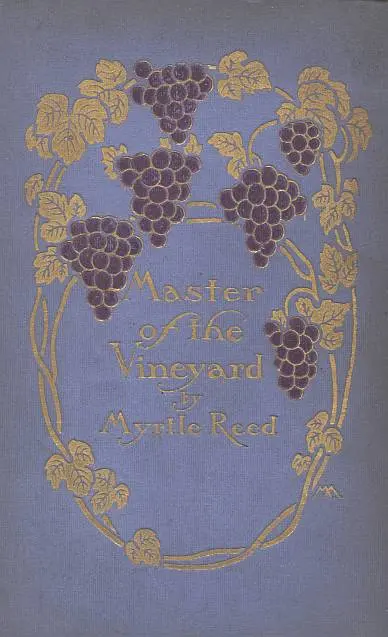
"Master of the Vineyard" by Myrtle Reed is a novel written in the early 20th century. The story follows Rosemary, a young woman reflecting on her life and circumstances while navigating a world shaped by familial obligations and unfulfilled dreams. It explores themes of love, duty, and personal aspiration against the backdrop of a vineyard that symbolizes both entrapment and legacy. The opening of the novel depicts Rosemary as she seeks solace on the Hill of the Muses, a place where she feels a sense of escape from her mundane existence. As she observes the valley, the river, and the vineyards belonging to the Marsh family, she reminisces about the weight of her thirty years, characterized by toil and emotional detachment. The narrative introduces Alden Marsh, a complex character frustrated with his role in the vineyard and his responsibilities, establishing a connection between them. Their interactions mix feelings of yearning for freedom with a budding emotional bond, hinting at the themes of love and sacrifice that will permeate the narrative.
Introduction adapted from the source catalogue; source summaries may be automatically generated.
Free to read · English · 80,142 words · No account needed
MAKE TIME FOR A GOOD BOOK
On by default. Untick to stop anonymous reading totals. Each page counts after 10 seconds in view. How this works.
Anonymous counting is on unless you have switched it off.
The silvery cadence of Madame's laughter rang through the house and echoed along the corridor. As though in answer, the clock struck ten, the canary sang happily, and a rival melody came from the kitchen, in cracked soprano, mercifully muted by distance and two closed doors.
"See what you've started," Edith said. "It's like the poem, where the magic kiss woke the princess, and set all the clocks to going and the little dogs to barking outside. Don't let me talk you to death--I've been chattering for considerably over an hour, and, very selfishly, of my own affairs, to the exclusion of everything else."
"But your affairs interest me extremely, I wish I knew of some way to
help you."
"In the last analysis, of course, it comes to this--either go on and make the best of it, or quit."
[Sidenote: The Marriage Vow]
"Not--not divorce," breathed Madame. Her violet eyes were wide with
horror.
"No," Edith answered, shortly, "not divorce. Separation, possibly, but not divorce, which is only a legal form permitting one to marry again. Personally, I feel bound by the solemn oath I took at the altar, 'until death do us part,' and 'forsaking all others keep thee only unto me so long as we both shall live.' All the laws in the country couldn't make me feel right with my own conscience if I violated that oath."
"If the marriage service were changed," Madame said, nodding her approval, "it might be justified. If one said, at the altar, 'Until death or divorce do us part,' or 'Until I see someone else I like better,' there'd be reason for it, but, as it is, there isn't. And again, it says, 'Those whom God hath joined let no man put asunder.'"
"Those whom God hath joined no man can put asunder," Edith retorted, "but did God do it? It doesn't seem right to blame Him for all the pitiful mistakes that masquerade as marriage. Mother used to say," she resumed, after a little, "that when you're more miserable without a man than you think you ever could be with him, it's time to marry him, and when you're more miserable with him than you think you ever could be without him, it's time to quit."
[Sidenote: Envious Women]
"And," suggested Madame, "in which class do you belong?"
"Both, I think--that is, I'm miserable enough to belong to both. I'm unhappy when he's with me and wretched when he isn't. As he mostly isn't, I'm more wretched than unhappy. In the small circle in which I move, I'm considered a very fortunate woman.
Your reading position is saved on this browser. Take it to another device with a library code. Reading pages adapt to text, rather than matching a printed edition.
Myrtle Reed
Myrtle Reed
Myrtle Reed
Myrtle Reed
BEHIND THE BOOK
This eBook is for the use of anyone anywhere in the United States and most other parts of the world at no cost and with almost no restrictions whatsoever. You may copy it, give it away or re-use it under the terms of the Project Gutenberg License included with this eBook or online at www.gutenberg.org. If you are not located in the United States, you will have to check the laws of the country where you are located before using this eBook. Read the source licence.
The original source file, including credits and licence, is retained by this library. Request an original-format copy at no charge. Please include the book title and Project Gutenberg identifier #27661.
KEEP YOUR CURIOSITY GOING
Coulson Kernahan

Maurice Baring
Frances Wright
Cécile Tormay

Frederic Jesup Stimson

W. H. P. (William Henry Pope) Jarvis