
The Book of Clever Beasts: Studies in Unnatural History
Myrtle Reed
THE CLASSIC COLLECTION · 1910
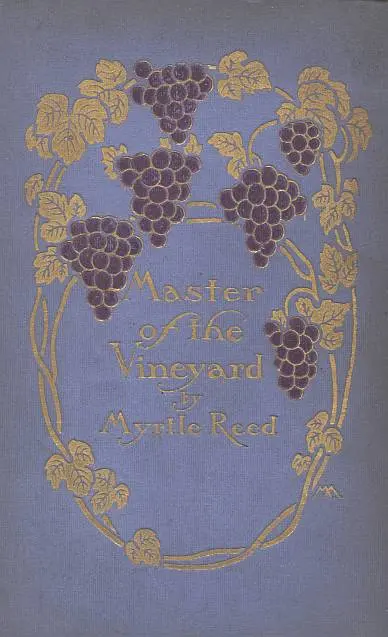
"Master of the Vineyard" by Myrtle Reed is a novel written in the early 20th century. The story follows Rosemary, a young woman reflecting on her life and circumstances while navigating a world shaped by familial obligations and unfulfilled dreams. It explores themes of love, duty, and personal aspiration against the backdrop of a vineyard that symbolizes both entrapment and legacy. The opening of the novel depicts Rosemary as she seeks solace on the Hill of the Muses, a place where she feels a sense of escape from her mundane existence. As she observes the valley, the river, and the vineyards belonging to the Marsh family, she reminisces about the weight of her thirty years, characterized by toil and emotional detachment. The narrative introduces Alden Marsh, a complex character frustrated with his role in the vineyard and his responsibilities, establishing a connection between them. Their interactions mix feelings of yearning for freedom with a budding emotional bond, hinting at the themes of love and sacrifice that will permeate the narrative.
Introduction adapted from the source catalogue; source summaries may be automatically generated.
Free to read · English · 80,142 words · No account needed
MAKE TIME FOR A GOOD BOOK
On by default. Untick to stop anonymous reading totals. Each page counts after 10 seconds in view. How this works.
Anonymous counting is on unless you have switched it off.
Smiling, Madame went to her desk, and in a quaint, old-fashioned script, wrote a note to Mrs. Lee. "There," she said, as she sealed it. "I've asked her to come to-morrow on the six o'clock train. I've told her that you will meet her at the station, and that we won't have dinner until half-past seven. That will give her time to rest and dress. If you'll take it to the post-office now, she'll get it in the morning."
Alden shrugged his shoulders good-humouredly, kissed his mother, and went out. He wondered how he would recognise the "strange woman" when she arrived on the morrow, though few people came on the six o'clock train, or, for that matter, on any train.
"Might write her a little note on my own account," he mused. "Ask her to take off her right shoe and hold it in her left hand, or something of that sort. No, that isn't necessary. I'll bet I could go into a crowd of a thousand women and pick out the one who wrote that letter."
The scent of violet still haunted him, but, by the time he had posted his mother's note, he had forgotten all about it and was thinking of Rosemary.
[Sidenote: Planning for the Guest]
Madame, however, was busy with plans for her guest's comfort. She took down her best hand-embroidered linen sheets, shaking out the lavender that was laid between the folds, selected her finest towels and dresser-covers, ransacked three or four trunks in the attic for an old picture of Louise Lane, found a frame to fit it, laid out fresh curtains, had the shining silver candlesticks cleaned again, and opened wide every window of the long-unused guest-room to give it a night's airing.
Downstairs, she searched through the preserve-closet for dainties to tempt an unhappy woman's appetite, meanwhile rejoicing with housewifely pride in her well-stocked shelves. That evening, while Alden read the paper, she planned a feast for the next night, and mended, with fairy-like stitches, the fichu of real lace that she usually wore with her lavender silk gown.
"Is it a party?" queried Alden, without looking up from his paper.
"Yes. Isn't company a party?"
"That depends. You know three are said to be a crowd."
"Still inhospitable, dear?"
"Only mildly so. I contemplate the approaching evil with resignation, if
not content."
"You and I have lived alone so long that we've got ourselves into a rut. Everyone we meet may give us something, and receive something from us in return."
[Sidenote: Best Things for Strangers]
"I perceive," said Alden, irrelevantly, "that the Lady Mother is going to be dressed in her best when the guest arrives."
Your reading position is saved on this browser. Take it to another device with a library code. Reading pages adapt to text, rather than matching a printed edition.
Myrtle Reed
Myrtle Reed
Myrtle Reed
Myrtle Reed
BEHIND THE BOOK
This eBook is for the use of anyone anywhere in the United States and most other parts of the world at no cost and with almost no restrictions whatsoever. You may copy it, give it away or re-use it under the terms of the Project Gutenberg License included with this eBook or online at www.gutenberg.org. If you are not located in the United States, you will have to check the laws of the country where you are located before using this eBook. Read the source licence.
The original source file, including credits and licence, is retained by this library. Request an original-format copy at no charge. Please include the book title and Project Gutenberg identifier #27661.
KEEP YOUR CURIOSITY GOING
Coulson Kernahan

Maurice Baring
Frances Wright
Cécile Tormay

Frederic Jesup Stimson

W. H. P. (William Henry Pope) Jarvis