
The Book of Clever Beasts: Studies in Unnatural History
Myrtle Reed
THE CLASSIC COLLECTION · 1910
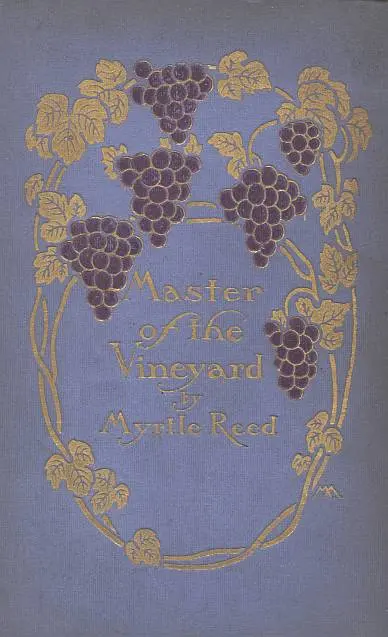
"Master of the Vineyard" by Myrtle Reed is a novel written in the early 20th century. The story follows Rosemary, a young woman reflecting on her life and circumstances while navigating a world shaped by familial obligations and unfulfilled dreams. It explores themes of love, duty, and personal aspiration against the backdrop of a vineyard that symbolizes both entrapment and legacy. The opening of the novel depicts Rosemary as she seeks solace on the Hill of the Muses, a place where she feels a sense of escape from her mundane existence. As she observes the valley, the river, and the vineyards belonging to the Marsh family, she reminisces about the weight of her thirty years, characterized by toil and emotional detachment. The narrative introduces Alden Marsh, a complex character frustrated with his role in the vineyard and his responsibilities, establishing a connection between them. Their interactions mix feelings of yearning for freedom with a budding emotional bond, hinting at the themes of love and sacrifice that will permeate the narrative.
Introduction adapted from the source catalogue; source summaries may be automatically generated.
Free to read · English · 80,142 words · No account needed
MAKE TIME FOR A GOOD BOOK
On by default. Untick to stop anonymous reading totals. Each page counts after 10 seconds in view. How this works.
Anonymous counting is on unless you have switched it off.
She laughed, mirthlessly. "It's as new a gown as I'll ever have," she returned, trying to keep her voice even. "My wardrobe consists of an endless parade of brown alpaca and brown gingham garments, all made exactly alike."
[Sidenote: Thwarted on All Sides]
"Like a dozen stage soldiers, marching in and out, to create the
illusion of a procession?"
"I suppose so. You know I've never seen a stage, much less a stage
soldier."
Alden's heart softened with pity. He longed to take Rosemary to town and let her feast her eyes upon some gorgeous spectacle; to see her senses run riot, for once, with colour and light and sound.
"I feel sometimes," she was saying, "as though I had sold my soul for pretty things in some previous existence, and was paying the penalty for it now."
"You love pretty things, don't you?"
She turned brimming eyes toward him. "Love them?" she repeated, brokenly. "There aren't words enough to say how much!"
From a fresh point of view he saw her countless deprivations, binding her, thwarting her, oppressing her on all sides by continual denial. His own rebellion against circumstances seemed weak and unworthy.
"Whenever I think of you," he said, in a different tone, "I feel ashamed of myself. I have freedom, of a certain sort, and you've never had a chance to learn the meaning of the word. You're dominated, body and soul, by a couple of old women who haven't discovered, as yet, that the earth is round and not flat."
[Sidenote: Freedom]
"My soul isn't bound," returned Rosemary, softly, "but it would have been, if it hadn't been for you."
"I? Why, my dear girl, what have I done?"
"Everything. Think of all the books you've loaned me, all the candles you've given me--all the times you've climbed this steep hill just to talk to me for an hour and give me new strength to go on."
"It's only selfishness, Rosemary. I knew you were here and I like to talk to you. Don't forget that you've meant something to me, too. Why, you're the only woman I know, except my mother."
"Your mother is lovely," she returned. "I wish I could go to see her once in a while. I like to look at her. Even her voice is different someway."
"Yes, mother is 'different,'" he agreed, idly. "It's astonishing, sometimes, how 'different' she manages to be. We had it out the other day, about the vineyard, and I'm to stay here--all the rest of my life," he concluded bitterly.
"I don't see why, if you don't want to," she answered, half-fearfully. "You're a man, and men can do as they please."
Your reading position is saved on this browser. Take it to another device with a library code. Reading pages adapt to text, rather than matching a printed edition.
Myrtle Reed
Myrtle Reed
Myrtle Reed
Myrtle Reed
BEHIND THE BOOK
This eBook is for the use of anyone anywhere in the United States and most other parts of the world at no cost and with almost no restrictions whatsoever. You may copy it, give it away or re-use it under the terms of the Project Gutenberg License included with this eBook or online at www.gutenberg.org. If you are not located in the United States, you will have to check the laws of the country where you are located before using this eBook. Read the source licence.
The original source file, including credits and licence, is retained by this library. Request an original-format copy at no charge. Please include the book title and Project Gutenberg identifier #27661.
KEEP YOUR CURIOSITY GOING
Coulson Kernahan

Maurice Baring
Frances Wright
Cécile Tormay

Frederic Jesup Stimson

W. H. P. (William Henry Pope) Jarvis