
The Book of Clever Beasts: Studies in Unnatural History
Myrtle Reed
THE CLASSIC COLLECTION · 1910
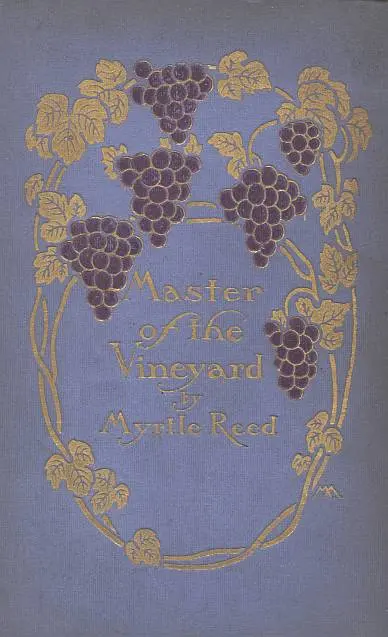
"Master of the Vineyard" by Myrtle Reed is a novel written in the early 20th century. The story follows Rosemary, a young woman reflecting on her life and circumstances while navigating a world shaped by familial obligations and unfulfilled dreams. It explores themes of love, duty, and personal aspiration against the backdrop of a vineyard that symbolizes both entrapment and legacy. The opening of the novel depicts Rosemary as she seeks solace on the Hill of the Muses, a place where she feels a sense of escape from her mundane existence. As she observes the valley, the river, and the vineyards belonging to the Marsh family, she reminisces about the weight of her thirty years, characterized by toil and emotional detachment. The narrative introduces Alden Marsh, a complex character frustrated with his role in the vineyard and his responsibilities, establishing a connection between them. Their interactions mix feelings of yearning for freedom with a budding emotional bond, hinting at the themes of love and sacrifice that will permeate the narrative.
Introduction adapted from the source catalogue; source summaries may be automatically generated.
Free to read · English · 80,142 words · No account needed
MAKE TIME FOR A GOOD BOOK
On by default. Untick to stop anonymous reading totals. Each page counts after 10 seconds in view. How this works.
Anonymous counting is on unless you have switched it off.
[Sidenote: Mute and Frightened]
The voices came nearer and nearer, the man's full-toned and vaguely familiar, the woman's musical, vibrant, and, in a way, familiar too.
A single powerful stroke brought the boat into view, as it rounded the curve. It was Alden and Edith. The girl stepped back still farther into the sheltering thicket, repressing the cry of astonishment that rose to her lips. Acutely self-conscious, it seemed that the leaves were no protection; that she stood before them helpless, unconcealed.
Trembling, she sat down on a low, flat stone, for she had suddenly become too weak to stand. Much to her dismay, Alden swung the head of the boat toward the shore. They were going to land!
Mute and frightened, she watched him as he assisted her to the shore, saw him return to the boat for a basket covered with a white cloth, and draw the oars up to the bank.
Rosemary instantly comprehended the emotions of an animal in a trap. She scarcely dared to breathe, much less move. Unwilling to listen, she put her fingers in her ears and turned her head away, but presently the position became so strained and uncomfortable that she had to give it up. Their voices were plainly audible.
[Sidenote: A Picnic]
"I thought I heard a rustle behind that thicket," said Edith. She was lovely in her gown of pale green linen, and carried a white linen parasol instead of wearing a hat.
"It's a bird, or a squirrel," he assured her. "Nobody ever comes here."
"Are we nobody?"
"Indeed not--we're everybody. The world was made just for us two."
"I wish I could believe you," Edith returned, sadly. Then she added, with swift irrelevance: "Why do people always take hard-boiled eggs to picnics?"
"To mitigate the pickles," he responded. "There always are pickles--see? I knew Mother would put some in."
"Wine, too," commented Edith, peering into the basket. "Why, it's almost
a party!"
Alden's face took on a grave, sweet boyishness. "I did that myself," he said. "Mother didn't know. Wait until I tell you. The day I was born, my father set aside all the wine that was that day ready for bottling. There wasn't much of it. All these years, it's been untouched on one particular shelf in the storeroom, waiting, in dust and cobwebs. At sunset he went to Mother, and told her what he had done. 'It's for the boy,' he said. 'It's to be opened the day he finds the woman he loves as I love you.'"
"And--" Edith's voice was almost a whisper.
[Sidenote: The Time Has Come]
Your reading position is saved on this browser. Take it to another device with a library code. Reading pages adapt to text, rather than matching a printed edition.
Myrtle Reed
Myrtle Reed
Myrtle Reed
Myrtle Reed
BEHIND THE BOOK
This eBook is for the use of anyone anywhere in the United States and most other parts of the world at no cost and with almost no restrictions whatsoever. You may copy it, give it away or re-use it under the terms of the Project Gutenberg License included with this eBook or online at www.gutenberg.org. If you are not located in the United States, you will have to check the laws of the country where you are located before using this eBook. Read the source licence.
The original source file, including credits and licence, is retained by this library. Request an original-format copy at no charge. Please include the book title and Project Gutenberg identifier #27661.
KEEP YOUR CURIOSITY GOING
Coulson Kernahan

Maurice Baring
Frances Wright
Cécile Tormay

Frederic Jesup Stimson

W. H. P. (William Henry Pope) Jarvis