
The Book of Clever Beasts: Studies in Unnatural History
Myrtle Reed
THE CLASSIC COLLECTION · 1910
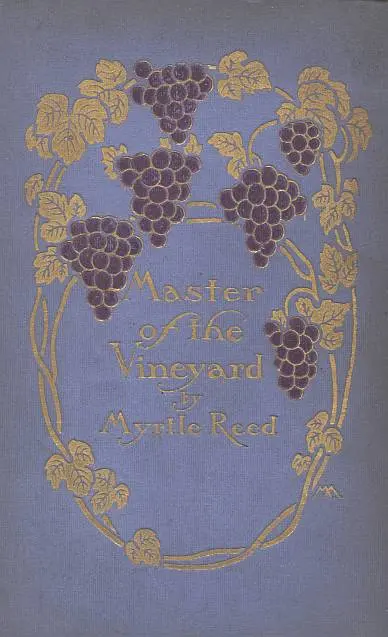
"Master of the Vineyard" by Myrtle Reed is a novel written in the early 20th century. The story follows Rosemary, a young woman reflecting on her life and circumstances while navigating a world shaped by familial obligations and unfulfilled dreams. It explores themes of love, duty, and personal aspiration against the backdrop of a vineyard that symbolizes both entrapment and legacy. The opening of the novel depicts Rosemary as she seeks solace on the Hill of the Muses, a place where she feels a sense of escape from her mundane existence. As she observes the valley, the river, and the vineyards belonging to the Marsh family, she reminisces about the weight of her thirty years, characterized by toil and emotional detachment. The narrative introduces Alden Marsh, a complex character frustrated with his role in the vineyard and his responsibilities, establishing a connection between them. Their interactions mix feelings of yearning for freedom with a budding emotional bond, hinting at the themes of love and sacrifice that will permeate the narrative.
Introduction adapted from the source catalogue; source summaries may be automatically generated.
Free to read · English · 80,142 words · No account needed
MAKE TIME FOR A GOOD BOOK
On by default. Untick to stop anonymous reading totals. Each page counts after 10 seconds in view. How this works.
Anonymous counting is on unless you have switched it off.
"Wife," breathed Alden, in a rapturous whisper. "Oh, Edith, say you
will!"
She turned away, for she could not force herself to meet his eyes. Her little white hands clasped the edge of the table tightly.
"Have you thought of this?" he continued. "Suppose, for him, there is
another woman----"
"There isn't," she denied. "I know that."
"Perhaps not in the sense you mean, but if he were free----?"
Edith drew a long breath. "I never thought of that."
Steadily the man pursued his advantage. "There must be some reason for his treating you as he does--for making you miserable. If, for any cause whatever, he wanted his freedom, would it make--any difference to you?"
She tapped her foot restlessly upon the floor. The atmosphere was surcharged with expectancy, then grew tense with waiting. Alden's eyes never swerved from her face.
[Sidenote: What Right?]
"Have you any right, through principles of your own, which I thoroughly understand and respect, to keep a man bound who desires to be free?"
She swayed back and forth unsteadily. Alden assisted her to her chair and stood before her as she sat with her elbows upon her knees, her face hidden in her hands. With the precise observation one accords to trifles in moments of unendurable stress, he noted that two of the hooks which fastened her gown at the back of her neck had become unfastened and that the white flesh showed through the opening.
"If," said Alden, mercilessly, "he longs for his freedom, and the law permits him to take it, have you the right to force your principles upon him--and thus keep him miserable when he might otherwise be happy?"
The clock in the hall struck ten. The sound died into silence and the remorseless tick-tick went on. Outside a belated cricket fiddled bravely as he fared upon his way. The late moon flooded the room with light.
"Have you?" demanded Alden. He endeavoured to speak calmly, but his
voice shook. "Answer me!"
Edith leaned back in her chair, white and troubled. "I don't know," she murmured, with lips that scarcely moved. "Before God, I don't know!"
[Sidenote: Advantages of a Letter]
The man went on pitilessly. "Don't you think you might find out? Before you condemn yourself and me to everlasting separation, don't you think you might at least ask him?"
"Yes," said Edith, slowly. "I might ask him. I'll go----"
"No, you needn't go. Can't you write?"
"Yes," she returned. "I can write."
All the emotion had gone from her voice. She said the words as
meaninglessly as a parrot might.
Your reading position is saved on this browser. Take it to another device with a library code. Reading pages adapt to text, rather than matching a printed edition.
Myrtle Reed
Myrtle Reed
Myrtle Reed
Myrtle Reed
BEHIND THE BOOK
This eBook is for the use of anyone anywhere in the United States and most other parts of the world at no cost and with almost no restrictions whatsoever. You may copy it, give it away or re-use it under the terms of the Project Gutenberg License included with this eBook or online at www.gutenberg.org. If you are not located in the United States, you will have to check the laws of the country where you are located before using this eBook. Read the source licence.
The original source file, including credits and licence, is retained by this library. Request an original-format copy at no charge. Please include the book title and Project Gutenberg identifier #27661.
KEEP YOUR CURIOSITY GOING
Coulson Kernahan

Maurice Baring
Frances Wright
Cécile Tormay

Frederic Jesup Stimson

W. H. P. (William Henry Pope) Jarvis