
The Book of Clever Beasts: Studies in Unnatural History
Myrtle Reed
THE CLASSIC COLLECTION · 1910
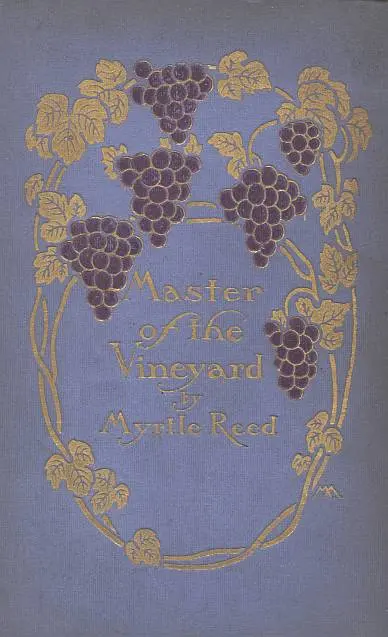
"Master of the Vineyard" by Myrtle Reed is a novel written in the early 20th century. The story follows Rosemary, a young woman reflecting on her life and circumstances while navigating a world shaped by familial obligations and unfulfilled dreams. It explores themes of love, duty, and personal aspiration against the backdrop of a vineyard that symbolizes both entrapment and legacy. The opening of the novel depicts Rosemary as she seeks solace on the Hill of the Muses, a place where she feels a sense of escape from her mundane existence. As she observes the valley, the river, and the vineyards belonging to the Marsh family, she reminisces about the weight of her thirty years, characterized by toil and emotional detachment. The narrative introduces Alden Marsh, a complex character frustrated with his role in the vineyard and his responsibilities, establishing a connection between them. Their interactions mix feelings of yearning for freedom with a budding emotional bond, hinting at the themes of love and sacrifice that will permeate the narrative.
Introduction adapted from the source catalogue; source summaries may be automatically generated.
Free to read · English · 80,142 words · No account needed
MAKE TIME FOR A GOOD BOOK
On by default. Untick to stop anonymous reading totals. Each page counts after 10 seconds in view. How this works.
Anonymous counting is on unless you have switched it off.
Madame took the picture, studied it for a moment, then returned it to its place. She made no comment, having been asked for none.
"Won't you lie down, dear?"
"Yes, I believe I will."
"Truly?"
"Yes--I promise."
With a sad little smile she kissed Madame, closed the door, and turned the key in the lock. The old lady sighed as she went down with the tray, reflecting how impossible it is really to aid another, unless the barrier of silence be removed.
At four, she had her tea alone. No sound came from up-stairs, and Alden neither returned to luncheon nor sent word. When he came in, a little past six, he was tired and muddy, his face was strained and white, and, vouchsafing only the briefest answers to his mother's solicitude, went straight to his room.
Exactly upon the stroke of seven, both appeared, Alden in evening clothes as usual, and Edith in her black gown, above which her face was deathly white by contrast, in spite of the spangles. She wore no ornaments, not even the string of pearls about her bare throat.
"You look as though you were in mourning, my dear," said Madame. "Let me
get you a red rose."
[Sidenote: Things to Be Said]
She started toward the veranda, but, with a little cry, Edith caught her and held her back. "No," she said, in a strange tone, "roses are--not for me!"
The dinner-gong chimed in with the answer, and the three went out together. Neither Alden nor Edith made more than a pretence of eating. Edith held her head high and avoided even his eyes, though more than once Madame saw the intensity of his appeal.
Afterward he took his paper, Madame her fancy work, and Edith, attempting to play solitaire, hopelessly fumbled her cards. Madame made a valiant effort to carry on a conversation alone, but at length the monologue wearied her, and she slipped quietly out of the room.
Edith turned, with a start, and hurriedly rose to follow her. Alden intercepted her. "No," he said, quietly. "There are things to be said between you and me."
"I thought," Edith murmured, as she sank into the chair he offered her, "that everything was said last night."
"Everything? Perhaps, but not for the last time."
She leaned forward, into the light, put her elbows upon the table, and rested her head upon her clasped hands, as though to shade her eyes. "Well?" she said, wearily.
"Look at me!"
[Sidenote: Vows and the Law]
Your reading position is saved on this browser. Take it to another device with a library code. Reading pages adapt to text, rather than matching a printed edition.
Myrtle Reed
Myrtle Reed
Myrtle Reed
Myrtle Reed
BEHIND THE BOOK
This eBook is for the use of anyone anywhere in the United States and most other parts of the world at no cost and with almost no restrictions whatsoever. You may copy it, give it away or re-use it under the terms of the Project Gutenberg License included with this eBook or online at www.gutenberg.org. If you are not located in the United States, you will have to check the laws of the country where you are located before using this eBook. Read the source licence.
The original source file, including credits and licence, is retained by this library. Request an original-format copy at no charge. Please include the book title and Project Gutenberg identifier #27661.
KEEP YOUR CURIOSITY GOING
Coulson Kernahan

Maurice Baring
Frances Wright
Cécile Tormay

Frederic Jesup Stimson

W. H. P. (William Henry Pope) Jarvis