
Last letters from the living dead man
David Patterson (Spirit) Hatch
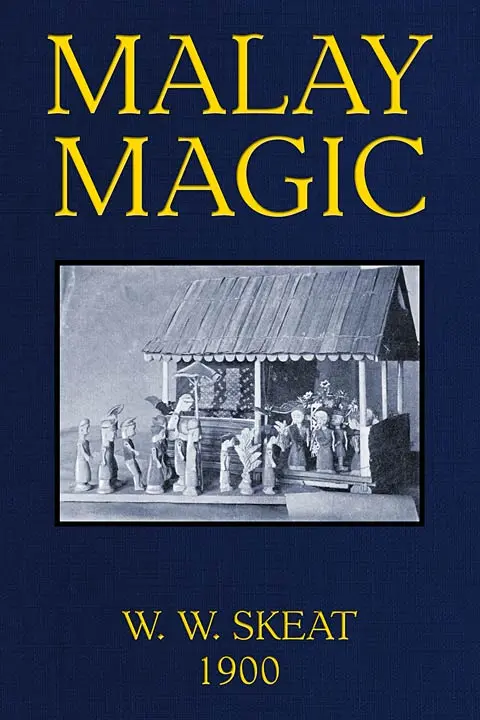
THE CLASSIC COLLECTION · 1900
"Malay Magic" by Walter William Skeat is an introductory work on folklore and popular religion written in the late 19th century. It explores the rich tapestry of beliefs, customs, and magical practices of the Malays in the Malay Peninsula, drawing upon a variety of sources, including personal observations, native manuscripts, and published works. The book aims to document and analyze the traditional beliefs and practices that are integral to Malay culture, highlighting the complexity of their folklore intertwined with influences from Indian, Arab, and indigenous sources. The opening of the book sets the stage for a comprehensive exploration of Malay folklore, establishing the author's intent to create a representative account of Malay beliefs and magical practices. Skeat introduces the key themes such as creation myths, the understanding of nature, and the relationships between humans and the supernatural world. He reflects on the significance of various folkloric beliefs, such as the creation of the world and the role of magic in everyday life, and emphasizes the importance of these elements in understanding the Malay identity and culture. As he begins to unfold these narratives, the reader is invited into the intricate world of Malay magic, laying the foundation for the detailed studies that follow.
Introduction adapted from the source catalogue; source summaries may be automatically generated.
Free to read · English · 226,518 words · No account needed
MAKE TIME FOR A GOOD BOOK
On by default. Untick to stop anonymous reading totals. Each page counts after 10 seconds in view. How this works.
Anonymous counting is on unless you have switched it off.
[1016] Lengkong Pulau is the name of the royal (Bengal) tiger, which was described to me as the steed of "Raja Jin Peria," whereas Nibong Hangus was explained as the name of the Black Leopard and the steed of "Lang Jengkat." These steeds (!) are said to wait outside the house when their masters have entered, their spoor being visible next morning! Raja Jin Peria and Lang Jengkat are said to reside upon the mountain Ambin Anak, together with other spirits named Mampek, Pilus, Lang Padang, Nibong Alai, and Gelombang Ribut, whereas Penglima Lenggang Laut lives in the Heart of the Seas (Pusat Tasek).
[1017] J.R.A.S., S.B., No. 17, p. 116.
[1018] i.e. Kahwin-nya.
[1019] i.e. Jerok.
[1020] Qu. tarohkan.
[1021] Romanized from the Sel. Journ., vol. ii. No. 26, pp. 424-426.
[1022] Qu. Bersulor.
[1023] Kalau berlaga atau bertanding pun gantong juga dua-dua.
[1024] Bangsa limau hutan.
[1025] Em. ruayat, i.e. kesah.
[1026] Di-surat, i.e. aku.
[1027] Ha, i.e. angkau. (But qu. em. do`a for de' ha.)
[1028] "Penetration is from me," i.e. "it rests with me whether you
penetrate or not."
[1029] Qu. ia.
[1030] Em. sa-hingga.
[1031] Gampang (?).
[1032] Rejang, said to be Achinese, equivalent to tinju.
[1033] Tembok = menchedok ayer (?).
[1034] Tang = kita in the spirit language (bhasa hantu).
[1035] Quære.
[1036] Quære.
[1037] Em. Mengadu.
[1038] i.e. Halilintar. These four are the Saudara Ampat.
[1039] Qu. Menunggu.
[1040] Qu. sunggoh-nya.
[1041] Some word like hantu, puaka, buatan orang, or the like, is
missing here.
[1042] The reading is doubtful; the word might be read berhenti.
[1043] As in the first section the Naning MS. here has menerka.
[1044] Qu. dia bersunggoh.
[1045] The substance of the rest of this short treatise will be found
in the text.
[1046] For `Utarid.
[1047] Zuhrah.
[1048] Mirrikh.
[1049] Zuhal.
[1050] Or Zu-'l-hijjah.
[1051] Inserted from another version, which also gives the numbers of the Abjad; for these vide Hughes' Dict. of Islam, s.v.
[1052] From Life and Essays of H. T. Colebrooke, vol. iii. p. 284.
[1053] Qu. memerang from prang, or memarang from parang?
[1054] Lit. the Invisible (or Hidden) Man.
[1055] Probably Fa is intended, v. inf.
[1056] Qu. Thal or Dal.
[1057] Explained as yang bising. Kl. "plaaggeest."
[1058] Membrum virile.
[1059] Coitus.
[1060] Transliteration of the magic letters and figures directed to
be used.
[1061] Ia was explained by 'Che Indut as referring to the figure (gambar), not to the person who was to be charmed. A more complete identification of the soul-receptacle with the person it would be hard to find.
[1062] Em. Derhaka.
[1063] Betuah or petua?
[1064] Mix them.
[1065] Quære.
[1066] A single needle which has a broken eye out of a score (needles
being made up in scores).
[1067] J.R.A.S., S.B., No. 14, p. 313.
Your reading position is saved on this browser. Take it to another device with a library code. Reading pages adapt to text, rather than matching a printed edition.
BEHIND THE BOOK
This eBook is for the use of anyone anywhere in the United States and most other parts of the world at no cost and with almost no restrictions whatsoever. You may copy it, give it away or re-use it under the terms of the Project Gutenberg License included with this eBook or online at www.gutenberg.org. If you are not located in the United States, you will have to check the laws of the country where you are located before using this eBook. Read the source licence.
The original source file, including credits and licence, is retained by this library. Request an original-format copy at no charge. Please include the book title and Project Gutenberg identifier #47873.
KEEP YOUR CURIOSITY GOING
David Patterson (Spirit) Hatch

David Patterson (Spirit) Hatch

David Patterson (Spirit) Hatch

Maurice Baring
Francis Greenleaf Allinson & Anne C. E. (Anne Crosby Emery) Allinson

Edwin Abbott Abbott