
Last letters from the living dead man
David Patterson (Spirit) Hatch
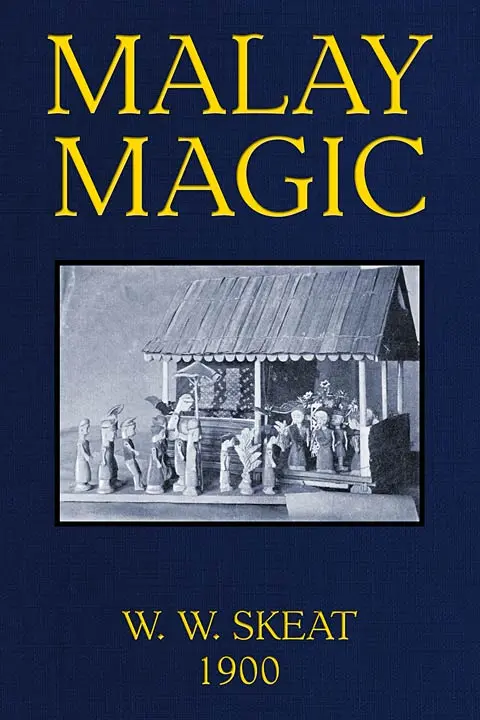
THE CLASSIC COLLECTION · 1900
"Malay Magic" by Walter William Skeat is an introductory work on folklore and popular religion written in the late 19th century. It explores the rich tapestry of beliefs, customs, and magical practices of the Malays in the Malay Peninsula, drawing upon a variety of sources, including personal observations, native manuscripts, and published works. The book aims to document and analyze the traditional beliefs and practices that are integral to Malay culture, highlighting the complexity of their folklore intertwined with influences from Indian, Arab, and indigenous sources. The opening of the book sets the stage for a comprehensive exploration of Malay folklore, establishing the author's intent to create a representative account of Malay beliefs and magical practices. Skeat introduces the key themes such as creation myths, the understanding of nature, and the relationships between humans and the supernatural world. He reflects on the significance of various folkloric beliefs, such as the creation of the world and the role of magic in everyday life, and emphasizes the importance of these elements in understanding the Malay identity and culture. As he begins to unfold these narratives, the reader is invited into the intricate world of Malay magic, laying the foundation for the detailed studies that follow.
Introduction adapted from the source catalogue; source summaries may be automatically generated.
Free to read · English · 226,518 words · No account needed
MAKE TIME FOR A GOOD BOOK
On by default. Untick to stop anonymous reading totals. Each page counts after 10 seconds in view. How this works.
Anonymous counting is on unless you have switched it off.
[980] Qu. angkau.
[981] The Filer of Teeth explained that the file being of iron, and hence emblematic of earth, the bowl of water in which the file was to be dipped emblematic of water in general, and the limes emblematic of the vegetable creation, it was necessary to invoke the three "Prophets" who are supposed to be in charge of those departments of creation. The explanation, however, is not a satisfactory one, and it is more probable that these lines have taken the place of an older invocation now forgotten. Their Arabic character in itself is almost conclusive on this point.
[982] Qu. beratus or saratus?
[983] Qu. baruh.
[984] The neckbone.
[985] The breastbone.
[986] The backbone.
[987] Em. Berchela chachat.
[988] i.e. beriring, also biring.
[989] Qu. pernama or berlima?
[990] Asam, which comes from the land, is mixed with salt, which comes from the sea, and the two bring out each other's qualities.
[991] Tengkuling, or tengguli, is said to be made with the squeezings of cocoa-nut pulp mixed with sugar, and cooked till the oil and sugar come out and float on the top; this is called tengguli.
[992] V.l.
'Ku titek pinang 'ku titek
'Ku titek di-atas batu
'Ku makan pinang sadikit
Naik s'ri ka muka aku.
Titek, is from titekka to hammer, and so to smash, hence 'ku titek = 'ku kachipkan, I break with the betel-nut scissors?
Temuning, v. l. tengkuling or tengguli (v. supra).
Ta' si kulita' seqq. should probably be taken as meaning "Ta' si kulita' stands for Tepi laut bunyi guroh halilintar."
Cp. "'Tah 'ting stands for patah ranting," etc.
[993] Menti is explained as a minor title of rank, below that of
mentri.
[994] i.e. Knead your limbs upwards.
[995] Qu. chintamani.
[996] Qu. hanyiran from hanyir.
[997] Qu. upau, a snake.
[998] i.e. Jibra'il, Gabriel.
[999] i.e. Nestapa.
[1000] Explained as meaning "to roll in anything sticky."
[1001] Tracks, qu. bangkar.
[1002] "Thrust deeply down."
[1003] i.e. yang dalam diri kita.
[1004] i.e. siput darat.
[1005] Em. Kalimu 'llah.
[1006] Raja di Laut: in this connection my informant quoted:
Maduraya nama bapa-nya,
Madaruti nama anak-nya,
Si Kekas nama anak-nya.
[1007] Em. Baruh.
[1008] Or Si-rekong, Si-reking; pronounced Serkong, Serking.
[1009] Qu. Sula.
[1010] Ula-ula is the name given to a pennon attached to the mainmast. It was of such length that it reached to the poop, which it flapped against or "whipped." Gada-gada was explained here as a short pennon attached to the foremast. Pemepah was the standard at the stern.
[1011] i.e. juru batu.
[1012] Or else this first verse:
Talang puan, tatang cherana
Dalang bidok pagi hari
Datang-lah tuan datang-lah nyawa,
Memanggil tuan datang kamari.
[1013] i.e. Penuwei.
[1014] i.e. Poko' kait-kait.
[1015] Or Kembola.
Your reading position is saved on this browser. Take it to another device with a library code. Reading pages adapt to text, rather than matching a printed edition.
BEHIND THE BOOK
This eBook is for the use of anyone anywhere in the United States and most other parts of the world at no cost and with almost no restrictions whatsoever. You may copy it, give it away or re-use it under the terms of the Project Gutenberg License included with this eBook or online at www.gutenberg.org. If you are not located in the United States, you will have to check the laws of the country where you are located before using this eBook. Read the source licence.
The original source file, including credits and licence, is retained by this library. Request an original-format copy at no charge. Please include the book title and Project Gutenberg identifier #47873.
KEEP YOUR CURIOSITY GOING
David Patterson (Spirit) Hatch

David Patterson (Spirit) Hatch

David Patterson (Spirit) Hatch

Maurice Baring
Francis Greenleaf Allinson & Anne C. E. (Anne Crosby Emery) Allinson

Edwin Abbott Abbott