THE CLASSIC COLLECTION✦South Australia and Western AustraliaCLASSIC FREE BOOKS
South Australia and Western Australia
Anthony Trollope
THE CLASSIC COLLECTION · 1882
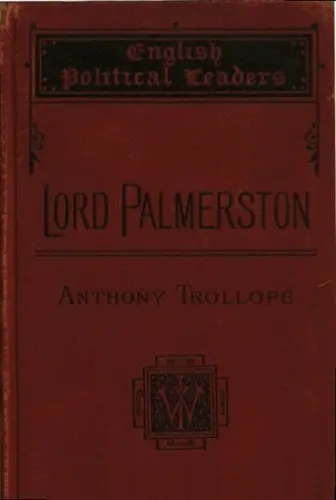
"Lord Palmerston" by Anthony Trollope is a historical account written in the late 19th century. The book provides a detailed examination of the life and political career of Henry John Temple, the 3rd Viscount Palmerston, who served as a prominent British statesman and Prime Minister during the 19th century. It covers his extensive impact on foreign and domestic policy, focusing particularly on his perception as a foreign minister and his clashes with other political figures, including the Prince Consort. The opening of "Lord Palmerston" introduces readers to the author's approach in compiling the memoir, citing various sources, including speeches and biographies. Trollope expresses his intention to navigate the complicated political landscape of Palmerston's life, emphasizing the controversies surrounding his dismissal as Foreign Minister and how he skillfully maneuvered through the political arena to regain power. The author hints at Palmerston's character, noting his determination and resilience, while also foreshadowing the key events in Palmerston’s career that would define his legacy in British politics. The initial narrative sets up a contextual framework for understanding Palmerston's role in significant historical events and debates, laying the groundwork for a deeper exploration of his life throughout the rest of the text.
Introduction adapted from the source catalogue; source summaries may be automatically generated.
Free to read · English · 65,828 words · No account needed
MAKE TIME FOR A GOOD BOOK
On by default. Untick to stop anonymous reading totals. Each page counts after 10 seconds in view. How this works.
Anonymous counting is on unless you have switched it off.
Panmure, Lord, Minister of War, 167.
Peel, Sir Robert, Palmerston’s opinion of, 24;
Home Secretary, 37;
vainly attempts to form a Government, 74;
repeals the Corn Laws, 87;
resigns, 88;
last speech in the House, 123.
Percival, Mr., Prime Minister, 16, 18;
assassinated, 19.
Petty, Lord Henry, defeats Palmerston at Cambridge, 11.
Pitt, the death of, 11, 14.
Ponsonby, Lord, our Ambassador at Vienna, 102;
opposes Palmerston’s Eastern policy, 111.
Portland, the Duke of, 12.
Pope Pio Nono, Palmerston’s great expectations for Italy
from his supposed liberalism, 96;
his letter to McHale on Irish grievances, 97;
escapes from Rome, 108.
Prince Consort, misjudges Palmerston, 2, 4, 6;
opinions on the Crimean war, 156;
his death, 192.
Quadruple Alliance, the, 54.
Queen’s, The, displeasure with Palmerston, 4, 141;
coronation, 65;
refuses Peel’s demand for the dismissal of her Ladies of
the Bedchamber, 74;
at the Great Exhibition, 131;
her favour shown to Palmerston, 7, 165.
Raglan, Lord, in command at the Crimea, 161, 167.
Redcliffe, Sir Stratford de, encourages the Porte in resisting
Russian demands, 152.
Reform Bill, Lord Grey’s, 31.
Rémusat discloses the French policy in Egypt, 78.
Roebuck, Mr., chosen to raise the question of Pacifico’s claims in the House of Commons, 122; moves inquiry into the state of the army, 162, 165.
Rome, French occupation of, 108.
Russell, Lord John, as a leader of the House of Commons, 81;
succeeds Sir R. Peel as Prime Minister, 88;
his powerful speech on Palmerston’s dismissal, 141;
is turned out by Palmerston on the Militia Bill, 143;
Foreign Secretary under Lord Aberdeen, 147;
deserts the Government, 162;
loses caste thereby, 164;
joins Palmerston’s Government, 163;
diplomatic failure at the Vienna Conference, 166;
moves amendment to the Tory Reform Bill, 185;
created a peer, 193.
Search for slavers, the right of, 85.
Sebastiani, Count, 49.
Secession, the American war of, causes of, 192;
tension of international feeling during, 194.
Sick Man, chattels of the, 152, 171.
Sinope, sea-fight at, 158.
Slavery, the Abolition of, 55.
Smith O’Brien heads the Irish deputation to Paris, 103.
Spanish marriages, the, 90;
their disastrous consequences, 93, 94.
Spencer, Lord, 61.
Stockmar’s, Baron, influence with the Prince Consort, 3;
his opinion of Palmerston, 10.
Stanley, Lord, attacked by Palmerston, 83;
opposes Repeal of the Corn Laws, 88;
his speech against Palmerston’s position towards the Don
Pacifico claims, 83, 112, 113.
Talleyrand in London, 49;
hates Palmerston, 202.
Temple, Sir Wm., Palmerston’s brother, our Ambassador at Naples, 175.
Thiers, M., as French Minister, 68, 76;
break-up of his policy, 78.
Tory Government, the last rally, 32.
Trent, the British steamer, Captain Wilkes boards, 195.
Turk, the doom of the, 172.
Urquhart, Mr., attacks Palmerston in his pamphlets, 72.
Vienna, the Treaty of, 47, 94;
question of remodelling, 196.
Vienna, abortive Conference at, 152;
second Conference at, 166, 167.
Walewski and the Coup d’Etat, 135.
Wellington, the Duke of, 21;
resigns Command-in-Chief, 33;
a soldier-statesman, 36;
succeeds Lord Goderich as Prime Minister, 37;
weakness of his Government, 43;
Prime Minister again, 60.
William IV., a true Liberal, 61.
Your reading position is saved on this browser. Take it to another device with a library code. Reading pages adapt to text, rather than matching a printed edition.
Anthony Trollope

Anthony Trollope

Anthony Trollope

Anthony Trollope
BEHIND THE BOOK
This eBook is for the use of anyone anywhere in the United States and most other parts of the world at no cost and with almost no restrictions whatsoever. You may copy it, give it away or re-use it under the terms of the Project Gutenberg License included with this eBook or online at www.gutenberg.org. If you are not located in the United States, you will have to check the laws of the country where you are located before using this eBook. Read the source licence.
The original source file, including credits and licence, is retained by this library. Request an original-format copy at no charge. Please include the book title and Project Gutenberg identifier #55648.
KEEP YOUR CURIOSITY GOING
Cécile Tormay

Moritz Busch
John L. Ransom
Frances Wright
Cécile Tormay

Mabel Potter Daggett