THE CLASSIC COLLECTION✦South Australia and Western AustraliaCLASSIC FREE BOOKS
South Australia and Western Australia
Anthony Trollope
THE CLASSIC COLLECTION · 1882
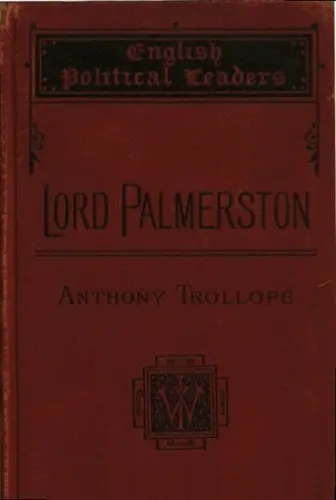
"Lord Palmerston" by Anthony Trollope is a historical account written in the late 19th century. The book provides a detailed examination of the life and political career of Henry John Temple, the 3rd Viscount Palmerston, who served as a prominent British statesman and Prime Minister during the 19th century. It covers his extensive impact on foreign and domestic policy, focusing particularly on his perception as a foreign minister and his clashes with other political figures, including the Prince Consort. The opening of "Lord Palmerston" introduces readers to the author's approach in compiling the memoir, citing various sources, including speeches and biographies. Trollope expresses his intention to navigate the complicated political landscape of Palmerston's life, emphasizing the controversies surrounding his dismissal as Foreign Minister and how he skillfully maneuvered through the political arena to regain power. The author hints at Palmerston's character, noting his determination and resilience, while also foreshadowing the key events in Palmerston’s career that would define his legacy in British politics. The initial narrative sets up a contextual framework for understanding Palmerston's role in significant historical events and debates, laying the groundwork for a deeper exploration of his life throughout the rest of the text.
Introduction adapted from the source catalogue; source summaries may be automatically generated.
Free to read · English · 65,828 words · No account needed
MAKE TIME FOR A GOOD BOOK
On by default. Untick to stop anonymous reading totals. Each page counts after 10 seconds in view. How this works.
Anonymous counting is on unless you have switched it off.
Nimmo, the Irish engineer, 24, 42.
Normanby, Lord, 94;
our Ambassador at Paris, 100, 101;
differs from Palmerston on the Greek Compensation question, 116;
and as to the Coup d’Etat, 134.
O’Connell, Mr., is elected for Clare, 39;
on Irish coercion, 60;
is convicted for conspiracy, but released by the Lords, 85.
Orsini, 182.
Osborne, Bernal, 123.
Palmerston, Lord, materials for life of, 1;
his tendency to lessen the power of the Crown, 3, 107;
two charges against, 4;
his success as a Foreign Minister, 8, 27, 46;
fifty years in office, 8;
his character, 9, 16, 17;
constitution, 10;
“Cupid,” 10, 20, 25;
early life and education, 10, 11;
stands unsuccessfully for the University of Cambridge, 11;
unseated for Horsham, 11;
member for Newtown, 11;
Junior Lord, 11;
member for Tiverton, 12, 62, 77;
his means, 12;
as an Irish landlord, 12, 23, 42;
his advantages of person, 12;
his mode of life, 12, 26;
advocates a military college, 15;
as an orator, 15, 24, 211;
his first speech in Parliament, 16;
Secretary at War, 17, 33;
magnifies the office, 20;
political apprenticeship, 17;
theory of official life, 17, 18, 20, 26, 42, 53;
Tory traditions and Liberal leanings, 10, 18, 30;
member for Cambridge, 1812-25, 19;
enters Lord Liverpool’s Cabinet, 3, 19, 27;
impression made on contemporaries by, 16, 25, 26;
his parliamentary reticence, 19, 24, 62, 63;
sides with the Whigs on the Catholic claims, 21, 24, 38;
at Paris--reference to Napoleon’s pictures, 21;
shot at by Lieut. Davis, 22;
visits the scene of Waterloo--low opinion of the Belgians, 22;
his estimate of Hume, 23;
his style of letter-writing, 23, 64;
his pluck and good-humour, 15, 26, 148;
business capacities and energy, 25, 212;
his political self-reliance, 29,
self-diffidence, 30,
and stubbornness, 31;
Palmerston and Herries, 35;
refuses the Gov.-Generalship of India, 32;
favours the Catholics, 38;
quits the Duke of Wellington’s Cabinet, 38;
anxious for Greek independence, 39;
out of office, 40;
fallen among the Whigs, 41, 58;
his exertions for Catholic Emancipation, 43;
“hammering away” at the Slave Trade, 43, 56, 58, 81, 84;
Palmerston and Parliamentary Reform, 44, 53, 150;
becomes Whig Foreign Secretary under Lord Grey, 44, 47, 48;
his autobiography, 33, 47;
takes up the Belgian question, 48;
opposes the policy of Louis Philippe, 53, 68;
member for S. Hants, 54, 62;
the Quadruple Alliance, 55, 59;
a disciple of Canning, 55, 59;
incessant work, 58, 103;
out of office, 60;
his cordiality with William IV., 61;
back at the Foreign Office under Lord Melbourne, 62;
speaks on the British Legion in Spain, 64;
policy on the Eastern question--inaugurates the English
protectorate of the Sultan, 71;
Mr. Urquhart’s charges--“Russian Gold,” 72;
on British interests, 73, 85;
takes part in the discussion of the Bedchamber question, 74;
marries Lord Melbourne’s sister, 75;
success of his Eastern policy, 78;
resigns with the Melbourne Government, 81;
in opposition,--attacks Lord Stanley, 82;
his doings on the Turf, 74, 84;
on the right of search for slaves, 85;
returns to the Foreign Office under Lord Russell, 88;
his attitude towards the Spanish marriages, 90;
as a politician compared with Guizot, 95, 201;
on the partition of Poland, 94, 104;
his advances to Rome in view of Irish disaffection, 97;
his attitude towards the French Revolution, 100, 101;
protests against Lamartine’s speeches on Irish disorder, 103;
advice to Austria on Northern Italy, 105;
on the French occupation of Rome, 108;
befriends the Hungarian refugees, 110;
his political arrogance, 96, 112, 118, 130, 139;
causes ill-feeling among European diplomats, 115, 117, 203;
presses Don Pacifico’s claims, 120, 129;
his great speech on Mr. Roebuck’s motion, 124;
at the culminating point of his career, 127;
his interest in the Volunteer movement and Fortification
schemes, and in the Great Exhibition, 131;
believes in Louis Napoleon, 134;
his indiscreet utterances on the Coup d’Etat bring about
his dismissal, 135;
Palmerston “is smashed,” 141;
turns out Lord Russell on the Militia Bill, 143;
refuses to serve under Lord Derby, 145;
proposes a resolution on Free-Trade, 146;
at the Home Office under Lord Aberdeen, 148;
deputations, 149;
presses for more active measures against Russia in the East,
150, 153, 155, 159;
Palmerston’s luck, 151;
controversy with Mr. Bright, 160;
an anomalous Home Secretary, 161;
resigns with the Aberdeen Ministry on the eve of the Crimean war, 162;
refuses to serve under Lord Derby, and is called upon to form
a Ministry himself, 163;
circumstances of his advent to power, and his qualifications
to meet them, 166;
as a politician compared with Lord Russell, 167;
his instructions for the Crimean army, 168;
must be held mainly responsible for the war, 173, 178;
created K.G., 174;
is defeated on the China question, and appeals successfully
to the country, 176;
his popularity, 177, 178;
his splendid success in dealing with the Indian Mutiny, 178;
speech at the Mansion House on the Indian Mutiny, 180;
abolishes the East India Company, 182;
brings in the Conspiracy Bill, 182;
is defeated on the Tory amendment and resigns, 184;
becomes a second time Prime Minister, 187;
promotes the unification of Italy, 188;
distrusts Napoleon, 189, 196;
organizing the Volunteers, 190;
Warden of the Cinque Ports, 191;
abolishes the paper duties, 191;
maintains England’s neutrality during the American war of Secession, 193;
sends the Guards to Canada, 195;
his European policy during the Danish war, 197;
his last speech in the House of Commons, 198;
is buried in Westminster Abbey, 199;
“Civis Romanus,” 201;
general view of his career as Minister, 200;
compared as a statesman with Gladstone and Canning, 204;
his manliness, 209.
Your reading position is saved on this browser. Take it to another device with a library code. Reading pages adapt to text, rather than matching a printed edition.
Anthony Trollope

Anthony Trollope

Anthony Trollope

Anthony Trollope
BEHIND THE BOOK
This eBook is for the use of anyone anywhere in the United States and most other parts of the world at no cost and with almost no restrictions whatsoever. You may copy it, give it away or re-use it under the terms of the Project Gutenberg License included with this eBook or online at www.gutenberg.org. If you are not located in the United States, you will have to check the laws of the country where you are located before using this eBook. Read the source licence.
The original source file, including credits and licence, is retained by this library. Request an original-format copy at no charge. Please include the book title and Project Gutenberg identifier #55648.
KEEP YOUR CURIOSITY GOING
Cécile Tormay

Moritz Busch
John L. Ransom
Frances Wright
Cécile Tormay

Mabel Potter Daggett