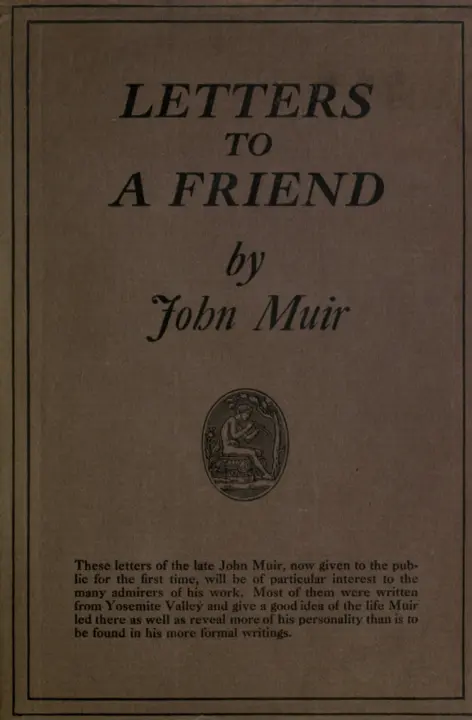
Letters to a Friend, Written to Mrs. Ezra S. Carr, 1866-1879
John Muir
THE CLASSIC COLLECTION · 1921
"Lichens" by Annie Lorrain Smith is a scientific publication written in the early 20th century. This book serves as a comprehensive study of lichens, covering their historical classification, morphology, physiology, and ecological significance. The work is likely targeted towards botanists, lichenologists, and students interested in the intricacies of these unique symbiotic organisms. The opening of the text provides context for its publication, emphasizing the challenges faced during the First World War that delayed its release. The preface explains the book's structure, indicating that it will include historical accounts of lichenology, practical information such as a glossary and bibliography, and detailed analysis of the constituents of lichens. It also acknowledges contributions from various experts in the field who assisted with research and observations, thereby establishing a foundation for the detailed exploration of lichens that follows in the subsequent chapters.
Introduction adapted from the source catalogue; source summaries may be automatically generated.
Free to read · English · 184,755 words · No account needed
MAKE TIME FOR A GOOD BOOK
On by default. Untick to stop anonymous reading totals. Each page counts after 10 seconds in view. How this works.
Anonymous counting is on unless you have switched it off.
[158] Wallroth 1825, I.
[159] Wallroth 1825, I., p. 303.
[160] Fries 1831, pp. lvi and lvii.
[161] Kützing 1843.
[162] Thwaites 1849, pp. 219 and 241.
[163] Flotow 1850.
[164] Sachs 1855.
[165] Itzigsohn 1855.
[166] Itzigsohn 1854.
[167] Hicks 1860 and 1861.
[168] Speerschneider 1853.
[169] Famintzin and Baranetzky 1867.
[170] Baranetzky 1869.
[171] Itzigsohn 1867.
[172] Bayrhoffer 1851.
[173] Tulasne 1852.
[174] Speerschneider 1854.
[175] de Bary 1866, p. 242.
[176] Schwendener 1860, p. 125.
[177] de Bary 1866, p. 291.
[178] Nylander 1870.
[179] Elfving 1903 and 1913.
[180] See p. 133.
[181] Minks 1878 and 1879.
[182] Müller 1878 and 1884.
[183] Zukal 1884.
[184] Darbishire 1895¹.
[185] Schwendener 1860, etc.
[186] Schwendener 1867.
[187] Schwendener 1868, p. 195.
[188] Schwendener 1869.
[189] Rees 1871.
[190] Bornet 1872.
[191] The authors quoted have been followed in their designation of the various green algae that form lichen gonidia. It is however now recognized (Wille 1913) that either Protococcus viridis Ag., Chlorella or other Protococcaceae may form the universal green coating on trees, etc., and be incorporated as lichen gonidia. Pleurococcus vulgaris Naeg. and Pleurococcus Naegeli Chod. are synonyms of Protococcus viridis. In that alga there is no pyrenoid, and no zoospores are formed.
The genus Cystococcus, according to Chodat (1913), is characterized by the presence of a pyrenoid and by reproduction with zoospores and is identical with Pleurococcus vulgaris Menegh. (non Naeg.), though Wille regards Meneghini’s species as of mixed content. Paulson and Hastings (1920) now find that Chodat’s pyrenoid is the nucleus of the cell.
[192] Woronin 1872.
[193] Archer 1873, 1874, 1875.
[194] Bornet 1873 and 1874.
[195] Treub 1873.
[196] Borzi 1875.
[197] Stahl 1877.
[198] Bonnier 1886 and 1889.
[199] Bonnier was probably experimenting with an Arthopyrenia. Verrucaria species combine with Protococcus or according to Chodat with Coccobotrys gen. nov.
[200] Nylander 1858.
[201] Fuisting 1868, p. 674.
[202] Winter 1876, p. 264.
[203] Stahl 1877.
[204] See p. 62.
[205] Wainio 1890, 2, p. 29.
[206] Reinke 1872, p. 108.
[207] Reinke 1873¹.
[208] Reinke 1873², p. 98.
[209] Frank 1876.
[210] de Bary 1879.
[211] Bornet 1873.
[212] Hedlund 1892.
[213] Peirce 1899.
[214] Hue 1915.
[215] Lindau 1895¹.
[216] Peirce 1899.
[217] Claassen 1914.
[218] Frank 1876.
[219] Lindau 1895.
[220] Bachmann 1913.
[221] Cunningham 1879.
[222] Ward 1884.
[223] Jennings 1895.
[224] Fitting 1910.
[225] Bornet 1873.
[226] Bonnier 1889².
[227] Schwendener 1867.
[228] Elenkin 1902¹ and 1904¹, 1904².
[229] Elenkin 1906².
[230] Danilov 1910.
[231] Paulson and Hastings 1920.
[232] Nienburg 1917.
[233] Zukal 1891.
[234] Sutherland 1915.
[235] Beyerinck 1890.
[236] Artari 1902.
[237] See p. 56.
[238] Artari 1902.
[239] Treboux 1912.
[240] Chodat 1913.
[241] See Paulson and Hastings 1920.
[242] Keeble 1910.
[243] Reinke 1872.
[244] Dufrenoy 1918.
[245] Artari 1899.
[246] Etard and Bouilhac 1898.
[247] Radais 1900.
[248] Artari 1901.
[249] Chodat 1913.
[250] Treboux 1905.
[251] Marshall Ward 1884.
[252] Uhlir 1915.
[253] Tobler 1911.
[254] Zopf 1907.
[255] Chambers 1912.
[256] Chodat 1913.
[257] See note Paulson and Hastings, p. 28.
[258] Chodat 1913.
[259] Gargeaune 1911.
[260] Servettaz 1913.
[261] See p. 65.
[262] Wettstein 1915.
[263] Meyer 1825.
[264] Holle 1849.
[265] Tulasne 1852.
[266] Bonnier 1889².
[267] Term coined by Lindau (1899) to describe the pseudo-cellular tissue of lichens and fungi now referred to as “plectenchyma.”
[268] Wainio 1897.
[269] Möller 1887.
[270] Tobler 1909.
[271] Wahrlich 1893.
[272] Baur 1898.
[273] Darbishire 1899.
[274] Kienitz-Gerloff 1902.
[275] Meyer 1902.
[276] Salter 1902.
[277] Nylander (1866) gave the term “gonimia” to the blue-green algae of the Phycolichens, retaining the term “gonidia” for the bright-green algae of the Archilichens: the distinction is not now maintained.
[278] For further details see also the chapter on Classification.
[279] See p. 133.
[280] Krempelhuber 1873.
[281] Chodat 1913.
[282] Paulson and Hastings 1920.
[283] Paulson in litt.
[284] Acton 1909.
[285] Bialosuknia 1909.
[286] Hue 1905.
[287] Deckenbach 1893.
[288] In a comparative study of leaf algae from Ceylon and Barbadoes, N. Thomas (1913) came to the conclusion that Marshall Ward’s alga in its early stages is the same as Phyllactidium tropicum Moebius; and that the Barbadoes alga with which she was working represented the older stages, it being then subcuticular in habit, forming rhizoids, barren and sterile aerial hairs and subcuticular zoosporangia.
[289] De Toni 1889.
[290] Bornet 1873.
Your reading position is saved on this browser. Take it to another device with a library code. Reading pages adapt to text, rather than matching a printed edition.
BEHIND THE BOOK
This eBook is for the use of anyone anywhere in the United States and most other parts of the world at no cost and with almost no restrictions whatsoever. You may copy it, give it away or re-use it under the terms of the Project Gutenberg License included with this eBook or online at www.gutenberg.org. If you are not located in the United States, you will have to check the laws of the country where you are located before using this eBook. Read the source licence.
The original source file, including credits and licence, is retained by this library. Request an original-format copy at no charge. Please include the book title and Project Gutenberg identifier #61616.
KEEP YOUR CURIOSITY GOING
John Muir
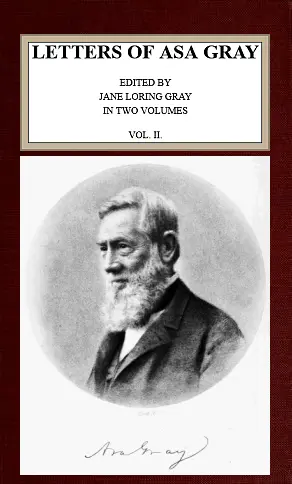
Asa Gray
Asa Gray
Florence Nightingale
Elizabeth Robins Pennell
Denison Olmsted