
The Wound Dresser A Series of Letters Written from the Hospitals in Washington during the War of the Rebellion
Walt Whitman
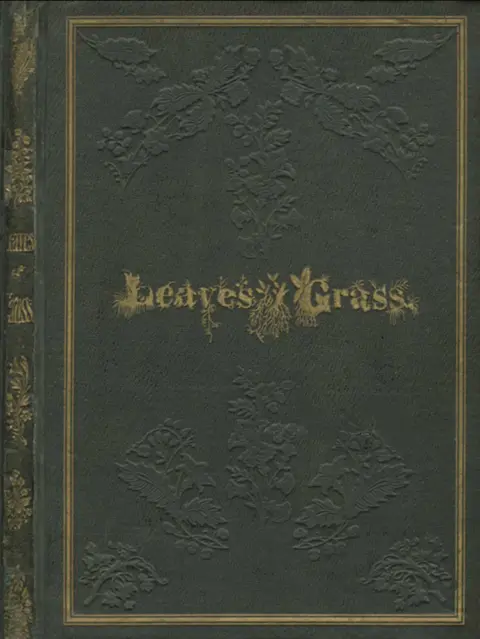
THE CLASSIC COLLECTION · 1855
"Leaves of Grass" by Walt Whitman is a poetry collection first published in 1855. Beginning with just twelve poems, Whitman continuously revised and expanded this work throughout his life, eventually creating a collection of over four hundred poems. He celebrates American democracy, nature, the human body, and sensual pleasure in verse that breaks traditional rules of rhyme and meter. The book's explicit content sparked controversy and condemnation, yet it ultimately became recognized as one of the central works of American poetry.
Introduction adapted from the source catalogue; source summaries may be automatically generated.
Free to read · English · 123,719 words · No account needed
MAKE TIME FOR A GOOD BOOK
On by default. Untick to stop anonymous reading totals. Each page counts after 10 seconds in view. How this works.
Anonymous counting is on unless you have switched it off.
Off the word I have spoken I except not one--red, white, black, are all deific, In each house is the ovum, it comes forth after a thousand years.
Spots or cracks at the windows do not disturb me, Tall and sufficient stand behind and make signs to me, I read the promise and patiently wait.
This is a full-grown lily’s face, She speaks to the limber-hipp’d man near the garden pickets, Come here she blushingly cries, Come nigh to me limber-hipp’d man, Stand at my side till I lean as high as I can upon you, Fill me with albescent honey, bend down to me, Rub to me with your chafing beard, rub to my breast and shoulders.
5
The old face of the mother of many children,
Whist! I am fully content.
Lull’d and late is the smoke of the First-day morning, It hangs low over the rows of trees by the fences, It hangs thin by the sassafras and wild-cherry and cat-brier under them.
I saw the rich ladies in full dress at the soiree, I heard what the singers were singing so long, Heard who sprang in crimson youth from the white froth and the water-blue.
Behold a woman!
She looks out from her quaker cap, her face is clearer and more
beautiful than the sky.
She sits in an armchair under the shaded porch of the farmhouse, The sun just shines on her old white head.
Her ample gown is of cream-hued linen,
Her grandsons raised the flax, and her grand-daughters spun it with
the distaff and the wheel.
The melodious character of the earth,
The finish beyond which philosophy cannot go and does not wish to go,
The justified mother of men.
The Mystic Trumpeter
1
Hark, some wild trumpeter, some strange musician,
Hovering unseen in air, vibrates capricious tunes to-night.
I hear thee trumpeter, listening alert I catch thy notes, Now pouring, whirling like a tempest round me, Now low, subdued, now in the distance lost.
2
Come nearer bodiless one, haply in thee resounds
Some dead composer, haply thy pensive life
Was fill’d with aspirations high, unform’d ideals,
Waves, oceans musical, chaotically surging,
That now ecstatic ghost, close to me bending, thy cornet echoing, pealing,
Gives out to no one’s ears but mine, but freely gives to mine,
That I may thee translate.
Your reading position is saved on this browser. Take it to another device with a library code. Reading pages adapt to text, rather than matching a printed edition.
Walt Whitman

Anne (Anne Burrows) Gilchrist & Walt Whitman
Walt Whitman
Walt Whitman
BEHIND THE BOOK
This eBook is for the use of anyone anywhere in the United States and most other parts of the world at no cost and with almost no restrictions whatsoever. You may copy it, give it away or re-use it under the terms of the Project Gutenberg License included with this eBook or online at www.gutenberg.org. If you are not located in the United States, you will have to check the laws of the country where you are located before using this eBook. Read the source licence.
The original source file, including credits and licence, is retained by this library. Request an original-format copy at no charge. Please include the book title and Project Gutenberg identifier #1322.
KEEP YOUR CURIOSITY GOING

Eric Mackay
Edmund Gosse
Sophia Margaretta Hensley
Gilbert Parker
George MacDonald

Elizabeth Bibesco