
The Wound Dresser A Series of Letters Written from the Hospitals in Washington during the War of the Rebellion
Walt Whitman
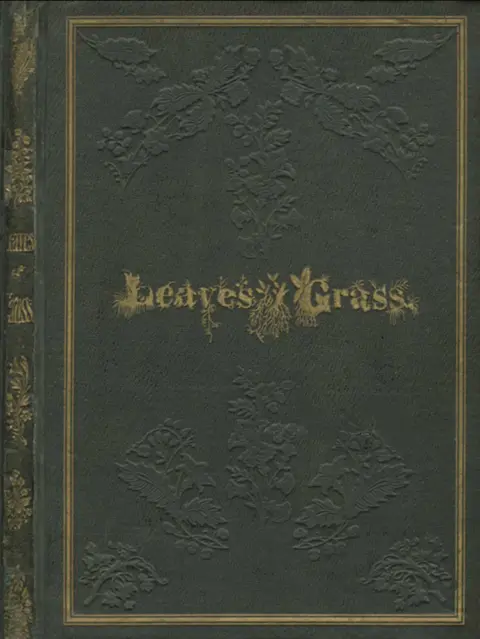
THE CLASSIC COLLECTION · 1855
"Leaves of Grass" by Walt Whitman is a poetry collection first published in 1855. Beginning with just twelve poems, Whitman continuously revised and expanded this work throughout his life, eventually creating a collection of over four hundred poems. He celebrates American democracy, nature, the human body, and sensual pleasure in verse that breaks traditional rules of rhyme and meter. The book's explicit content sparked controversy and condemnation, yet it ultimately became recognized as one of the central works of American poetry.
Introduction adapted from the source catalogue; source summaries may be automatically generated.
Free to read · English · 123,719 words · No account needed
MAKE TIME FOR A GOOD BOOK
On by default. Untick to stop anonymous reading totals. Each page counts after 10 seconds in view. How this works.
Anonymous counting is on unless you have switched it off.
I believe in those wing’d purposes, And acknowledge red, yellow, white, playing within me, And consider green and violet and the tufted crown intentional, And do not call the tortoise unworthy because she is not something else, And the jay in the woods never studied the gamut, yet trills pretty well to me, And the look of the bay mare shames silliness out of me.
14 The wild gander leads his flock through the cool night, Ya-honk he says, and sounds it down to me like an invitation, The pert may suppose it meaningless, but I listening close, Find its purpose and place up there toward the wintry sky.
The sharp-hoof’d moose of the north, the cat on the house-sill, the chickadee, the prairie-dog, The litter of the grunting sow as they tug at her teats, The brood of the turkey-hen and she with her half-spread wings, I see in them and myself the same old law.
The press of my foot to the earth springs a hundred affections, They scorn the best I can do to relate them.
I am enamour’d of growing out-doors, Of men that live among cattle or taste of the ocean or woods, Of the builders and steerers of ships and the wielders of axes and mauls, and the drivers of horses, I can eat and sleep with them week in and week out.
What is commonest, cheapest, nearest, easiest, is Me, Me going in for my chances, spending for vast returns, Adorning myself to bestow myself on the first that will take me, Not asking the sky to come down to my good will, Scattering it freely forever.
15 The pure contralto sings in the organ loft, The carpenter dresses his plank, the tongue of his foreplane whistles its wild ascending lisp, The married and unmarried children ride home to their Thanksgiving dinner, The pilot seizes the king-pin, he heaves down with a strong arm, The mate stands braced in the whale-boat, lance and harpoon are ready, The duck-shooter walks by silent and cautious stretches, The deacons are ordain’d with cross’d hands at the altar, The spinning-girl retreats and advances to the hum of the big wheel, The farmer stops by the bars as he walks on a First-day loafe and looks at the oats and rye, The lunatic is carried at last to the asylum a confirm’d case, (He will never sleep any more as he did in the cot in his mother’s bed-room;) The jour printer with gray head and gaunt jaws works at his case, He turns his quid of tobacco while his eyes blurr with the manuscript; The malform’d limbs are tied to the surgeon’s table, What is removed drops horribly in a pail; The quadroon girl is sold at the auction-stand, the drunkard nods by the bar-room stove, The machinist rolls up his sleeves, the policeman travels his beat, the gate-keeper marks who pass, The young fellow drives the express-wagon, (I love him, though I do not know him;) The half-breed straps on his light boots to compete in the race, The western turkey-shooting draws old and young, some lean on their rifles, some sit on logs, Out from the crowd steps the marksman, takes his position, levels his piece; The groups of newly-come immigrants cover the wharf or levee, As the woolly-pates hoe in the sugar-field, the overseer views them from his saddle, The bugle calls in the ball-room, the gentlemen run for their partners, the dancers bow to each other, The youth lies awake in the cedar-roof’d garret and harks to the musical rain, The Wolverine sets traps on the creek that helps fill the Huron, The squaw wrapt in her yellow-hemm’d cloth is offering moccasins and bead-bags for sale, The connoisseur peers along the exhibition-gallery with half-shut eyes bent sideways, As the deck-hands make fast the steamboat the plank is thrown for the shore-going passengers, The young sister holds out the skein while the elder sister winds it off in a ball, and stops now and then for the knots, The one-year wife is recovering and happy having a week ago borne her first child, The clean-hair’d Yankee girl works with her sewing-machine or in the factory or mill, The paving-man leans on his two-handed rammer, the reporter’s lead flies swiftly over the note-book, the sign-painter is lettering with blue and gold, The canal boy trots on the tow-path, the book-keeper counts at his desk, the shoemaker waxes his thread, The conductor beats time for the band and all the performers follow him, The child is baptized, the convert is making his first professions, The regatta is spread on the bay, the race is begun, (how the white sails sparkle!) The drover watching his drove sings out to them that would stray, The pedler sweats with his pack on his back, (the purchaser higgling about the odd cent;) The bride unrumples her white dress, the minute-hand of the clock moves slowly, The opium-eater reclines with rigid head and just-open’d lips, The prostitute draggles her shawl, her bonnet bobs on her tipsy and pimpled neck, The crowd laugh at her blackguard oaths, the men jeer and wink to each other, (Miserable! I do not laugh at your oaths nor jeer you;) The President holding a cabinet council is surrounded by the great Secretaries, On the piazza walk three matrons stately and friendly with twined arms, The crew of the fish-smack pack repeated layers of halibut in the hold, The Missourian crosses the plains toting his wares and his cattle, As the fare-collector goes through the train he gives notice by the jingling of loose change, The floor-men are laying the floor, the tinners are tinning the roof, the masons are calling for mortar, In single file each shouldering his hod pass onward the laborers; Seasons pursuing each other the indescribable crowd is gather’d, it is the fourth of Seventh-month, (what salutes of cannon and small arms!) Seasons pursuing each other the plougher ploughs, the mower mows, and the winter-grain falls in the ground; Off on the lakes the pike-fisher watches and waits by the hole in the frozen surface, The stumps stand thick round the clearing, the squatter strikes deep with his axe, Flatboatmen make fast towards dusk near the cotton-wood or pecan-trees, Coon-seekers go through the regions of the Red river or through those drain’d by the Tennessee, or through those of the Arkansas, Torches shine in the dark that hangs on the Chattahooche or Altamahaw, Patriarchs sit at supper with sons and grandsons and great-grandsons around them, In walls of adobie, in canvas tents, rest hunters and trappers after their day’s sport, The city sleeps and the country sleeps, The living sleep for their time, the dead sleep for their time, The old husband sleeps by his wife and the young husband sleeps by his wife; And these tend inward to me, and I tend outward to them, And such as it is to be of these more or less I am, And of these one and all I weave the song of myself.
Your reading position is saved on this browser. Take it to another device with a library code. Reading pages adapt to text, rather than matching a printed edition.
Walt Whitman

Anne (Anne Burrows) Gilchrist & Walt Whitman
Walt Whitman
Walt Whitman
BEHIND THE BOOK
This eBook is for the use of anyone anywhere in the United States and most other parts of the world at no cost and with almost no restrictions whatsoever. You may copy it, give it away or re-use it under the terms of the Project Gutenberg License included with this eBook or online at www.gutenberg.org. If you are not located in the United States, you will have to check the laws of the country where you are located before using this eBook. Read the source licence.
The original source file, including credits and licence, is retained by this library. Request an original-format copy at no charge. Please include the book title and Project Gutenberg identifier #1322.
KEEP YOUR CURIOSITY GOING

Eric Mackay
Edmund Gosse
Sophia Margaretta Hensley
Gilbert Parker
George MacDonald

Elizabeth Bibesco