
The Wound Dresser A Series of Letters Written from the Hospitals in Washington during the War of the Rebellion
Walt Whitman
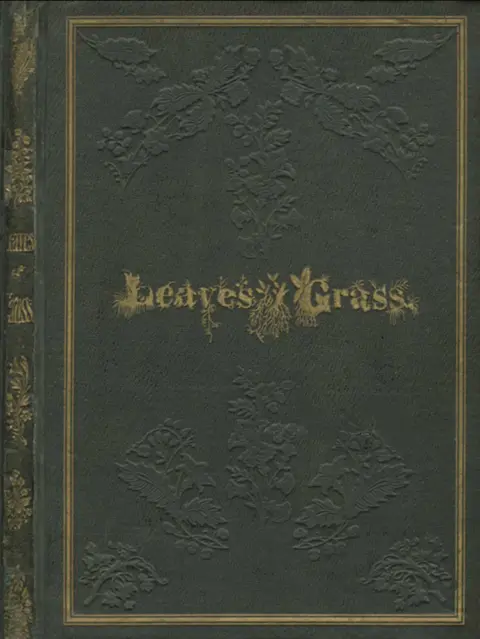
THE CLASSIC COLLECTION · 1855
"Leaves of Grass" by Walt Whitman is a poetry collection first published in 1855. Beginning with just twelve poems, Whitman continuously revised and expanded this work throughout his life, eventually creating a collection of over four hundred poems. He celebrates American democracy, nature, the human body, and sensual pleasure in verse that breaks traditional rules of rhyme and meter. The book's explicit content sparked controversy and condemnation, yet it ultimately became recognized as one of the central works of American poetry.
Introduction adapted from the source catalogue; source summaries may be automatically generated.
Free to read · English · 123,719 words · No account needed
MAKE TIME FOR A GOOD BOOK
On by default. Untick to stop anonymous reading totals. Each page counts after 10 seconds in view. How this works.
Anonymous counting is on unless you have switched it off.
The early lilacs became part of this child, And grass and white and red morning-glories, and white and red clover, and the song of the phoebe-bird, And the Third-month lambs and the sow’s pink-faint litter, and the mare’s foal and the cow’s calf, And the noisy brood of the barnyard or by the mire of the pond-side, And the fish suspending themselves so curiously below there, and the beautiful curious liquid, And the water-plants with their graceful flat heads, all became part of him.
The field-sprouts of Fourth-month and Fifth-month became part of him, Winter-grain sprouts and those of the light-yellow corn, and the esculent roots of the garden, And the apple-trees cover’d with blossoms and the fruit afterward, and wood-berries, and the commonest weeds by the road, And the old drunkard staggering home from the outhouse of the tavern whence he had lately risen, And the schoolmistress that pass’d on her way to the school, And the friendly boys that pass’d, and the quarrelsome boys, And the tidy and fresh-cheek’d girls, and the barefoot negro boy and girl, And all the changes of city and country wherever he went.
His own parents, he that had father’d him and she that had conceiv’d him in her womb and birth’d him, They gave this child more of themselves than that, They gave him afterward every day, they became part of him.
The mother at home quietly placing the dishes on the supper-table, The mother with mild words, clean her cap and gown, a wholesome odor falling off her person and clothes as she walks by, The father, strong, self-sufficient, manly, mean, anger’d, unjust, The blow, the quick loud word, the tight bargain, the crafty lure, The family usages, the language, the company, the furniture, the yearning and swelling heart, Affection that will not be gainsay’d, the sense of what is real, the thought if after all it should prove unreal, The doubts of day-time and the doubts of night-time, the curious whether and how, Whether that which appears so is so, or is it all flashes and specks? Men and women crowding fast in the streets, if they are not flashes and specks what are they? The streets themselves and the facades of houses, and goods in the windows, Vehicles, teams, the heavy-plank’d wharves, the huge crossing at the ferries, The village on the highland seen from afar at sunset, the river between, Shadows, aureola and mist, the light falling on roofs and gables of white or brown two miles off, The schooner near by sleepily dropping down the tide, the little boat slack-tow’d astern, The hurrying tumbling waves, quick-broken crests, slapping, The strata of color’d clouds, the long bar of maroon-tint away solitary by itself, the spread of purity it lies motionless in, The horizon’s edge, the flying sea-crow, the fragrance of salt marsh and shore mud, These became part of that child who went forth every day, and who now goes, and will always go forth every day.
Your reading position is saved on this browser. Take it to another device with a library code. Reading pages adapt to text, rather than matching a printed edition.
Walt Whitman

Anne (Anne Burrows) Gilchrist & Walt Whitman
Walt Whitman
Walt Whitman
BEHIND THE BOOK
This eBook is for the use of anyone anywhere in the United States and most other parts of the world at no cost and with almost no restrictions whatsoever. You may copy it, give it away or re-use it under the terms of the Project Gutenberg License included with this eBook or online at www.gutenberg.org. If you are not located in the United States, you will have to check the laws of the country where you are located before using this eBook. Read the source licence.
The original source file, including credits and licence, is retained by this library. Request an original-format copy at no charge. Please include the book title and Project Gutenberg identifier #1322.
KEEP YOUR CURIOSITY GOING

Eric Mackay
Edmund Gosse
Sophia Margaretta Hensley
Gilbert Parker
George MacDonald

Elizabeth Bibesco