
The Wound Dresser A Series of Letters Written from the Hospitals in Washington during the War of the Rebellion
Walt Whitman
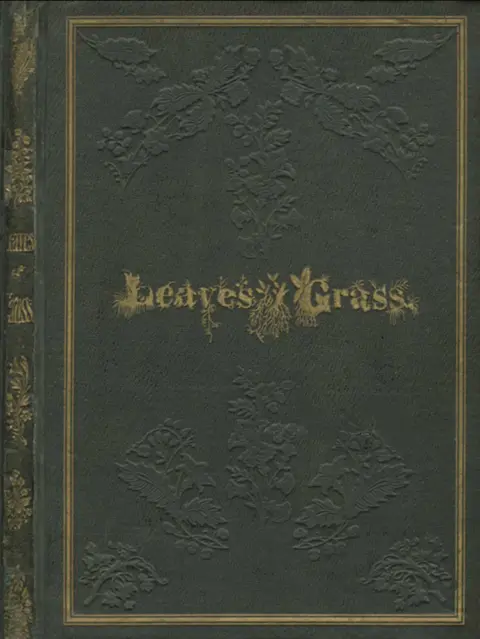
THE CLASSIC COLLECTION · 1855
"Leaves of Grass" by Walt Whitman is a poetry collection first published in 1855. Beginning with just twelve poems, Whitman continuously revised and expanded this work throughout his life, eventually creating a collection of over four hundred poems. He celebrates American democracy, nature, the human body, and sensual pleasure in verse that breaks traditional rules of rhyme and meter. The book's explicit content sparked controversy and condemnation, yet it ultimately became recognized as one of the central works of American poetry.
Introduction adapted from the source catalogue; source summaries may be automatically generated.
Free to read · English · 123,719 words · No account needed
MAKE TIME FOR A GOOD BOOK
On by default. Untick to stop anonymous reading totals. Each page counts after 10 seconds in view. How this works.
Anonymous counting is on unless you have switched it off.
All music is what awakes from you when you are reminded by the instruments, It is not the violins and the cornets, it is not the oboe nor the beating drums, nor the score of the baritone singer singing his sweet romanza, nor that of the men’s chorus, nor that of the women’s chorus, It is nearer and farther than they.
5
Will the whole come back then?
Can each see signs of the best by a look in the looking-glass? is
there nothing greater or more?
Does all sit there with you, with the mystic unseen soul?
Strange and hard that paradox true I give,
Objects gross and the unseen soul are one.
House-building, measuring, sawing the boards, Blacksmithing, glass-blowing, nail-making, coopering, tin-roofing, shingle-dressing, Ship-joining, dock-building, fish-curing, flagging of sidewalks by flaggers, The pump, the pile-driver, the great derrick, the coal-kiln and brickkiln, Coal-mines and all that is down there, the lamps in the darkness, echoes, songs, what meditations, what vast native thoughts looking through smutch’d faces, Iron-works, forge-fires in the mountains or by river-banks, men around feeling the melt with huge crowbars, lumps of ore, the due combining of ore, limestone, coal, The blast-furnace and the puddling-furnace, the loup-lump at the bottom of the melt at last, the rolling-mill, the stumpy bars of pig-iron, the strong clean-shaped Trail for railroads, Oil-works, silk-works, white-lead-works, the sugar-house, steam-saws, the great mills and factories, Stone-cutting, shapely trimmings for facades or window or door-lintels, the mallet, the tooth-chisel, the jib to protect the thumb, The calking-iron, the kettle of boiling vault-cement, and the fire under the kettle, The cotton-bale, the stevedore’s hook, the saw and buck of the sawyer, the mould of the moulder, the working-knife of the butcher, the ice-saw, and all the work with ice, The work and tools of the rigger, grappler, sail-maker, block-maker, Goods of gutta-percha, papier-mache, colors, brushes, brush-making, glazier’s implements, The veneer and glue-pot, the confectioner’s ornaments, the decanter and glasses, the shears and flat-iron, The awl and knee-strap, the pint measure and quart measure, the counter and stool, the writing-pen of quill or metal, the making of all sorts of edged tools, The brewery, brewing, the malt, the vats, every thing that is done by brewers, wine-makers, vinegar-makers, Leather-dressing, coach-making, boiler-making, rope-twisting, distilling, sign-painting, lime-burning, cotton-picking, electroplating, electrotyping, stereotyping, Stave-machines, planing-machines, reaping-machines, ploughing-machines, thrashing-machines, steam wagons, The cart of the carman, the omnibus, the ponderous dray, Pyrotechny, letting off color’d fireworks at night, fancy figures and jets; Beef on the butcher’s stall, the slaughter-house of the butcher, the butcher in his killing-clothes, The pens of live pork, the killing-hammer, the hog-hook, the scalder’s tub, gutting, the cutter’s cleaver, the packer’s maul, and the plenteous winterwork of pork-packing, Flour-works, grinding of wheat, rye, maize, rice, the barrels and the half and quarter barrels, the loaded barges, the high piles on wharves and levees, The men and the work of the men on ferries, railroads, coasters, fish-boats, canals; The hourly routine of your own or any man’s life, the shop, yard, store, or factory, These shows all near you by day and night--workman! whoever you are, your daily life!
Your reading position is saved on this browser. Take it to another device with a library code. Reading pages adapt to text, rather than matching a printed edition.
Walt Whitman

Anne (Anne Burrows) Gilchrist & Walt Whitman
Walt Whitman
Walt Whitman
BEHIND THE BOOK
This eBook is for the use of anyone anywhere in the United States and most other parts of the world at no cost and with almost no restrictions whatsoever. You may copy it, give it away or re-use it under the terms of the Project Gutenberg License included with this eBook or online at www.gutenberg.org. If you are not located in the United States, you will have to check the laws of the country where you are located before using this eBook. Read the source licence.
The original source file, including credits and licence, is retained by this library. Request an original-format copy at no charge. Please include the book title and Project Gutenberg identifier #1322.
KEEP YOUR CURIOSITY GOING

Eric Mackay
Edmund Gosse
Sophia Margaretta Hensley
Gilbert Parker
George MacDonald

Elizabeth Bibesco