
The Wound Dresser A Series of Letters Written from the Hospitals in Washington during the War of the Rebellion
Walt Whitman
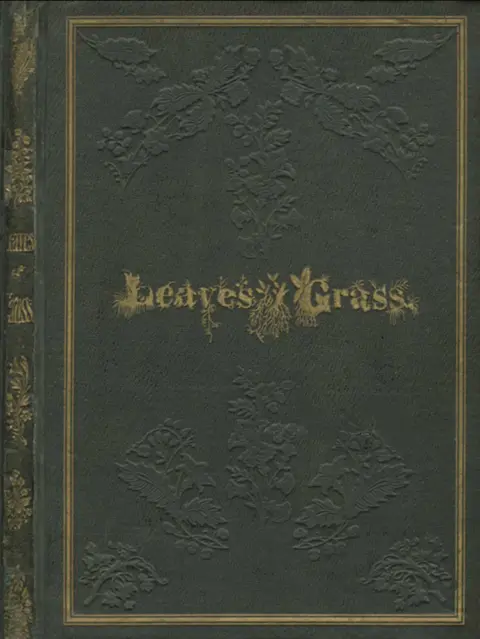
THE CLASSIC COLLECTION · 1855
"Leaves of Grass" by Walt Whitman is a poetry collection first published in 1855. Beginning with just twelve poems, Whitman continuously revised and expanded this work throughout his life, eventually creating a collection of over four hundred poems. He celebrates American democracy, nature, the human body, and sensual pleasure in verse that breaks traditional rules of rhyme and meter. The book's explicit content sparked controversy and condemnation, yet it ultimately became recognized as one of the central works of American poetry.
Introduction adapted from the source catalogue; source summaries may be automatically generated.
Free to read · English · 123,719 words · No account needed
MAKE TIME FOR A GOOD BOOK
On by default. Untick to stop anonymous reading totals. Each page counts after 10 seconds in view. How this works.
Anonymous counting is on unless you have switched it off.
6
(This, this and these, America, shall be your pyramids and obelisks,
Your Alexandrian Pharos, gardens of Babylon,
Your temple at Olympia.)
The male and female many laboring not,
Shall ever here confront the laboring many,
With precious benefits to both, glory to all,
To thee America, and thee eternal Muse.
And here shall ye inhabit powerful Matrons! In your vast state vaster than all the old, Echoed through long, long centuries to come, To sound of different, prouder songs, with stronger themes, Practical, peaceful life, the people’s life, the People themselves, Lifted, illumin’d, bathed in peace--elate, secure in peace.
7
Away with themes of war! away with war itself!
Hence from my shuddering sight to never more return that show of
blacken’d, mutilated corpses!
That hell unpent and raid of blood, fit for wild tigers or for
lop-tongued wolves, not reasoning men,
And in its stead speed industry’s campaigns,
With thy undaunted armies, engineering,
Thy pennants labor, loosen’d to the breeze,
Thy bugles sounding loud and clear.
Away with old romance! Away with novels, plots and plays of foreign courts, Away with love-verses sugar’d in rhyme, the intrigues, amours of idlers, Fitted for only banquets of the night where dancers to late music slide, The unhealthy pleasures, extravagant dissipations of the few, With perfumes, heat and wine, beneath the dazzling chandeliers.
To you ye reverent sane sisters, I raise a voice for far superber themes for poets and for art, To exalt the present and the real, To teach the average man the glory of his daily walk and trade, To sing in songs how exercise and chemical life are never to be baffled, To manual work for each and all, to plough, hoe, dig, To plant and tend the tree, the berry, vegetables, flowers, For every man to see to it that he really do something, for every woman too; To use the hammer and the saw, (rip, or cross-cut,) To cultivate a turn for carpentering, plastering, painting, To work as tailor, tailoress, nurse, hostler, porter, To invent a little, something ingenious, to aid the washing, cooking, cleaning, And hold it no disgrace to take a hand at them themselves.
Your reading position is saved on this browser. Take it to another device with a library code. Reading pages adapt to text, rather than matching a printed edition.
Walt Whitman

Anne (Anne Burrows) Gilchrist & Walt Whitman
Walt Whitman
Walt Whitman
BEHIND THE BOOK
This eBook is for the use of anyone anywhere in the United States and most other parts of the world at no cost and with almost no restrictions whatsoever. You may copy it, give it away or re-use it under the terms of the Project Gutenberg License included with this eBook or online at www.gutenberg.org. If you are not located in the United States, you will have to check the laws of the country where you are located before using this eBook. Read the source licence.
The original source file, including credits and licence, is retained by this library. Request an original-format copy at no charge. Please include the book title and Project Gutenberg identifier #1322.
KEEP YOUR CURIOSITY GOING

Eric Mackay
Edmund Gosse
Sophia Margaretta Hensley
Gilbert Parker
George MacDonald

Elizabeth Bibesco