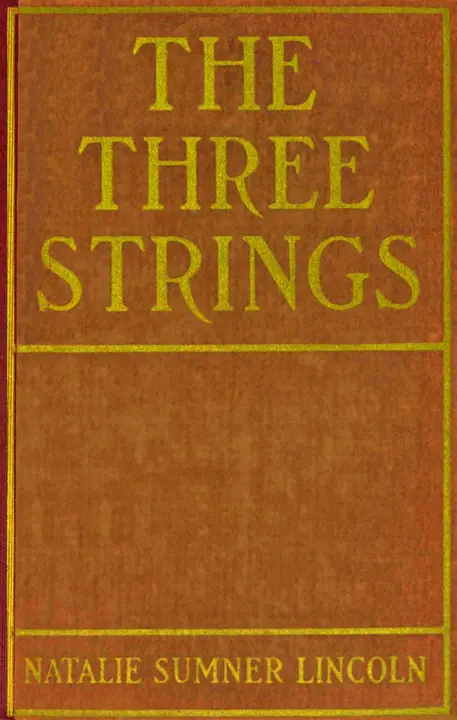
The three strings
Natalie Sumner Lincoln
THE CLASSIC COLLECTION · 1916
"I Spy" by Natalie Sumner Lincoln is a novel written during the early 20th century, around the time of World War I. The story unfolds against the backdrop of war, espionage, and the emotional struggles of its characters, particularly highlighting familial and romantic tensions amidst the chaos of the time. The narrative introduces John Hargraves, a young officer about to leave for the front, and explores his relationships with his uncle, Sir Percival Hargraves, and the women in his life, including Kathleen, an American girl who plays a significant role in his emotional journey. The opening of "I Spy" establishes a tense atmosphere, set in November 1914, where John and his uncle discuss the war and the undercurrents of espionage affecting England. Their conversation reveals deep concerns over the German Secret Service's influence within England, illustrating the pervasive anxiety of the time. Shortly after, John departs for Victoria Station, where he encounters a mysterious man associated with the German spy network. The chapter skillfully sets the stage for the unfolding drama, hinting at elements of intrigue, danger, and romance while introducing key characters whose lives are intricately connected to the war. As the story progresses, it promises to delve into themes of loyalty, love, and the impact of war on personal lives.
Introduction adapted from the source catalogue; source summaries may be automatically generated.
Free to read · English · 61,719 words · No account needed
MAKE TIME FOR A GOOD BOOK
On by default. Untick to stop anonymous reading totals. Each page counts after 10 seconds in view. How this works.
Anonymous counting is on unless you have switched it off.
Charles Miller was generally an early riser, but the head waiter at the Metropole was surreptitiously scanning his watch before giving the signal to close the dining-room doors, when the Captain walked in and took his accustomed seat at a distant table. Miller had but time to glance at the headline, "Stormy Cabinet Meeting Predicted at White House Today," in his morning newspaper, when eggs and toast were placed before him. His attentive waiter poured the hot coffee and placed cream and sugar in his cup without waiting for instructions.
"Eggs all right, sir?" he asked anxiously, a trace of accent in his
pleasant voice.
"Yes, thanks." Miller looked at him casually. "I haven't seen you before;
where's Jenkins?"
"Transferred to the cafe, sir," smoothing a wrinkle out of the tablecloth as he spoke. "I'll try to give satisfaction, sir."
Miller nodded absently. "Oh, it's all right," he said, stifling a yawn, and propping his newspaper against his coffee pot, ate his breakfast leisurely, so leisurely that the other habitues of the hotel had finished their breakfast and departed before he pushed back his chair. Turning, he signed to his waiter to bring his check, and not appearing to do so, watched his approach with keen interest.
"Been a steward, haven't you?" he inquired.
"Yes, sir." The waiter pocketed the tip with alacrity. "Hamburg-American
Line, sir."
"Thought so." Miller signed his name with careful attention to each stroke of the pencil. "How many of you are employed here?"
"Eight, sir. The lines are tied up; we must have work, and it's hard to get good berths, sir, with so many ships interned."
"Quite so," Miller rose. "Your name--?"
"Lewis. Just a moment, sir," as Miller started to cross the deserted dining-room, "Shall I reserve the table for you for luncheon, sir?"
"Luncheon?" Miller reflected. "I rather think not."
"Thank you, sir." The waiter's manner was apologetic. "I asked, sir, because, sir, today the Cabinet officers lunch here, and...."
"They require your undivided attention?" mildly. "I quite understand--Ludwig." Their eyes met, then Miller turned on his heel. "Auf wiedersehen" he exclaimed under his breath, and the waiter's stolid expression changed to one of relief.
Miller, who had checked his overcoat and hat before entering the dining-room, wasted no time but entered a public telephone booth. When he emerged he was whistling cheerily, and the doorkeeper watched him hail a street car with curious eyes.
"Always running in and out," he muttered. "It beats me when he sleeps."
First stopping at a florist's and then a jeweler's establishment, Miller bent his footsteps toward the Portland, and to his satisfaction found Senator Foster enjoying a belated breakfast in his apartment.
Your reading position is saved on this browser. Take it to another device with a library code. Reading pages adapt to text, rather than matching a printed edition.
Natalie Sumner Lincoln
Natalie Sumner Lincoln
Natalie Sumner Lincoln
Natalie Sumner Lincoln
BEHIND THE BOOK
This eBook is for the use of anyone anywhere in the United States and most other parts of the world at no cost and with almost no restrictions whatsoever. You may copy it, give it away or re-use it under the terms of the Project Gutenberg License included with this eBook or online at www.gutenberg.org. If you are not located in the United States, you will have to check the laws of the country where you are located before using this eBook. Read the source licence.
The original source file, including credits and licence, is retained by this library. Request an original-format copy at no charge. Please include the book title and Project Gutenberg identifier #9812.
KEEP YOUR CURIOSITY GOING
Coulson Kernahan

Maurice Baring
Frances Wright
Cécile Tormay

Frederic Jesup Stimson

W. H. P. (William Henry Pope) Jarvis