THE CLASSIC COLLECTION✦An outlaw’s diary: the CommuneCLASSIC FREE BOOKS
An outlaw’s diary: the Commune
Cécile Tormay
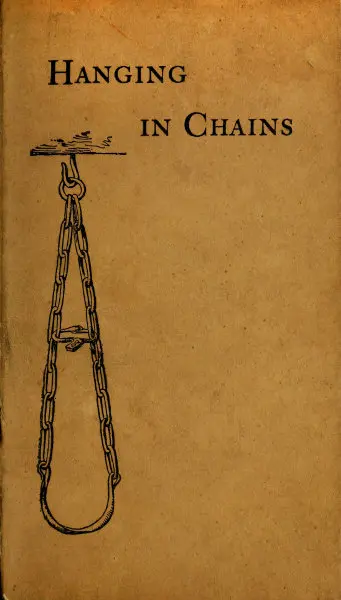
THE CLASSIC COLLECTION · 1891
"Hanging in Chains" by Albert Hartshorne is a historical account written in the late 19th century. The work delves into the historical practices and legalities surrounding capital punishment in England, specifically focusing on the gibbeting of bodies as a form of public deterrence. The text highlights various punishments over the centuries, including details about notorious figures and events related to executions, exploring societal perceptions of death and dishonor associated with gibbeting. At the start of the narrative, the author discusses the significance of burial in ancient cultures, particularly among the Jews, Egyptians, and Greeks, emphasizing the shame and infamy associated with dying outside of proper burial rites. Hartshorne uses biblical references and historical anecdotes to illustrate the horror that was gibbeting, detailing how this form of punishment was employed to instill fear in the public and serve as a warning against crime. The opening sets an eerie tone, preparing readers for a detailed exploration of the macabre aspects of judicial punishments throughout history.
Introduction adapted from the source catalogue; source summaries may be automatically generated.
Free to read · English · 16,624 words · No account needed
MAKE TIME FOR A GOOD BOOK
On by default. Untick to stop anonymous reading totals. Each page counts after 10 seconds in view. How this works.
Anonymous counting is on unless you have switched it off.
[35] Viollet le Duc, “Dictionnaire raisonné,” tome v. p. 553, s.v.
Fourches patibulaires.
[36] “Comptes et Ordinaires de la prévôté de Paris.”
[37] Lacroix, “Mœurs, Usages, et Costumes au Moyen Age,” &c.,
“Pénalité,” p. 455.
[38] “La Repeue faicte auprès de Montfaulcon.” Poetry attributed to Villon. Edit. Jannet, p. 292. 1854.
[39] “Anciens Fourches Patibulaires,” p. 38.
[40] “Le suicide est une mort furtive et honteuse, c’est un vol fait au genre humain.”--J. J. ROUSSEAU.
[41] Lithgow’s “Nineteen Years’ Travels,” London, 1682.
[42] Communicated by Mr. F. H. M. Van Lilaar.
[43] “Quand l’Empereur Charles y fit son entrée; les gens de cette ville-là lui voulurent faire tout l’honneur qu’ils purent. Et faisant de belle façons d’arcades, chapeaux de triomphes, poiteaux et telles magnificences, ils s’aviserent d’un pendu qui était à la porte de la ville et principale entrée. Ils ôtèrent à ce pendu sa chemise sale, et lui en mirent une blanche pour faire honneur à Monsieur l’Empereur” (Le Moyen de Parvenir: contenant la raison de tout ce qui a été, est et sera. Nulle Part., 1000700504, vol. ii. p. 249).
[44] Information from the late Mr. M. H. Bloxam.
[45] Witch-Finder General, under a commission from Parliament in the reign of Charles I. He hung threescore suspected witches in one year in Suffolk under most wicked and degrading circumstances.
[46] Rev. S. Baring-Gould, “Yorkshire Oddities,” vol. i. p. 56.
[47] “Notes and Queries,” 1874, vol. i. p. 35. Fifth Series.
[48] It may be recalled that Defoe published, anonymously, in 1725, a most interesting and vivid account of the conduct, proceedings, and capture of the pirate Gow and his buccaneer crew.
[49] J. L. Cherry, “Stafford” in Olden Times, p. 80.
“Mute
The camel labours with the heaviest load,
And the wolf dies in silence. Not bestowed
In vain should such examples be: if they,
Things of ignoble or of savage mood,
Endure and shrink not, we, of nobler clay,
May temper it to bear.”
“Childe Harold,” iv. 21.
[51] High Treason, as defined by the Statute of 25 Edward III. (1351), is divided by Blackstone into seven distinct branches. The first is “compassing or imagining the death of the King, the Queen, or their eldest son and heir.” 2. “Violating the King’s companion, or the King’s eldest daughter unmarried, or the wife of the King’s eldest son and heir.” 3. “Levying war against the King in his realm.” 4. “Adhering to the King’s enemies in his realm, or elsewhere.” 5. “Counterfeiting the King’s great or privy seal.” 6. “Counterfeiting the King’s money.” 7. “Slaying the chancellor, treasurer, or any of the King’s justices, being in their places, doing their offices.” (Blackstone’s, Comm. vol. iv. p. 76).
Your reading position is saved on this browser. Take it to another device with a library code. Reading pages adapt to text, rather than matching a printed edition.
BEHIND THE BOOK
This eBook is for the use of anyone anywhere in the United States and most other parts of the world at no cost and with almost no restrictions whatsoever. You may copy it, give it away or re-use it under the terms of the Project Gutenberg License included with this eBook or online at www.gutenberg.org. If you are not located in the United States, you will have to check the laws of the country where you are located before using this eBook. Read the source licence.
The original source file, including credits and licence, is retained by this library. Request an original-format copy at no charge. Please include the book title and Project Gutenberg identifier #46432.
KEEP YOUR CURIOSITY GOING
Cécile Tormay

Moritz Busch
John L. Ransom
Frances Wright
Cécile Tormay

Mabel Potter Daggett