THE CLASSIC COLLECTION✦An outlaw’s diary: the CommuneCLASSIC FREE BOOKS
An outlaw’s diary: the Commune
Cécile Tormay
THE CLASSIC COLLECTION · 1891
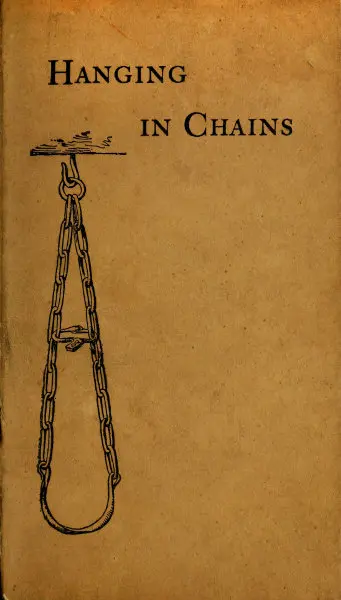
"Hanging in Chains" by Albert Hartshorne is a historical account written in the late 19th century. The work delves into the historical practices and legalities surrounding capital punishment in England, specifically focusing on the gibbeting of bodies as a form of public deterrence. The text highlights various punishments over the centuries, including details about notorious figures and events related to executions, exploring societal perceptions of death and dishonor associated with gibbeting. At the start of the narrative, the author discusses the significance of burial in ancient cultures, particularly among the Jews, Egyptians, and Greeks, emphasizing the shame and infamy associated with dying outside of proper burial rites. Hartshorne uses biblical references and historical anecdotes to illustrate the horror that was gibbeting, detailing how this form of punishment was employed to instill fear in the public and serve as a warning against crime. The opening sets an eerie tone, preparing readers for a detailed exploration of the macabre aspects of judicial punishments throughout history.
Introduction adapted from the source catalogue; source summaries may be automatically generated.
Free to read · English · 16,624 words · No account needed
MAKE TIME FOR A GOOD BOOK
On by default. Untick to stop anonymous reading totals. Each page counts after 10 seconds in view. How this works.
Anonymous counting is on unless you have switched it off.
[26] The battle of Shrewsbury was fought July 21, 1403, and the four quarters of Hotspur were divided between London, Shrewsbury, Chester, and Newcastle. York had the head. Four months later, namely, November 3rd., a writ was directed to the mayor and sheriffs of York, as follows:--
“The King to the Mayor and Sheriffs of the city of York, greeting.--Whereas of our special grace we have granted to our Cousin Elizabeth, who was the wife of Henry de Percy, Chivalier, the head and quarters of the same Henry to be buried: We command you that the head aforesaid, placed by our command upon the gate of the city aforesaid, you deliver to the same Elizabeth, to be buried according to our grant aforesaid. Witness the king at Cirencester, this 3rd day of November.”
By writ of Privy Seal:--
“The King to the Mayor and Sheriff of the town of Newcastle-on-Tyne, greeting.--Whereas (&c., &c., as above) you deliver to the said Elizabeth a certain quarter of the said Henry placed upon the gate” (&c., &c., as above).
Similar writs were directed to the Mayor and Bailiffs of Chester, and to the authorities at Shrewsbury for other several quarters of the same Henry, and to the Abbot of Shrewsbury a writ was addressed directing him to bury the body of Hotspur, thus again brought together, in his church of St. Peter at Shrewsbury. The fourth quarter, that sent to distant London, does not appear to have been forthcoming, for reasons which will be apparent. See Rev. C. H. Hartshorne’s “Feudal and Military Antiquities of Northumberland and the Scottish Borders,” p. 296.
[27] “History of Penrith,” 1858, p. 95.
[28] The total number arraigned was 382; by lot this was reduced to 127, the total number condemned to death being 86. Lords Balmerino and Kilmarnock were beheaded for “the --45,” August 18, 1746. They behaved with much dignity and fortitude. The former expressed his wish to Lord Kilmarnock, just before the execution, that he wished he could suffer for them both; noblesse oblige, even on the scaffold. By their particular request their heads were not severally held up and exposed by the executioner with the usual formula--“This is the head of a traitor.” But the sheriffs directed that everybody on the scaffold should kneel down, so that the people might see the execution itself performed--a ceremony never practised before. (“Account of the Behaviour,” &c., by T. Forde, a gentleman then present, 1746.)
[29] De la Croix, “Jersey, Ses Antiquités, Ses Institutions, Son Histoire,” vol. iii. pp. 342, 343.
[30] Hakluyt, “Voyages,” vol. iii. p. 336.
[31] Weever, “Ancient Funeral Monuments,” p. 22, edit. 1631.
[32] M’Laurin (Lord Dreghorn), “Arguments and Decisions,” &c.,
Edinburgh, 1774.
[33] See “Trial of Philip Standsfield,” &c., Edinburgh, 1688.
[34] See p. 15.
Your reading position is saved on this browser. Take it to another device with a library code. Reading pages adapt to text, rather than matching a printed edition.
BEHIND THE BOOK
This eBook is for the use of anyone anywhere in the United States and most other parts of the world at no cost and with almost no restrictions whatsoever. You may copy it, give it away or re-use it under the terms of the Project Gutenberg License included with this eBook or online at www.gutenberg.org. If you are not located in the United States, you will have to check the laws of the country where you are located before using this eBook. Read the source licence.
The original source file, including credits and licence, is retained by this library. Request an original-format copy at no charge. Please include the book title and Project Gutenberg identifier #46432.
KEEP YOUR CURIOSITY GOING
Cécile Tormay

Moritz Busch
John L. Ransom
Frances Wright
Cécile Tormay

Mabel Potter Daggett