THE CLASSIC COLLECTION✦An outlaw’s diary: the CommuneCLASSIC FREE BOOKS
An outlaw’s diary: the Commune
Cécile Tormay
THE CLASSIC COLLECTION · 1891
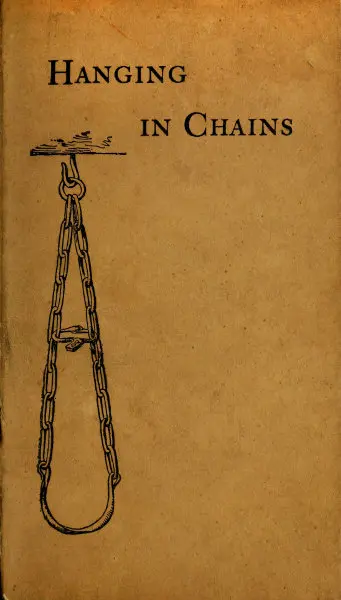
"Hanging in Chains" by Albert Hartshorne is a historical account written in the late 19th century. The work delves into the historical practices and legalities surrounding capital punishment in England, specifically focusing on the gibbeting of bodies as a form of public deterrence. The text highlights various punishments over the centuries, including details about notorious figures and events related to executions, exploring societal perceptions of death and dishonor associated with gibbeting. At the start of the narrative, the author discusses the significance of burial in ancient cultures, particularly among the Jews, Egyptians, and Greeks, emphasizing the shame and infamy associated with dying outside of proper burial rites. Hartshorne uses biblical references and historical anecdotes to illustrate the horror that was gibbeting, detailing how this form of punishment was employed to instill fear in the public and serve as a warning against crime. The opening sets an eerie tone, preparing readers for a detailed exploration of the macabre aspects of judicial punishments throughout history.
Introduction adapted from the source catalogue; source summaries may be automatically generated.
Free to read · English · 16,624 words · No account needed
MAKE TIME FOR A GOOD BOOK
On by default. Untick to stop anonymous reading totals. Each page counts after 10 seconds in view. How this works.
Anonymous counting is on unless you have switched it off.
Whilst such horrors were going on in England we may be sure that the Germans, with their dogged brutality, were not behind-hand. With them the bodies of traitors and highwaymen, as well as of murderers, were fixed upon poles, set upon wheels, impaled alive, or hung upon gibbets. Three prints from “La Cosmographie Universelle de Münster,” 1552, give some notion of the sternness of the Teutonic penal code.
The last instance of burning at the stake in Germany occurred at Berlin, Aug. 18, 1786. It was then seventy years since a similar punishment had been carried out in the Prussian capital. The criminal, stripped to his shirt, was enclosed in a cage-like frame which fastened with a door, and was surrounded with wood and straw.
The last example of breaking on the wheel was carried out at Vienna in the above-mentioned year. The victim was tortured with red-hot pincers--tenaillé--as he walked to the place of execution.
Weever, writing in 1631, says:--
“Hee that commits treason, is adjudged by our Lawes, to be hanged, drawne, and quartered, and his diuided limbes to be set vpon poles in some eminent place, within some great Market-towne, or Citie.
“He that commits that crying sinne of murther, is vsually hanged vp in chaines, so to continue vntill his bodie be consumed, at or near the place where the fact was perpetrated.
“Such as are found guilty of other criminall causes, as Burglarie, Felonie, or the like, after a little hanging are cut downe and indeed buried, but seldom in Christian mould (as we say) nor in the sepulchres of their fathers, except their fathers have their graves made neare, or vnder the gallowes.
“And we vse to bury such as lay violent hands vpon themselues, in or neare to the high wayes, with a stake thrust through their bodies, to terrifie all passengers, by that so infamous and reproachfull a buriall; not to make such their finall passage out of this present world.”[31]
It is important to notice, as regards hanging in chains, that Weever says “vsually,” not “always;” and although in the preceding paragraph, when speaking of treason, he says the punishment for it “is adjudged by our Lawes,” he makes no such remark now, but is significantly silent as to the legal nature of chains; but, from the way Weever puts it, it must have been a common practice at that time in England.
In Scotland, Lord Dreghorn, writing in 1774, says, “The first instance of hanging in chains is in March, 1637, in the case of Macgregor, for theft, robbery, and slaughter; he was sentenced to be hanged in a chenzie on the gallowlee till his corpse rot.”[32]
Your reading position is saved on this browser. Take it to another device with a library code. Reading pages adapt to text, rather than matching a printed edition.
BEHIND THE BOOK
This eBook is for the use of anyone anywhere in the United States and most other parts of the world at no cost and with almost no restrictions whatsoever. You may copy it, give it away or re-use it under the terms of the Project Gutenberg License included with this eBook or online at www.gutenberg.org. If you are not located in the United States, you will have to check the laws of the country where you are located before using this eBook. Read the source licence.
The original source file, including credits and licence, is retained by this library. Request an original-format copy at no charge. Please include the book title and Project Gutenberg identifier #46432.
KEEP YOUR CURIOSITY GOING
Cécile Tormay

Moritz Busch
John L. Ransom
Frances Wright
Cécile Tormay

Mabel Potter Daggett