THE CLASSIC COLLECTION✦An outlaw’s diary: the CommuneCLASSIC FREE BOOKS
An outlaw’s diary: the Commune
Cécile Tormay
THE CLASSIC COLLECTION · 1891
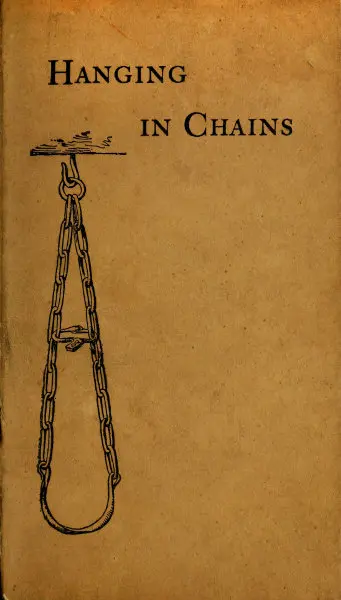
"Hanging in Chains" by Albert Hartshorne is a historical account written in the late 19th century. The work delves into the historical practices and legalities surrounding capital punishment in England, specifically focusing on the gibbeting of bodies as a form of public deterrence. The text highlights various punishments over the centuries, including details about notorious figures and events related to executions, exploring societal perceptions of death and dishonor associated with gibbeting. At the start of the narrative, the author discusses the significance of burial in ancient cultures, particularly among the Jews, Egyptians, and Greeks, emphasizing the shame and infamy associated with dying outside of proper burial rites. Hartshorne uses biblical references and historical anecdotes to illustrate the horror that was gibbeting, detailing how this form of punishment was employed to instill fear in the public and serve as a warning against crime. The opening sets an eerie tone, preparing readers for a detailed exploration of the macabre aspects of judicial punishments throughout history.
Introduction adapted from the source catalogue; source summaries may be automatically generated.
Free to read · English · 16,624 words · No account needed
MAKE TIME FOR A GOOD BOOK
On by default. Untick to stop anonymous reading totals. Each page counts after 10 seconds in view. How this works.
Anonymous counting is on unless you have switched it off.
Petit Treason is aggravated murder, according to the same Statute; and may happen in three ways: 1. “By a servant killing his master.” 2. “By a wife killing her husband.” 3. “By an ecclesiastic killing his superior.” (Blackstone, ib. p. 202).
[52] A Regency of Lords Justices administered the government during the numerous absences of the King in Hanover.
[53] “Sussex Archæological Collections,” vol. xxiii. p. 215.
[54] “Gentleman’s Magazine,” 1751, p. 186.
[55] Blackstone, “Comm.” vol. iv. p. 202.
[56] Blackstone, “Comm.” vol. iv. p. 202.
[57] Blackstone, “Comm.” vol. iv. p. 202.
[58] Blackstone, “Comm.” vol. iv. p. 202.
[59] Ff. 48, 19, 28, § 15.
[60] Othello, Act i. sc. 3.
[61] King Henry VI., Part ii. Act iv. sc. 1.
[62] Two sets of pirates’ chains from the Thames are in the collection of the Rev. J. W. Tottenham.
[63] “Notes and Queries,” 1874, vol. i. p. 35. Fifth Series.
[64] C. A. Markham, “Ancient Punishments in Northamptonshire,” p. 16.
[65] Ibid.
[66] Percy. “Reliques of Ancient English Poetry,” vol. i. p. 306.
“Ale makes many a man reel over the fallows; Ale makes many a man to swear by God and All-Hallows; Ale makes many a man to hang upon the gallows-- With dole.”
“Songs and Carols.” Edited by Thomas Wright. Percy Society, 1847.
[68] “History of Penrith,” ut sup.
[69] “Records of Buckinghamshire,” paper by the Rev. J. C. Wharton,
vol. ii. p. 159.
[70] “Notes and Queries,” 1873, vol. xi. pp. 83, 125. Fourth Series.
[71] “The Pilgrim’s Progress,” chap. iv., Fate of Simple, Sloth, and
Presumption.
[72] “The Antiquary,” Nov., 1890.
[73] C. Madeley, “Obsolete Punishments,” p. 35.
[74] “Rizpah,” Tennyson.
[75] Communicated by Mr. C. Madeley.
[76] “Sussex Archæological Collections,” vol. xxiii. pp. 214-5.
[77] See W. Howitt, “The Rural Life of England,” 1838, vol. ii.
[78] See W. Howitt, ut. sup.
[79] “British Birds,” v. p. 84.
[80] In consequence of the rarity of representations of gibbets, it may be desirable to mention other examples in the works of Thomas Bewick, “British Birds,” Edit. 1832, vol. i. In a tailpiece to the account of the Alpine Vulture, p. 53, a gibbet is shown in the distance. Tailpiece to the Introduction to the Shrike, p. 74--a moonlight scene, with a gibbet in the distance; in the foreground a scared old man is terrified by trees and rocks whose forms assume hob-goblin shapes. Tailpiece to the account of the Chatterer, p. 105--Satan sits upon a rock, smoking a pipe, a gibbet in the distance. Tailpiece to the account of the Whitethroat, p. 261--a gibbet in the distance. “Quadrupeds,” first Edit., 1790. Tailpiece to the account of the Arctic Fox, p. 274--a gibbet in the distance; in the foreground two boys hanging a dog. Tailpiece to the account of the Opossum, p. 375--a gibbet in the distance; in the foreground two boys belabouring a donkey.
[81] “Notes and Queries,” 1872, vol. x. p. 332. Fourth Series.
[82] Ibid., p. 459.
Your reading position is saved on this browser. Take it to another device with a library code. Reading pages adapt to text, rather than matching a printed edition.
BEHIND THE BOOK
This eBook is for the use of anyone anywhere in the United States and most other parts of the world at no cost and with almost no restrictions whatsoever. You may copy it, give it away or re-use it under the terms of the Project Gutenberg License included with this eBook or online at www.gutenberg.org. If you are not located in the United States, you will have to check the laws of the country where you are located before using this eBook. Read the source licence.
The original source file, including credits and licence, is retained by this library. Request an original-format copy at no charge. Please include the book title and Project Gutenberg identifier #46432.
KEEP YOUR CURIOSITY GOING
Cécile Tormay

Moritz Busch
John L. Ransom
Frances Wright
Cécile Tormay

Mabel Potter Daggett