THE CLASSIC COLLECTION✦An outlaw’s diary: the CommuneCLASSIC FREE BOOKS
An outlaw’s diary: the Commune
Cécile Tormay
THE CLASSIC COLLECTION · 1891
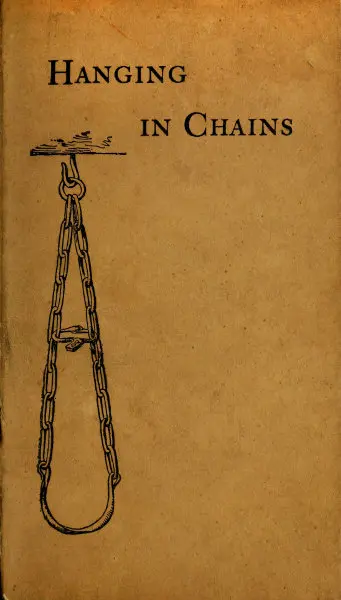
"Hanging in Chains" by Albert Hartshorne is a historical account written in the late 19th century. The work delves into the historical practices and legalities surrounding capital punishment in England, specifically focusing on the gibbeting of bodies as a form of public deterrence. The text highlights various punishments over the centuries, including details about notorious figures and events related to executions, exploring societal perceptions of death and dishonor associated with gibbeting. At the start of the narrative, the author discusses the significance of burial in ancient cultures, particularly among the Jews, Egyptians, and Greeks, emphasizing the shame and infamy associated with dying outside of proper burial rites. Hartshorne uses biblical references and historical anecdotes to illustrate the horror that was gibbeting, detailing how this form of punishment was employed to instill fear in the public and serve as a warning against crime. The opening sets an eerie tone, preparing readers for a detailed exploration of the macabre aspects of judicial punishments throughout history.
Introduction adapted from the source catalogue; source summaries may be automatically generated.
Free to read · English · 16,624 words · No account needed
MAKE TIME FOR A GOOD BOOK
On by default. Untick to stop anonymous reading totals. Each page counts after 10 seconds in view. How this works.
Anonymous counting is on unless you have switched it off.
Villon (Corbeuil), his poetry on the gibbet of Montfaucon, 38.
Vincent, Saint, martyrdom of, 12.
Voltaire, his gallows at Ferney, 31.
Wallace, execution and quartering of, 18.
Weever, on punishment for treason, murder, &c., 27;
on hanging in chains, ib.
Witchcraft, 68.
Women, punishment of, in England, 52;
in France, 53.
[1] Psa. cxxvii. 2.
[2] Deut. xxi. 22, 23.
[3] Jer. xxii. 19.
[4] Jer. xix. 7.
[5] Deut. xxviii. 26.
[6] Jer. viii. 2.
[7] Jer. xxxvi. 30.
[8] Eccles. vi. 3.
[9] Gen. xl. 19.
[10] 2 Sam. xxi. 10.
[11] 2 Sam. xx. 12.
[12] Smith’s “Dict. of the Bible,” s.v. Rizpah.
[13] Of justice, in that earth should be returned to earth, and dust to dust, for what could be more just than to restore to mother earth her children, ... that she might at last receive them again into her bosom, and afford them lodging till the resurrection? The ancients also thought it an act of mercy to hide the dead in the earth, that the organs of such divine souls might not be torn and devoured by wild beasts, birds, &c. T. Greenhill, “ΝΕΚΡΟΚΗΔΕΙΑ,” p. 33.
[14] Dryden’s “Translation”--Æneid, lib. ix. v. 901.
Nullum in cœde nefas nec sic ad prœlia veni Nec tecum meus hæc pepigit mihi fœdera Lausus Unum hoc, per, si qua est victis venia hostibus oro; Corpus humo patiare tegi: scio acerba meorum Circumstare odia: hunc, oro, defende furorem, Et me consortem nati concede sepulchro.
[15] Dryden’s “Translation”--Æneid, lib. xii. v. 935.
Et me, seu corpus spoliatum lumine mavis,
Redde meis.
Τὸν δ' ὀλιγοδρανέων προσέφη κορυθαίολος Ἕκτωρ· Λίσσομ' ὑπὲρ ψυχῆς, καὶ γούνων, σῶν τε τοκήων, Μή με ἔα παρὰ νηυσὶ κύνας καταδάψαι Ἀχαιῶν· Ἀλλὰ σὺ μὲν χαλκόν τε ἅλις χρυσόν τε δέδεξο, Δῶρα, τά τοι δώσουσι πατὴρ καὶ πότνια μήτηρ· Σῶμα δὲ οἴκαδ' ἐμὸν δόμεναι πάλιν, ὄφρα πυρός με Τρῶες καὶ Τρώων ἄλοχοι λελάχωσι θανόντα.
--Hom. Il. xxii. 337-343.
[17] Lib. 36, cap. 15.
Non lethum timeo, genus aut miserabile lethi:
Demite naufragium; mors mihi munus erit.
Est aliquid fatove suo, ferrore cadentem
In solida moriens, ponere corpus humo:
Est mandata suis aliquid sperare sepulchra,
Et non æquoreis piscibus esse cibum.
[19] Lew Leew, “Process. Criminal.”
[20] King Henry IV., Act i. sc. 1.
[21] Husenbeth, “Emblems of Saints,” edit. 1882.
[22] Chauncy, “History of Hertfordshire,” vol. ii. p. 274.
[23] F. A. Gasquet, “Henry VIII. and the Monasteries,” vol. ii. p. 164.
[24] The Chancellor’s Roll states that the cost of Wallace’s execution, and transmitting the quarters to Scotland, was 61s. 10d. “He was take and broute onto London, hanged, and drawn, and quartered; his hed sette on London brigge; his body dyvyded in iiij quarteres and sent to foure tounes in Scotland” (Capgrave’s “Chronicles”). Wallace was hung, cut down alive, opened, his bowels, &c., burnt, beheaded, and finally quartered. Newcastle had his brave right arm, the left went to Berwick, Perth received the right leg, and Aberdeen the left. Thus the patriot was broken up.
[25] “Enormiter, pertitiose, et crudeliter, sine judicio et responsione, suspensus, distractus, et in quatuor partes divisus fuit; et in nostra ecclesia diu postea sepultus” (Tewkesbury Register).
Your reading position is saved on this browser. Take it to another device with a library code. Reading pages adapt to text, rather than matching a printed edition.
BEHIND THE BOOK
This eBook is for the use of anyone anywhere in the United States and most other parts of the world at no cost and with almost no restrictions whatsoever. You may copy it, give it away or re-use it under the terms of the Project Gutenberg License included with this eBook or online at www.gutenberg.org. If you are not located in the United States, you will have to check the laws of the country where you are located before using this eBook. Read the source licence.
The original source file, including credits and licence, is retained by this library. Request an original-format copy at no charge. Please include the book title and Project Gutenberg identifier #46432.
KEEP YOUR CURIOSITY GOING
Cécile Tormay

Moritz Busch
John L. Ransom
Frances Wright
Cécile Tormay

Mabel Potter Daggett