THE CLASSIC COLLECTION✦An outlaw’s diary: the CommuneCLASSIC FREE BOOKS
An outlaw’s diary: the Commune
Cécile Tormay
THE CLASSIC COLLECTION · 1891
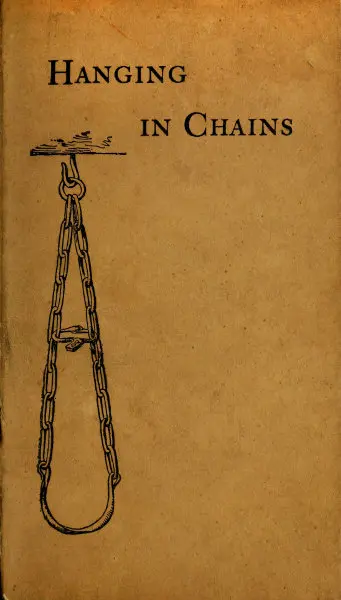
"Hanging in Chains" by Albert Hartshorne is a historical account written in the late 19th century. The work delves into the historical practices and legalities surrounding capital punishment in England, specifically focusing on the gibbeting of bodies as a form of public deterrence. The text highlights various punishments over the centuries, including details about notorious figures and events related to executions, exploring societal perceptions of death and dishonor associated with gibbeting. At the start of the narrative, the author discusses the significance of burial in ancient cultures, particularly among the Jews, Egyptians, and Greeks, emphasizing the shame and infamy associated with dying outside of proper burial rites. Hartshorne uses biblical references and historical anecdotes to illustrate the horror that was gibbeting, detailing how this form of punishment was employed to instill fear in the public and serve as a warning against crime. The opening sets an eerie tone, preparing readers for a detailed exploration of the macabre aspects of judicial punishments throughout history.
Introduction adapted from the source catalogue; source summaries may be automatically generated.
Free to read · English · 16,624 words · No account needed
MAKE TIME FOR A GOOD BOOK
On by default. Untick to stop anonymous reading totals. Each page counts after 10 seconds in view. How this works.
Anonymous counting is on unless you have switched it off.
Gibbeting of animals, in France, 40;
in Holland, 45.
Gloucester, Robert of, 14.
Gower, John, 16.
Halifax, gibbet of, 114.
Hand gibbeted in Malta, 105.
Hanging in chains:--At Easthampstead, 15;
at Hull, 16;
at York, ib.;
in Jersey, 22;
in England, 1631--the usual custom, 27;
in Scotland, 1637, 29;
near Edinburgh, 1688, 30;
noticed in the “Pilgrim’s Progress,” 49;
at Bourne, Cambridgeshire, 53;
at Hampstead, 54;
near Rugby, ib.;
at Cawood, near York, 55;
near London, 58;
in the Orkneys, 61;
by petition, 64;
at Rye, 66;
at Carlisle, ib.;
at Rake, Sussex, 67;
at Long Marston, Buckinghamshire, 69;
first legally recognized, 70;
terror evoked at prospect of, 72;
preparation of the body for, 73;
Thames Pirates, 75, 78;
in Epping Forest, ib.;
near Penrith, 80;
at Tring, 81;
near Wetheral, Cumberland, ib.;
on Brandon Sands, double gibbet, 82;
near Belper, triple gibbet, 83;
near Chester, 84;
near Warrington, 85;
near Chester, double gibbet, ib.;
near Midhurst, 86;
examples illustrated by Bewick, 90, 91;
near East Dereham, 93;
near Durham, 95;
at Deal, 96;
near Lincoln, 103;
near Sheffield, ib.;
in Malta, 106;
in Bengal, ib.;
at Calcutta, 107;
in Jamaica, ib.;
ordered near Brigg, but remitted, 108;
on Jarrow Slake, ib.;
near Leicester, last example of, 110;
abolition of, by Statute, ib.;
wooden head in memoriam, near Morpeth, 111.
Hanging alive in chains, fable of, 94;
statements of Hollingshed and Chettle, 97;
the fiction examined, and set aside, 99.
Hector, his desire for burial, 8.
High Treason:--Punishment for, 16;
description of, 18;
Statute of 1351, ib.;
first example of, 1241, ib.;
Wallace, ib.;
the Despencers, 19;
Hotspur, ib.;
executions for “the --45,” 21;
pardon of five gentlemen for, 1447, 22;
definition of, 63;
Jemmy Dawson, 79.
Hollingshed, on hanging alive in chains, 97.
Hotspur, execution and quartering of, 19;
the remains again brought together, ib.
Jehoiakim, denunciation of, 3.
Jeremiah, prophecy of, 3.
Jersey, hangings in chains in, 22.
Jews, the, treatment of their dead, 4.
Jotham, burial of, 1.
Justice, La, La Grande, 32.
Kerrich, Mr., his sketches, 82.
Leoninus, Albertus, on suicide with the Romans, 10.
Lincoln, the Chapter House at, a criminal court, 107.
Malta, a hand gibbeted, 105;
pirates at, 106.
Marise, William, a pirate, 1241, 18.
Medecis, Catherine de, views Coligny on the gibbet of Montfaucon, 40.
Mezentius, his desire for burial, 7.
Montfaucon, gibbet of, 33.
Montigny, gibbet of, 39.
Norfolk, Duke of, 16.
Northern Rising, 1536, 16.
Northampton, behaviour at, 76.
Our Saviour, gibbeted, 11.
Peine forte et dure, 61, 62.
“Pilgrim’s Progress,” the, hangings in chains in, 49.
Piracy in the Orkneys, 60.
Pirates gibbeted, in Jersey, 22;
on the Thames, 75, 78;
in Malta, 106.
Preacher, the, on lack of burial, 4.
Quartering:--At Carlisle in 1536, 16;
of a pirate, in 1241, 18;
of Wallace, ib.;
the Despencers, 19;
Hotspur, ib.;
for “the --45,” 21.
Rack, the, 62.
Rizpah, watches of, 5, 6.
Rhodez, Count of, his seizing of justice, 31.
Robbing the mail, 83, 85, 86.
Romans, the, their dread of exposure, 9;
their use of the furca, or gibbet, 11;
their laws as to gibbeting, 72.
Saints, gibbeted, 12.
Smugglers, gibbeted, 67.
Standing Mute, 61, 62.
Statute of Westminster the First, 1277, 14;
of treason, of Edward III., 1351, 18;
of George II., 1752, 70, 72;
of William IV., 1834, 110.
Tarquinius Priscus, orders gibbeting on a cross, 9.
Thames Pirates, 75;
chains of, ib.
Your reading position is saved on this browser. Take it to another device with a library code. Reading pages adapt to text, rather than matching a printed edition.
BEHIND THE BOOK
This eBook is for the use of anyone anywhere in the United States and most other parts of the world at no cost and with almost no restrictions whatsoever. You may copy it, give it away or re-use it under the terms of the Project Gutenberg License included with this eBook or online at www.gutenberg.org. If you are not located in the United States, you will have to check the laws of the country where you are located before using this eBook. Read the source licence.
The original source file, including credits and licence, is retained by this library. Request an original-format copy at no charge. Please include the book title and Project Gutenberg identifier #46432.
KEEP YOUR CURIOSITY GOING
Cécile Tormay

Moritz Busch
John L. Ransom
Frances Wright
Cécile Tormay

Mabel Potter Daggett