THE CLASSIC COLLECTION✦An outlaw’s diary: the CommuneCLASSIC FREE BOOKS
An outlaw’s diary: the Commune
Cécile Tormay
THE CLASSIC COLLECTION · 1891
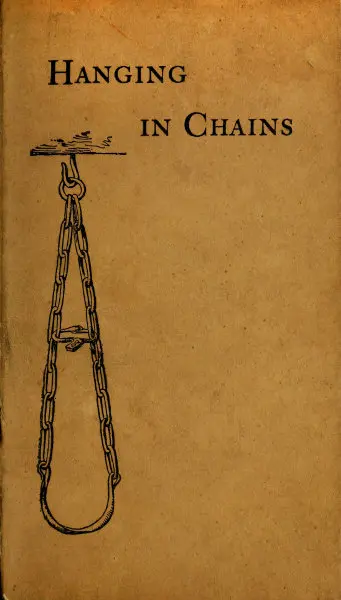
"Hanging in Chains" by Albert Hartshorne is a historical account written in the late 19th century. The work delves into the historical practices and legalities surrounding capital punishment in England, specifically focusing on the gibbeting of bodies as a form of public deterrence. The text highlights various punishments over the centuries, including details about notorious figures and events related to executions, exploring societal perceptions of death and dishonor associated with gibbeting. At the start of the narrative, the author discusses the significance of burial in ancient cultures, particularly among the Jews, Egyptians, and Greeks, emphasizing the shame and infamy associated with dying outside of proper burial rites. Hartshorne uses biblical references and historical anecdotes to illustrate the horror that was gibbeting, detailing how this form of punishment was employed to instill fear in the public and serve as a warning against crime. The opening sets an eerie tone, preparing readers for a detailed exploration of the macabre aspects of judicial punishments throughout history.
Introduction adapted from the source catalogue; source summaries may be automatically generated.
Free to read · English · 16,624 words · No account needed
MAKE TIME FOR A GOOD BOOK
On by default. Untick to stop anonymous reading totals. Each page counts after 10 seconds in view. How this works.
Anonymous counting is on unless you have switched it off.
It has been impossible to treat of such a ghastly subject--of which the horrors seem to burn themselves into the mind--without a certain amount of ghastliness; indeed, without the plea of attempting to throw a ray of light into some of these dark corners of history, we should almost have flinched from bringing forward these melancholy topics, making sensibility shudder, and which our readers may, perchance, find it a pleasure to forget. And in imagination we already hear the cry--
“Vex not his ghost: O, let him pass! he hates him
That would upon the rack of this tough world
Stretch him out longer.”[100]
NOTE.--Any notice of Gibbets in England would be incomplete without a reference to the Halifax Gibbet. This instrument of speedy but rough justice resembles the Guillotine. It remained in use until 1650, and records exist showing how numerous were the sufferers under its swift blade. The Earl of Morton, passing through Halifax about the middle of the sixteenth century, witnessed an execution, and is said to have been so much pleased with it that he had a similar machine made for Scotland, where he was Regent. It long remained unused under the name of “The Maiden.” But on June 3, 1587, the Regent was himself executed by it. Thus, as we have it in Hudibras, he “made a rod for his own breech.” The Maiden is now preserved in the Museum of the Society of Antiquaries of Scotland, at Edinburgh.--See “Halifax and its Gibbet Law,” &c., 1756.
Achæus, his end, 9.
Alfric, Archbishop, Vocabulary of, 13.
Amasa, fate of, 5.
Anastatius, Saint, martyrdom of, 12.
Anglo-Saxons, the; use of gallows with, 13.
Azariah, burial of, 1.
Baker, the Chief, fate of, 4.
Bewick, his woodcuts, 87;
his representations of the gibbet, 89, 91.
Boiling and quartering, example of, 100.
Brunne, Robert, 14.
Chains--see Hanging in.
Chettle, on hanging alive in chains, 97.
Coligny, hung on gibbet of Montfaucon, 40.
Colman, Saint, martyrdom of, 12.
Constable, Sir Robert, 16.
Cross, the, the gibbet, 6, 9;
the Christian emblem, 11.
David, burial in city of, 1.
Despencers, the, execution and quartering of, 19;
burial of their remains, ib.
Douai, gibbet at, 51.
Dreghorn, Lord, on hanging in chains in Scotland, 29.
Egyptians, the, their treatment of the bodies of criminals, 4.
Etruscans, their gibbeting on a cross, 9.
Ferreolus, Saint, martyrdom of, 12.
Fourches Patibulaires, 31.
Furca (Gibbet), use of, with the Romans, 11.
Galga (Gallows), use of, with the Anglo-Saxons, 13.
Gallows and Gibbet, difference between, in England, 25;
in France, ib.
Gallows, the, in England, 14;
in Scotland, 29, 30;
in France,--fourches patibulaires,--31;
their monumental character, 32;
in Spain, 42;
in Holland, 46;
at Douai, 51.
Germans, the, punishments with, 26.
Gibbet of Montfaucon, description of, 33;
mode of operation, 35;
ancient poetry concerning it, 38;
of Montigny, 39;
in England, 74;
effect on travellers and traffic, ib.;
of Halifax, 114.
Gibbet riddle, 104.
Your reading position is saved on this browser. Take it to another device with a library code. Reading pages adapt to text, rather than matching a printed edition.
BEHIND THE BOOK
This eBook is for the use of anyone anywhere in the United States and most other parts of the world at no cost and with almost no restrictions whatsoever. You may copy it, give it away or re-use it under the terms of the Project Gutenberg License included with this eBook or online at www.gutenberg.org. If you are not located in the United States, you will have to check the laws of the country where you are located before using this eBook. Read the source licence.
The original source file, including credits and licence, is retained by this library. Request an original-format copy at no charge. Please include the book title and Project Gutenberg identifier #46432.
KEEP YOUR CURIOSITY GOING
Cécile Tormay

Moritz Busch
John L. Ransom
Frances Wright
Cécile Tormay

Mabel Potter Daggett