THE CLASSIC COLLECTION✦Thorns of regretCLASSIC FREE BOOKS
Thorns of regret
Alex. McVeigh, Mrs. Miller
THE CLASSIC COLLECTION · 1883
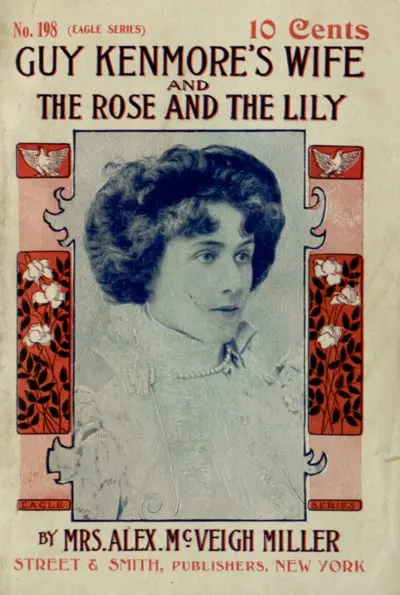
"Guy Kenmore's Wife, and The Rose and the Lily" by Mrs. Alex. McVeigh Miller is a romantic novel written in the late 19th century. The narrative revolves around the central character, Irene Brooke, who is caught in the complexities of family pressures, societal expectations, and her emerging feelings for Guy Kenmore amid her family's turmoil. The novel unfolds within a domestic setting, highlighting themes of love, rebellion, and family secrets that could impact Irene's destiny. At the start of the book, the scene is set on a moonlit night, where Irene is distraught over being denied the opportunity to attend a ball with her family. Despite her father's promise to take her, he is unexpectedly called away to business, prompting Irene to concoct a plan to attend the ball with her sister's suitor, Guy Kenmore. This decision leads to a series of events, including a mock wedding that spirals into a real and binding commitment, unveiling devastating family secrets about her lineage and the repercussions of their actions. The opening chapters throw Irene into a whirlwind of emotions as she grapples with her individuality against the backdrop of her family's pressures and secrets, setting the stage for the dramatic unfoldings to come.
Introduction adapted from the source catalogue; source summaries may be automatically generated.
Free to read · English · 105,266 words · No account needed
MAKE TIME FOR A GOOD BOOK
On by default. Untick to stop anonymous reading totals. Each page counts after 10 seconds in view. How this works.
Anonymous counting is on unless you have switched it off.
Looking up suddenly, with dark, anguished eyes, he caught her wondering,
troubled look.
"Mrs. Leslie, you think me mad," he said, mournfully.
"No, no," she answered, reassuringly. "I must beg your pardon for my ill-advised words," she continued, regretfully. "I fear that I have touched the spring of some secret sorrow."
"You have," he answered, sadly. "But do not reproach yourself. You could not have known. You probed an aching wound by chance."
"I am so sorry. I did not dream," she said, incoherently, full of sorrow for her unconscious fault.
"And she looks like me, you think?" he said, thoughtfully.
"Marvellously," she exclaimed.
"Have you ever seen the woman's face in the locket she wears about her
throat?" he asked.
"I am ashamed to confess that my womanly curiosity has made me guilty of peeping into it on one or two occasions," she replied. "It is the loveliest face I ever beheld."
"Fairest and falsest," he replied. "Mrs. Leslie, what will you think when I tell you that that woman was once bound to me by the dearest tie upon earth? She was my wife."
"I do not know what to think," she replied, and in truth she was half dazed by his words. She could not understand him.
"You look incredulous," he said, sadly. "But, Mrs. Leslie, you have known me for long years. Let your mind go back to the years before I married Miss Lessington. Did no faint rumor ever reach you of a boyish entanglement, hushed up by my father for fear it should reach the ears of the heiress selected for me?"
"Yes," she answered, with a start, "I recall it now--the merest whisper of a boyish fancy that your father would not tolerate. It was true, then?"
"It was true," he answered, sadly. "Mrs. Leslie, may I tell you my story? They say that a woman's wit is very keen. Perhaps you can help me to solve the problem of Irene's identity."
"You may tell me, and I will gladly help you if I can," she replied, with gentle, womanly sympathy.
In her heart she had always been sorry for Clarence Stuart. She believed him to be one of nature's noblemen, and she knew that he was mated with a cold, hard, jealous woman who was proud of her wealth, her birth, her station, and whose hard heart held neither pity nor sympathy for those whom she proudly held as inferiors. She intuitively felt that he had never loved the haughty heiress his proud father had selected for him.
Your reading position is saved on this browser. Take it to another device with a library code. Reading pages adapt to text, rather than matching a printed edition.
Alex. McVeigh, Mrs. Miller
Alex. McVeigh, Mrs. Miller

Alex. McVeigh, Mrs. Miller

Alex. McVeigh, Mrs. Miller
BEHIND THE BOOK
This eBook is for the use of anyone anywhere in the United States and most other parts of the world at no cost and with almost no restrictions whatsoever. You may copy it, give it away or re-use it under the terms of the Project Gutenberg License included with this eBook or online at www.gutenberg.org. If you are not located in the United States, you will have to check the laws of the country where you are located before using this eBook. Read the source licence.
The original source file, including credits and licence, is retained by this library. Request an original-format copy at no charge. Please include the book title and Project Gutenberg identifier #43037.
KEEP YOUR CURIOSITY GOING
Coulson Kernahan

Maurice Baring
Frances Wright
Cécile Tormay

Frederic Jesup Stimson

W. H. P. (William Henry Pope) Jarvis