THE CLASSIC COLLECTION✦Thorns of regretCLASSIC FREE BOOKS
Thorns of regret
Alex. McVeigh, Mrs. Miller
THE CLASSIC COLLECTION · 1883
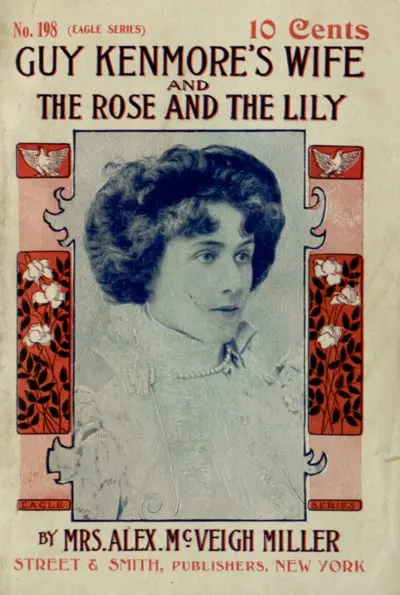
"Guy Kenmore's Wife, and The Rose and the Lily" by Mrs. Alex. McVeigh Miller is a romantic novel written in the late 19th century. The narrative revolves around the central character, Irene Brooke, who is caught in the complexities of family pressures, societal expectations, and her emerging feelings for Guy Kenmore amid her family's turmoil. The novel unfolds within a domestic setting, highlighting themes of love, rebellion, and family secrets that could impact Irene's destiny. At the start of the book, the scene is set on a moonlit night, where Irene is distraught over being denied the opportunity to attend a ball with her family. Despite her father's promise to take her, he is unexpectedly called away to business, prompting Irene to concoct a plan to attend the ball with her sister's suitor, Guy Kenmore. This decision leads to a series of events, including a mock wedding that spirals into a real and binding commitment, unveiling devastating family secrets about her lineage and the repercussions of their actions. The opening chapters throw Irene into a whirlwind of emotions as she grapples with her individuality against the backdrop of her family's pressures and secrets, setting the stage for the dramatic unfoldings to come.
Introduction adapted from the source catalogue; source summaries may be automatically generated.
Free to read · English · 105,266 words · No account needed
MAKE TIME FOR A GOOD BOOK
On by default. Untick to stop anonymous reading totals. Each page counts after 10 seconds in view. How this works.
Anonymous counting is on unless you have switched it off.
She was a sixteen-year-old girl, with the graceful slenderness of that exquisite age, and the warm, blonde beauty of the south. Her eyes were deeply, darkly, beautifully blue, and appeared almost black beneath the long, thick fringes of the beautiful, golden-brown lashes, and the slender, arched brows of a darker hue. These arched brows, and the faint, very faint, retrousse inclination of the pretty little nose, gave an air of piquancy and spirit to the young face that was hightened by the proud curve of the short upper lip. The round, dimpled chin, and soft cheeks were tinted with the soft pink of the sea shell. The waving, rippling mass of glorious curls was of that warm, rich, golden hue the old masters loved to paint. Put on such a fair young girl a dress of soft white muslin and lace--just short enough to show the tiny, high-arched feet in white kid slippers--girdle the slim waist with a broad, blue ribbon, and fancy to yourself, reader mine, how sweet a vision she appeared in the eyes of the stranger.
For him, he was tall, large, and graceful, with a certain air of indolence and gracious ease, not to say laziness. He was decidedly handsome, with a well-shaped head of closely-clipped brown hair, good features, laughing brown eyes, and a drooping brown mustache. His summer suit of soft, light-gray cloth was infinitely becoming.
But in much less time than it took for these cursory descriptions, Irene
has spoken:
"No, you do not look like a bear," she says, with charming frankness. "You look like--see how good I am at guessing--like Bertha's city beau! You are--aren't you?"
Something in this childish frankness touches him with faint annoyance. He chews the end of his long mustache after an old habit, and answers, rather stiffly:
"My name is----"
"'Norval, from the Grampian hills,'" she quotes, with audacious
laughter.
"No,--it is plain Guy Kenmore," he answers, stifling his rising
vexation, and laughing with her.
"There, didn't I say so? Pray sit down, Mr. Kenmore," sweeping him a mocking, ridiculous little courtesy. "I hope you will make yourself quite at home at Bay View. I have a great liking for you, Mr. Kenmore."
He takes a chair with readiness, while she paces, a little restlessly,
up and down the floor.
"Thank you," he says, languidly. "May I inquire to what circumstances I owe the honor of your regard?"
"You may," shooting him a swift, arch glance. "You're going to take Bert off our hands, and I consider you in the light of my greatest benefactor."
He laughs and colors at the cool speech of this strange girl.
Your reading position is saved on this browser. Take it to another device with a library code. Reading pages adapt to text, rather than matching a printed edition.
Alex. McVeigh, Mrs. Miller
Alex. McVeigh, Mrs. Miller

Alex. McVeigh, Mrs. Miller

Alex. McVeigh, Mrs. Miller
BEHIND THE BOOK
This eBook is for the use of anyone anywhere in the United States and most other parts of the world at no cost and with almost no restrictions whatsoever. You may copy it, give it away or re-use it under the terms of the Project Gutenberg License included with this eBook or online at www.gutenberg.org. If you are not located in the United States, you will have to check the laws of the country where you are located before using this eBook. Read the source licence.
The original source file, including credits and licence, is retained by this library. Request an original-format copy at no charge. Please include the book title and Project Gutenberg identifier #43037.
KEEP YOUR CURIOSITY GOING
Coulson Kernahan

Maurice Baring
Frances Wright
Cécile Tormay

Frederic Jesup Stimson

W. H. P. (William Henry Pope) Jarvis