THE CLASSIC COLLECTION✦Thorns of regretCLASSIC FREE BOOKS
Thorns of regret
Alex. McVeigh, Mrs. Miller
THE CLASSIC COLLECTION · 1883
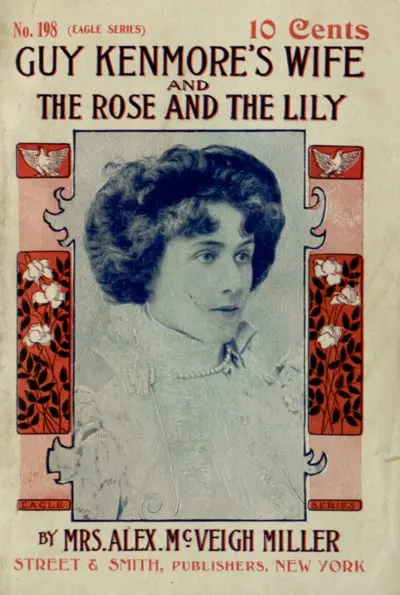
"Guy Kenmore's Wife, and The Rose and the Lily" by Mrs. Alex. McVeigh Miller is a romantic novel written in the late 19th century. The narrative revolves around the central character, Irene Brooke, who is caught in the complexities of family pressures, societal expectations, and her emerging feelings for Guy Kenmore amid her family's turmoil. The novel unfolds within a domestic setting, highlighting themes of love, rebellion, and family secrets that could impact Irene's destiny. At the start of the book, the scene is set on a moonlit night, where Irene is distraught over being denied the opportunity to attend a ball with her family. Despite her father's promise to take her, he is unexpectedly called away to business, prompting Irene to concoct a plan to attend the ball with her sister's suitor, Guy Kenmore. This decision leads to a series of events, including a mock wedding that spirals into a real and binding commitment, unveiling devastating family secrets about her lineage and the repercussions of their actions. The opening chapters throw Irene into a whirlwind of emotions as she grapples with her individuality against the backdrop of her family's pressures and secrets, setting the stage for the dramatic unfoldings to come.
Introduction adapted from the source catalogue; source summaries may be automatically generated.
Free to read · English · 105,266 words · No account needed
MAKE TIME FOR A GOOD BOOK
On by default. Untick to stop anonymous reading totals. Each page counts after 10 seconds in view. How this works.
Anonymous counting is on unless you have switched it off.
"Irene, my pet, my darling, where are you hiding? Come to papa," he called, glancing around the dimly-lighted room.
With a scream of joy the little figure sprang down from its high perch in the window, and ran precipitately into his arms.
"Oh, papa, dear papa, you are home again!" she exclaimed, laughing and crying together, and patting his grey whiskers with her loving white hands.
"Yes, but you aren't glad to see me one bit. You're crying because I've come home. Shall I go back to the city, eh?" he inquired, softly pinching her cheek, and looking at her with kind, blue eyes full of love.
Irene hid her lovely face on his broad breast and sobbed aloud.
"Why, what ails my little girl?" he exclaimed. "Who's been teasing my pet? Where are mamma and the girls?"
With a fresh rain of tears, Irene sobbed out:
"All g--gone to the b--ball, and would not let--let--me g--go, after you'd told them all I might, papa."
The old man's genial face clouded over instantly with some intangible
annoyance.
"Why wouldn't they let you go?" he inquired.
"Bertha said if I went, she wouldn't," replied Irene, hushing her sobs, and answering in a high-pitched, indignant young voice; "she said children had no business at a ball! The idea of calling me a child! I was sixteen, yesterday! Oh, papa, have you brought me a birthday present from the city?" she inquired, eagerly, forgetting for a moment her grievance.
"Yes, dear. And so Bertha wouldn't let you go to the ball?" he said, taking a seat, and drawing her down upon his knee.
"It was mamma, too. She took Bertha's part, and said I shouldn't come out until the girls were married. Two Miss Brookes were quite enough in the market at one time she said. As if I wanted to marry any of their ridiculous beauxs, with their lisps, and their eye-glasses, and their black coats. I despise them!" cried Irene, indignantly.
"That's because, as Bertha said, you're nothing but a child," laughed Mr. Brooke. "When you grow older you'll quite adore these black-coated dandies, I dare say;" then he added, in a graver tone: "Did Elaine forbid your going, too?"
"No, she didn't say one word for, or against it. She only pursed up her lips and looked out of the window. I never saw such a coward as Elaine," pursued the girl, angrily. "Bertha and mamma have everything their own way, and ride rough-shod over Elaine, and she daren't say her soul's her own!"
"Hush, Irene--you musn't talk so disrespectfully of your--sister," her
father said, reprovingly.
Your reading position is saved on this browser. Take it to another device with a library code. Reading pages adapt to text, rather than matching a printed edition.
Alex. McVeigh, Mrs. Miller
Alex. McVeigh, Mrs. Miller

Alex. McVeigh, Mrs. Miller

Alex. McVeigh, Mrs. Miller
BEHIND THE BOOK
This eBook is for the use of anyone anywhere in the United States and most other parts of the world at no cost and with almost no restrictions whatsoever. You may copy it, give it away or re-use it under the terms of the Project Gutenberg License included with this eBook or online at www.gutenberg.org. If you are not located in the United States, you will have to check the laws of the country where you are located before using this eBook. Read the source licence.
The original source file, including credits and licence, is retained by this library. Request an original-format copy at no charge. Please include the book title and Project Gutenberg identifier #43037.
KEEP YOUR CURIOSITY GOING
Coulson Kernahan

Maurice Baring
Frances Wright
Cécile Tormay

Frederic Jesup Stimson

W. H. P. (William Henry Pope) Jarvis