THE CLASSIC COLLECTION✦Thorns of regretCLASSIC FREE BOOKS
Thorns of regret
Alex. McVeigh, Mrs. Miller
THE CLASSIC COLLECTION · 1883
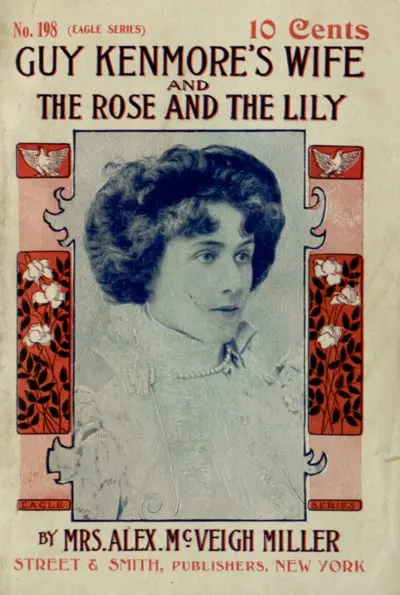
"Guy Kenmore's Wife, and The Rose and the Lily" by Mrs. Alex. McVeigh Miller is a romantic novel written in the late 19th century. The narrative revolves around the central character, Irene Brooke, who is caught in the complexities of family pressures, societal expectations, and her emerging feelings for Guy Kenmore amid her family's turmoil. The novel unfolds within a domestic setting, highlighting themes of love, rebellion, and family secrets that could impact Irene's destiny. At the start of the book, the scene is set on a moonlit night, where Irene is distraught over being denied the opportunity to attend a ball with her family. Despite her father's promise to take her, he is unexpectedly called away to business, prompting Irene to concoct a plan to attend the ball with her sister's suitor, Guy Kenmore. This decision leads to a series of events, including a mock wedding that spirals into a real and binding commitment, unveiling devastating family secrets about her lineage and the repercussions of their actions. The opening chapters throw Irene into a whirlwind of emotions as she grapples with her individuality against the backdrop of her family's pressures and secrets, setting the stage for the dramatic unfoldings to come.
Introduction adapted from the source catalogue; source summaries may be automatically generated.
Free to read · English · 105,266 words · No account needed
MAKE TIME FOR A GOOD BOOK
On by default. Untick to stop anonymous reading totals. Each page counts after 10 seconds in view. How this works.
Anonymous counting is on unless you have switched it off.
Crushing back one hopeless sigh, Reine goes back to the shaded, quiet chamber, where the sick woman lies on her silken couch, with tearful eyes veiled by the thin, emaciated fingers on which the shining wealth of rings hang loosely.
She kneels down and presses her soft, loving lips on the thin,
fever-flushed cheek.
"You are crying for me," she says, with an earnest penitence and regret. "I was cruel and ungrateful to talk of leaving you. Can you forgive me?"
"You are sorry; you will stay!" the sick woman murmurs, with piteous
eagerness.
"Yes, as long as you live, I will never leave you nor forsake you," Reine murmurs, with all the solemnity of a vow, thinking sadly to herself that this is the only heart left on earth to which she is near and dear.
"God bless you, you shall be like my own child, Reine. And it may not be for long," Mrs. Odell sighs. "I am afraid--afraid, dear, that I shall never see my native land again."
"We will hope for the best," the girl answers, gently, "and if--if it should be as you fear, you will not forget that Heaven is as near to Italy as to our native land."
Heaven! to these two who have lost the treasure of life, that word is
sweet and potent.
Drawn nearer together by the waves of sorrow that have gone over their heads, they cling together in the falling twilight, and talk softly of
"A land whose light is never dimmed with shade,
Whose fields are ever vernal;
Where nothing beautiful can ever fade,
But blooms for aye eternal."
The soft Italian winter comes and goes. To Reine's young and inexperienced eyes, as she ministers lovingly to her dying friend, it seems as if a change for the better is taking place. But Doctor Franks shakes his head.
"Impossible," he tells her, sadly. "It is a marvel she has lasted so long. It almost seems as if your love and tenderness have held her fluttering spirit back from the other world. The end is not far now."
But the spring days pass with such gentle touches on the wasting frame that the spirit lingers still.
At last, in the golden sunset of a golden June, Mrs. Odell's summons comes, gently, as if angels had borne it down the golden stairway of the sky, closing her tired eyelids on the fair land of Italy, with her thin hand nestled in Reine's warm clasp, she opens them again on the "stiller, fairer world of the dead."
Your reading position is saved on this browser. Take it to another device with a library code. Reading pages adapt to text, rather than matching a printed edition.
Alex. McVeigh, Mrs. Miller
Alex. McVeigh, Mrs. Miller

Alex. McVeigh, Mrs. Miller

Alex. McVeigh, Mrs. Miller
BEHIND THE BOOK
This eBook is for the use of anyone anywhere in the United States and most other parts of the world at no cost and with almost no restrictions whatsoever. You may copy it, give it away or re-use it under the terms of the Project Gutenberg License included with this eBook or online at www.gutenberg.org. If you are not located in the United States, you will have to check the laws of the country where you are located before using this eBook. Read the source licence.
The original source file, including credits and licence, is retained by this library. Request an original-format copy at no charge. Please include the book title and Project Gutenberg identifier #43037.
KEEP YOUR CURIOSITY GOING
Coulson Kernahan

Maurice Baring
Frances Wright
Cécile Tormay

Frederic Jesup Stimson

W. H. P. (William Henry Pope) Jarvis